Claude Fable 5 is Anthropic’s most capable developer model to date. For anyone using Claude Code to handle complex coding projects, DevOps pipelines, or long-running agentic tasks, this model completely changes what is possible in a single session.
Stripe recently used Fable 5 to migrate 50 million lines of Ruby code in a single day. Their engineering team estimated that same task would take over two months manually. This is not a simulated benchmark. It is a live production result.
This guide covers everything you need to know to activate Fable 5, master its agentic capabilities, and maximize the promotional trial window before API pricing begins. Share your Fable 5 testing results with other developers at the Scale Xpert Discord. The community is actively comparing real-world workflows and token efficiency numbers right now.
What Makes Fable 5 Different for Developers
The core behavioral difference between Claude Fable 5 and Claude Opus 4.8 comes down to autonomy, not just raw power.
When Opus 4.8 encounters an ambiguous problem or a roadblock during a multi-step task, it frequently pauses to ask a clarifying question. While this works fine in a supervised chat, every pause breaks the momentum of an automated pipeline.
┌────────────────────────────────────────────────────────┐
│                 THE MYTHOS CLASS ENGINE                │
│                                                        │
│   ├──► Claude Fable 5  ──► Public API + Safety Layer   │
│   └──► Claude Mythos 5 ──► Project Glasswing (Uncapped)│
└────────────────────────────────────────────────────────┘
Fable 5 refuses to stop. The model maps out the task, executes each stage, and runs tests on its own output. It actively identifies its own failures, recovers from them, and continues driving forward. It only pauses if it genuinely cannot proceed without human intervention. This behavioral shift from “asking questions” to “solving problems” enables massive autonomous outcomes.
Developer Simon Willison tested Fable 5 for over five hours on release day. He described the engine as something that “feels big.” In his evaluation, finding tasks the model cannot handle proved genuinely difficult. This is a massive signal from an expert who evaluates AI models professionally.
Furthermore, Fable 5 tops Cognition’s FrontierCode evaluation. This benchmark tests whether models can complete difficult coding tasks while meeting strict production-grade quality standards. Code correctness matters, but maintainability matters more. Fable 5 delivers both.
How to Activate Claude Fable 5 in Claude Code
Getting Fable 5 running in Claude Code is straightforward. However, your installation must be completely current.
Pro Tip: Early adopters recommend using the terminal version of Claude Code instead of the desktop application for heavy workloads. The terminal build optimizes system RAM usage and context window allocation during intense, multi-hour sessions.
Ultra Code and Dynamic Workflows: What They Do
Claude Fable 5 introduces two activatable modes within Claude Code that extend what the model can achieve during complex engineering tasks.
1. Ultra Code
This mode instructs Fable 5 to spawn specialized sub-agents to handle different components of a complex coding task in parallel. Instead of processing a project sequentially down a single thread, Ultra Code distributes components, runs them concurrently, and synthesizes the results.
This parallel processing makes codebase-wide operations possible. A single, sequential context window cannot process 50 million lines of code at once, but a network of sub-agents can.
2. Dynamic Workflows
This setting enables flexible, multi-stage task execution. The model maps out a comprehensive workflow before writing any code.
Dynamic Workflows builds an explicit plan with built-in checkpoints. This allows the model to assess its progress at each stage and adjust subsequent steps based on what succeeded or failed. For intricate projects with heavy interdependencies, this structure produces highly reliable outcomes.
To activate either mode, simply specify your preference in the initial task prompt inside Claude Code.
Token Efficiency: The True Economic Math
Fable 5 costs approximately twice as much per token as Opus 4.8. Surprisingly, it can actually cost less per completed complex task due to superior token efficiency.
| Metric | Claude Opus 4.8 | Claude Fable 5 |
| Input Cost (per M) | ~$10.00 | $10.00 |
| Output Cost (per M) | ~$25.00 | $50.00 |
| Context Window Used | 100% (Baseline) | ~25% for equivalent tasks |
| Error Recovery | Requires manual prompts | Self-corrects internally |
Fable 5 uses roughly one-quarter of the context window space that Opus 4.8 requires to complete equivalent tasks. If a project takes 200,000 tokens in Opus 4.8, Fable 5 can often finish it using just 50,000 tokens. This 4x efficiency gain completely offsets the higher output token pricing.
This economic reality simplifies your architectural choices:
-
Use Opus 4.8 for straightforward, isolated tasks where the lower baseline token cost saves money.
-
Use Fable 5 for long-horizon, ambiguous projects where its self-correction ensures a successful outcome in a single session.
For teams deciding between API access models, our Claude API pay-as-you-go analysis provides a deep dive into production cost planning.
Safety Guardrails in Development Contexts
Anthropic tuned Fable 5’s safety classifiers specifically to protect cybersecurity and biology domains. For general software engineering, these guardrails remain largely invisible.
The system reroutes fewer than 5% of average user sessions. When a query triggers a classifier, safety filters automatically hand the request down to Claude Opus 4.8 to generate a safe response. Best of all, Anthropic does not charge you Fable 5 prices for these rerouted requests.
This rerouting happens on a topic-by-topic basis, not a project-by-project basis. If you are building a legitimate penetration testing tool, Fable 5 will happily write the application architecture, standard routines, and testing suites. The classifier will only flag and reroute specific queries that look like active vulnerability exploitation scripts.
Practical Use Cases for Fable 5
-
Large Codebase Migrations: Fable 5 excels at modifying code across an entire repository simultaneously. It maintains a coherent understanding of architecture across your entire codebase.
-
Multi-Day Autonomous Sessions: Long-running automation pipelines benefit from Fable 5’s persistent focus. It avoids the coherence drift that often degrades older models over time.
-
Visual Validation Tasks: The model’s advanced vision engine can review user interface rendering. It reads mockups, processes screenshots, and verifies that your compiled frontend code matches your design specifications perfectly.
-
Full-Stack Implementations: Fable 5 easily manages tasks that cross multiple layers of your technology stack. It coordinates database schemas, backend API logic, and frontend state management as a singular, unified project.
The June 22 Deadline: What Changes After the Trial
Anthropic currently offers Claude Fable 5 within standard Claude subscription plans as a promotional trial running through June 22, 2026. After this date, access shifts entirely to standard API-based pricing ($10/M input, $50/M output).
This promotional window provides a major financial opportunity. Developers can run massive, compute-heavy engineering projects at standard subscription costs rather than paying per token.
We highly recommend offloading your most complex, long-standing development backlogs into Fable 5 before the trial closes. Test your workflows now so you can make data-driven decisions about your API budget later this month.
Fable 5 and SEO Technical Workflows
Developers building SEO tooling or technical discovery pipelines can use Fable 5 to automate tasks that previously required human supervision.
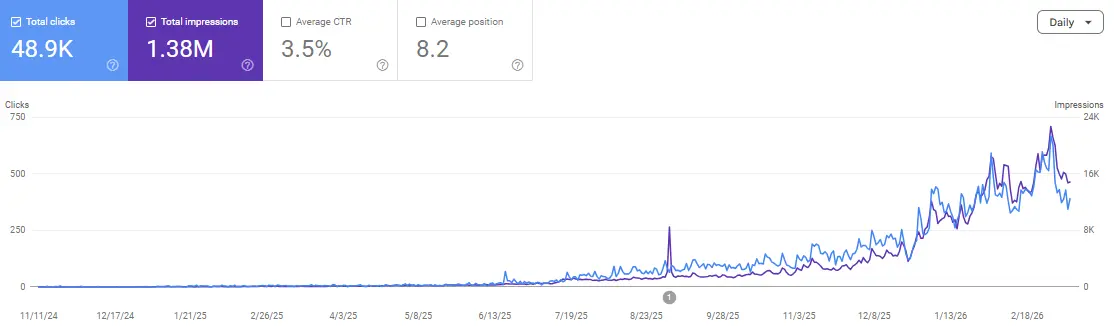
Thanks to its vision upgrades, Fable 5 can ingest direct screenshots of Google Search Console reports, Core Web Vitals dashboards, and analytics charts. It extracts trends and diagnoses traffic anomalies without requiring manual CSV data processing.
[Dashboard Screenshot] ──► [Fable 5 Vision] ──► [Automated Action Plan]
Furthermore, its agentic capabilities allow teams to bundle multi-stage technical SEO audits into a single instruction. The model can crawl a site structure, evaluate performance metrics, check structured data validity, and output an ordered priority matrix completely on its own.
For teams building advanced discovery platforms, exploring our breakdown on how to build a custom GPT for your daily SEO audit tasks shows how to structure these automated data pipelines effectively.
FAQs
How do I access Fable 5 inside Claude Code?
Make sure your CLI tool is updated to version 2.1.17 or higher by running claude update. Once updated, type /model in your terminal and select Fable from the menu.
Why does Fable 5 code better than older models?
Fable 5 does not stall out when it hits a problem. It autonomously builds a workflow plan, writes code, tests its own output, and fixes its own bugs until the task finishes successfully.
What are the official API rates for the model?
Input tokens cost $10.00 per million, and output tokens cost $50.00 per million. You can also leverage a 90% discount on input costs by utilizing prompt caching for repetitive contexts.
What is the difference between Ultra Code and Dynamic Workflows?
Ultra Code spawns parallel sub-agents to execute multiple tasks concurrently. Dynamic Workflows forces the model to create a linear plan with clear evaluation checkpoints to handle highly dependent, multi-stage projects.
Conclusion
Claude Fable 5 represents a major milestone for autonomous development. By blending self-correcting logic, high token efficiency, and vision processing, it handles production-grade tasks that used to require constant human intervention. Take advantage of the free promotional trial before June 22, 2026, to clear out your toughest development bottlenecks.
Want to see how other teams are optimizing their context windows? Join the conversation on the Scale Xpert Discord to talk strategy and trade optimization tips with the community.