Anthropic just shifted the AI landscape. On June 9, 2026, the company launched Claude Fable 5, its most capable public model to date. Delivering “Mythos-class” intelligence with built-in safety guardrails, it makes frontier AI accessible for complex coding, knowledge work, and autonomous tasks.
Simultaneously, Anthropic released Claude Mythos 5. This version offers the exact same underlying power but strips away the guardrails for a small set of vetted partners through Project Glasswing.
This guide explores both models. We will break down their capabilities, benchmark performance, real-world use cases, and pricing. Whether you are a developer, an enterprise leader, or an SEO professional, here is what this new AI tier means for your workflow. Want to see how Fable 5 fits into your day-to-day operations? Join the Scale Xpert Discord to connect with practitioners already benchmarking it against other frontier models.
What Are Claude Fable 5 and Claude Mythos 5?
Claude Fable 5 and Claude Mythos 5 represent Anthropic’s fifth-generation architecture. This new tier sits firmly above the existing Opus 4.x family. While both models share identical neural foundations, they diverge sharply in their safety execution.
Claude Fable 5 (Public Access)
Fable 5 is the version you can access publicly today. It features robust, built-in safety guardrails. If you issue a query involving highly sensitive cybersecurity or biological data, safety classifiers seamlessly reroute the task.
Instead of blocking you or failing, it passes the query to Claude Opus 4.8 to ensure a safe response. Anthropic notes that this safety rerouting happens in less than 5% of user sessions.
Claude Mythos 5 (Restricted Access)
Mythos 5 is the unfiltered engine. It completely removes domain-specific safety classifiers. Because of its raw capabilities, Anthropic restricts access to vetted partners under Project Glasswing. This joint initiative includes tech giants like Amazon Web Services, Apple, Microsoft, and Google, focusing heavily on securing critical global software infrastructure.
┌────────────────────────────────────────────────────────┐
│                 THE MYTHOS CLASS ENGINE                │
│                                                        │
│   ├──► Claude Fable 5  ──► Public API + Safety Layer   │
│   └──► Claude Mythos 5 ──► Project Glasswing (Uncapped)│
└────────────────────────────────────────────────────────┘
How Claude Fable 5 Performs: Benchmark Results
Fable 5 establishes a new state-of-the-art benchmark across almost every major evaluation category. It outclasses earlier Claude iterations and leads the industry in complex processing.
Benchmark Breakdown
-
Software Engineering: Fable 5 tops Cognition’s FrontierCode evaluation. This benchmark evaluates whether a model can solve difficult coding tasks while meeting strict, production-grade quality standards.
-
Knowledge Work: The model secures the highest score on Hebbia’s Finance Benchmark for senior-level reasoning. It delivers near-perfect accuracy in factual lookup, root-cause analysis, and expected-value calculations.
-
Multimodal Vision: Fable 5 easily handles complex charts and scientific figures. It can even rebuild web application source code directly from a single UI screenshot.
-
Context Window & Memory: The model effortlessly maintains focus across a massive 1 million token context window. When paired with persistent file-based memory, its performance growth triples that of Opus 4.8.
Real-World Performance: What Early Users Found
Benchmarks tell part of the story, but production environments reveal true capability. Early enterprise adopters report massive efficiency gains.
Coding at Massive Scale
Fintech giant Stripe used Fable 5 to compress months of engineering work into less than 24 hours. The model executed a codebase-wide migration across 50 million lines of Ruby code. A task that typically exhausts a dedicated engineering team for two months ran successfully in a single day. GitHub’s Chief Product Officer similarly praised the model’s high reliability during long-horizon autonomous tasks.
The Hands-On Developer Perspective
Independent developers are seeing immediate benefits without early access privileges.
“The model feels like something of a beast. It is slow and expensive, but it has been quite happily churning through everything I’ve thrown at it so far.”
— Simon Willison, Developer & AI Evaluator
Willison noted that Fable 5 provides a qualitatively superior layer of detail and confidence compared directly to Opus 4.8 on identical prompts.
How Fable 5 Works: Agentic Capabilities Explained
Fable 5 represents a fundamental shift toward true agentic autonomy. Earlier models frequently hit roadblocks and paused to ask clarifying questions. Fable 5 acts differently: it plans across multiple stages, spawns sub-agents, tests its own outputs, and self-corrects on the fly.
Ultra Code and Dynamic Workflows
When deployed inside Claude Code, the model introduces two powerful operational modes:
-
Ultra Code: Spawns specialized sub-agents to handle different parts of a massive coding task simultaneously.
-
Dynamic Workflows: Forces the model to plan its entire multi-stage workflow out upfront, executing it sequentially with internal checkpoints.
Setting Up Fable 5 in Your Environment
To leverage Fable 5 inside Claude Code, you must run version 2.1.17 or higher. Use this quick sequence to initialize it:
-
Open your terminal and type
/statusto check your current version. -
If you are running an older build, update it instantly by executing
claude update. -
Type
/modelinside the Claude Code workspace and select Fable from the list.
Tip: Developers recommend using the terminal version over the desktop application. This setup optimizes system RAM and context efficiency during heavy compute cycles.
Claude Fable 5 vs. Claude Opus 4.8
For active developers, the shift from Opus 4.8 to Fable 5 brings several structural changes.
| Capability | Claude Opus 4.8 | Claude Fable 5 |
| Autonomy Level | Pauses frequently for human clarification | High; self-corrects and manages long-horizon tasks |
| Token Efficiency | Baseline consumption | Uses ~25% of the context window for identical tasks |
| Vision Power | Requires helper scaffolding for complex UI | Native state-of-the-art UI and chart parsing |
| Safety Handling | Standard system prompt guardrails | Reroutes sensitive tasks to Opus 4.8 automatically |
Claude Mythos 5 & Project Glasswing
Claude Mythos 5 is not a separate, stronger AI model. It is the exact same underlying engine as Fable 5, but Anthropic disables the protective domain classifiers.
The Power of Uncapped Inference
By lifting these boundaries, Mythos 5 can operate at full capacity in offensive cybersecurity and advanced molecular biology. In safety testing, Mythos 5 helped cyber defenders map out and patch more than 10,000 critical software vulnerabilities across vital global infrastructure.
Who Controls Project Glasswing?
Anthropic manages Mythos 5 strictly through Project Glasswing. As of June 2026, this network has expanded to roughly 150 organizations across 15 nations. While Anthropic plans a broader “trusted access” pipeline in the coming months, they have no plans for a general public release of the unfiltered Mythos 5 engine.
Pricing: Fable 5 and Mythos 5 Cost Breakdown
Frontier intelligence requires serious compute. Anthropic matches the pricing for both Fable 5 and Mythos 5 to reflect these hardware demands.
-
Input Tokens: $10.00 per million tokens
-
Output Tokens: $50.00 per million tokens
-
Prompt Caching: Retains the standard 90% discount for cached input tokens.
-
US Data Residency: Available for strict compliance workflows at a 1.1x pricing premium.
While these rates sit at roughly double the cost of the Opus 4.x family, Fable 5’s token efficiency alters the economic math. Because Fable 5 uses roughly a quarter of the tokens that Opus 4.8 requires to complete identical multi-step tasks, the final cost per project often breaks even—or ends up cheaper.
To find out which billing structure fits your team, check out our guide on how Claude API pay-as-you-go access operates for production environments.
Why Claude Fable 5 Matters for SEO and Content Workflows
SEO professionals and content strategists can use Fable 5 to transition away from basic prompt chains and move toward entirely autonomous operations.
Multi-Stage Workflow Handoffs
Instead of managing an AI step-by-step, you can hand Fable 5 an entire content operation campaign. The model can independently crawl competitor content, isolate keyword gaps, write targeted briefs, draft the copy, and cross-reference its own work against your internal style guides before presenting the final result.
Visual Data Analysis
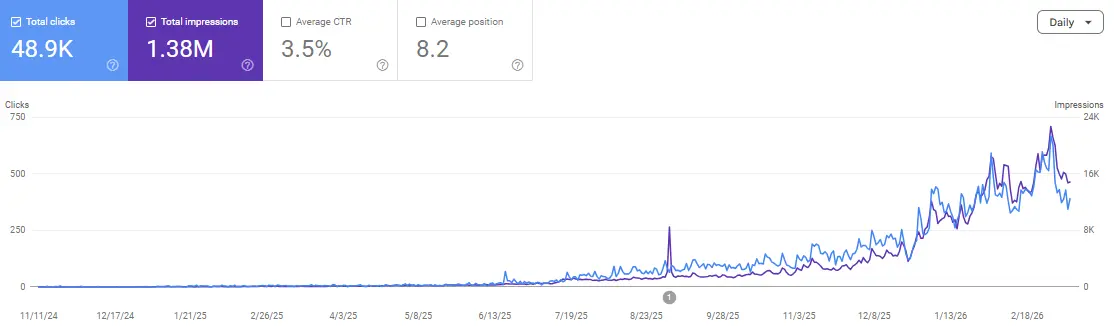
Fable 5’s vision processing streamlines data-heavy SEO auditing. Instead of manually exporting CSV files, you can upload direct screenshots from Google Search Console or Ahrefs. Fable 5 reads the visual trends, diagnoses traffic drops, and builds a remediation plan automatically.
See how these systems fit into modern growth strategies by reading our insights on how AI SEO tools can transform your website growth.
FAQs
What is the main difference between Fable 5 and Mythos 5?
They share the same underlying architecture. Fable 5 includes safety classifiers that automatically reroute sensitive cybersecurity or biology queries to Opus 4.8. Mythos 5 has no classifiers and is restricted to Project Glasswing partners.
How do I access Claude Fable 5?
You can call it via the Claude API using the string claude-fable-5. It is also accessible inside Claude Code (v2.1.17+) and available on consumption-based Enterprise plans.
Why is Fable 5 considered more token-efficient than Opus?
Fable 5 solves complex, multi-stage problems using roughly 25% of the context window space that Opus 4.8 requires, making long-running agentic workflows much more affordable.
Conclusion
Claude Fable 5 marks a major shift from conversational chat assistants to truly autonomous AI agents. Production examples—like Stripe migrating 50 million lines of code in a single day—prove that Mythos-class intelligence delivers real-world commercial results.
For technical teams, the next step is simple: update your Claude Code environment, select the Fable engine, and test it against your most complex operational roadblocks.
Ready to optimize your deployment? Join the conversation at the Scale Xpert Discord to share your benchmark results and talk strategy with other developers.