Google updated its canonicalization documentation on July 10, 2026. This release introduces three crucial changes that every technical SEO practitioner must understand.
First, Google now officially states that after you fix canonical issues, your pages may remain in a duplicate cluster for up to two weeks before the system recognizes the fix. Second, Google explicitly documented how it clusters pages featuring identical primary content before it selects a canonical winner. Third, Google formally recommends that every canonical page include a self-referential canonical tag. SEOs have recommended this for years, but Google has never formally documented it until now.
This guide covers what canonical URLs are and what these three changes mean in practice. You will learn how they alter your SEO reporting, improve client communication, and dictate the specific implementation steps required today.
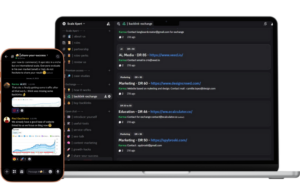
If you want to discuss how these documentation changes affect your current technical SEO projects, the Scale Xpert Discord community is an excellent resource. It is a premier hub for SEO learning and genuine backlink exchanges.
What Is a Canonical URL?
A canonical URL acts as the preferred version of a web page when multiple URLs contain identical or highly similar content. Search engines need to know exactly which version to index and rank. If they index every version, they divide that content’s authority across multiple URLs rather than concentrating it on your preferred page.
Canonical URLs exist across virtually every website type. For example, an e-commerce product page might generate multiple URL paths. Users can access the direct product URL, a category-filtered version, a search result URL with query parameters, or a print-friendly version. Each of these URLs displays the exact same product content. Without clear canonical signals, search engines must guess which version represents the page’s true identity.
The Technical Mechanics of Canonicalization
Google uses the rel="canonical" HTML link element as its primary mechanism for declaring these preferences. You place this link element in the <head> section of an HTML page, pointing it to the URL that Google should treat as the master version. When a page includes a canonical pointing to a different URL, Google treats that alternate URL as the preferred version and consolidates all ranking signals there.
You can also deploy other canonical signaling mechanisms. HTTP header canonicals serve the same function for non-HTML content like PDFs. Sitemaps act as a weaker signal, gently suggesting your preferred URLs. Consistent internal linking to the same URL version sends an implicit canonical signal. Finally, 301 redirects act as the strongest canonical signal when you permanently consolidate two URLs into one.
Google’s July 2026 update did not change how these technical signals work. Instead, it clarified how Google processes them over time and formally documented what Google considers best practice for modern implementation.
The Three Documentation Changes from July 10, 2026
Google’s Search Central Blog described this update as offering “clarifications on re-evaluation time.” The changes give webmasters “better expectations about how long it takes for canonicalization changes to take effect.”
The update modifies two separate help documents: the Fix Canonicalization Issues troubleshooting guide and the What Is URL Canonicalization explainer. Both pages now carry a “Last updated 2026-07-10” timestamp.
Change 1: The Two-Week Re-Evaluation Window
The most impactful addition sits at the top of Google’s Fix Canonicalization Issues guide. The text now explicitly states that after you fix content issues, Google might hold your pages in a duplicate cluster for up to two weeks before it recognizes the fix and splits the cluster apart.
This marks the first time Google has formally documented a specific timeframe for canonical fix propagation. Technical SEOs have long known that canonical changes do not happen instantly. However, the absence of a documented timeframe created a massive communication problem. Clients would watch a developer deploy a canonical fix, immediately check the URL Inspection tool, see the old status, and angrily conclude the fix had failed.
Crucially, Google included an important qualifier alongside this two-week window. The documentation notes that pages generally split out faster when the difference between the new content and the old clustered pages is clear and significant. This qualifier offers massive actionable value.
The two-week window represents the maximum delay, not the average. Pages featuring small, incremental content differences take the longest to split. Conversely, pages featuring substantially different text split much faster.
As Barry Schwartz and his co-hosts discussed in the It’s New video on July 13, 2026, this clarification fundamentally changes how agencies report technical SEO work. The two-week window gives practitioners an official, Google-backed timeline to share with clients rather than relying on informal estimates.
Change 2: Explicit Clustering Documentation
Google added bold emphasis to the What Is URL Canonicalization explainer. The text now explicitly explains that Google clusters pages featuring identical or very similar primary content together.
While the clustering concept itself is not new, formalizing it alongside the two-week window provides a much-needed conceptual framework. It finally explains exactly why canonical fixes take so much time.
Google’s system executes two distinct steps. First, it identifies all pages containing similar primary content and groups them into a cluster. Second, it evaluates which page in that cluster should act as the canonical master based on available signals (tags, internal links, sitemaps). When you apply a canonical fix, you only change the signals available for the second step. Google must still re-evaluate the entire cluster, which takes up to two weeks.
This documentation carries an important implicit message. If Google clusters your pages because their text is genuinely identical, simply adding a canonical tag may not resolve the issue. If content similarity causes the clustering, making the content physically different provides a far more durable solution.
Change 3: Self-Referential Canonicals Formally Documented
Google’s updated documentation now explicitly states: “Do include a rel=’canonical’ link on the canonical page itself (also known as a self-referential canonical).”
This marks the formal documentation of a practice that Mordy Oberstein, Greg Finn, and other veterans have informally recommended since 2011. A self-referential canonical is simply a canonical tag on a page that points directly back to that same page’s own URL.
For example, if your canonical URL is https://example.com/blog/seo-guide/, that page should include <link rel="canonical" href="https://example.com/blog/seo-guide/" /> in its <head>.
The goal here is signal clarity. Without a self-referential tag, a page’s preferred status relies on the mere absence of a canonical pointing elsewhere. With a self-referential tag, the page explicitly declares its master status. For large enterprise sites, the difference between these two states compounds significantly.
Why the Two-Week Window Changes Client Communication
Before July 10, 2026, technical SEO practitioners operated without an official timeline. When clients asked how long a fix would take, practitioners offered educated guesses rather than Google-stated facts.
Today, the two-week maximum acts as an official figure directly from Google. This completely changes how agencies handle three common scenarios.
Setting Immediate Client Expectations
When clients check the URL Inspection tool immediately after you deploy a fix and see no change, you now have a documented response. You can point directly to Google’s statement that re-evaluation takes up to two weeks. You can confidently explain that the fix works correctly and advise them against making further site modifications while Google processes the initial update.
Structuring Agency Deliverables
For agency timeline planning, this two-week window means you must schedule canonical work with a buffer. You should build a two-to-four-week validation period into your contract before marking a technical project complete. Marking a task complete the day you deploy code, only to show an unchanged Search Console screenshot the next day, represents a massive communication failure.
Planning Large-Scale Migrations
For massive site migrations involving structural URL changes, the two-week window acts as a hard planning constraint. You cannot validate a migration involving 50,000 canonical changes in a single week. You must explicitly build this documented two-week window into your migration timeline to manage stakeholder expectations properly.
How Clustering Affects Your Canonical Strategy
The explicit clustering documentation forces practitioners to rethink how they handle persistent canonical bugs. Because Google groups pages before selecting canonicals, a canonical tag acts merely as a signal within that cluster—it does not override the clustering mechanism itself.
Google will only select your preferred page if your canonical tag acts as the strongest available signal and the content differs enough to give the algorithm confidence. This creates a highly practical diagnostic framework for stubborn issues.
When you implement a canonical fix but Google continues selecting the wrong page, investigate these three explanations:
-
Content similarity is too high: The clustered pages look so similar that Google lacks confidence in choosing between them. To fix this, rewrite the master page so it looks distinct from the alternate pages, then reapply the canonical signal.
-
Stronger signals override your tag: If the non-canonical page holds significantly more internal links or sits in your XML sitemap, those signals will easily overpower a simple canonical tag. Ensure your internal linking architecture consistently points to the correct URL.
-
The fix needs more time: Given the new documentation, you may just need to wait out the two-week window. Implementing panic changes before Google processes your initial fix creates signal conflicts that delay indexing further.
To fully grasp why these signal conflicts occur, read our guide outlining what technical SEO actually is and how it works.
Self-Referential Canonicals at Scale: Why Large Sites Must Audit Now
For small WordPress blogs, adding a self-referential canonical represents a minor implementation detail. However, for massive e-commerce platforms and publishing networks, this formal documentation serves as a strict call to action.
Enterprise sites built without systematic self-referential tags suffer from massive canonical gaps. Without these tags, Google must infer preferences from the absence of conflicting signals rather than reading a positive declaration. This “reliance on absence” fails frequently as site complexity scales. CMS plugins add wild URL parameters, CDN configurations generate alternate protocols, and syndication networks create unexpected duplicates.
Executing the Canonical Audit
Large sites must immediately audit their inventory to ensure every primary page includes a self-referential canonical tag. You can execute this efficiently using a site crawler like Screaming Frog, Ahrefs, or Semrush.
Run a full crawl, export the canonical URL column, and compare it directly against the page URL column. If the canonical URL sits blank or points elsewhere when it should point to itself, you have found a critical bug requiring immediate remediation.
For sites leveraging programmatic SEO, fixing canonical template logic becomes your highest priority. Programmatic sites carry immense canonical risk. Template logic that functions perfectly for one URL pattern often generates incorrect canonicals for edge cases within that exact same template.
To explore these risks further, review our comprehensive breakdown of programmatic SEO risks and Google penalties.
The Fastest Resolution Path: Content Differentiation
The most actionable insight from Google’s July 2026 update sits within its clustering qualifier. Google explicitly states that pages split out faster when the content difference remains clear and significant.
Consequently, content differentiation now acts as your highest-priority resolution strategy for stubborn canonical issues. If Google repeatedly selects the wrong page, the most reliable path to a faster resolution involves rewriting the master page to make it vastly distinct from its cluster siblings.
When executing this strategy, hunt for these three common culprits:
-
Thin page sections: If your canonical page features thin text while an alternate page features deep paragraphs, Google will naturally prefer the longer page. Adding depth to your master page makes it the superior resource.
-
Boilerplate saturation: If both pages share a massive header, a bulky footer, and thick legal text, the unique primary content ratio drops too low for Google to distinguish them clearly. You must increase the volume of unique text on the master page.
-
Identical meta elements: Identical title tags, meta descriptions, and H1 headings heavily contribute to clustering. Ensure your master page features highly unique meta elements to signal its distinct identity.
Once you differentiate the content, your canonical tag sends a much cleaner signal. This combination safely reduces Google’s maximum two-week window down to a much faster resolution timeline.
Using Search Console to Monitor Canonical Status
The URL Inspection tool inside Google Search Console provides the most accurate way to check which URL Google currently treats as canonical. Simply enter any URL into the inspection bar. The tool will display the Google-selected canonical right at the top of the report, alongside your coverage status and last crawl date.
To monitor fix propagation effectively, follow this strict workflow:
-
Request Indexing: Use the URL Inspection tool to submit your updated page for prioritized crawling. This accelerates how quickly Googlebot sees your new canonical tag.
-
Verify the Crawl: Wait for the inspection tool to display a new crawl date, confirming Googlebot visited the page after you deployed the fix.
-
Check the Status: Check whether the Google-selected canonical has updated. If the crawl date shows recent activity but the canonical remains unchanged, you sit squarely within the two-week re-evaluation window. Do not touch the code again until this window expires.
For massive site audits, use the Index Coverage report. It highlights exactly which pages Google excludes as duplicates. Tracking these distribution numbers over time proves whether your canonical restructuring actually works.
Our complete guide to Google Search Console features covers this specific Index Coverage workflow in granular detail.
Frequently Asked Questions
What did Google change about canonical URLs in July 2026?
On July 10, 2026, Google formally stated three things. First, after fixing canonicalization issues, pages may remain in a duplicate cluster for up to two weeks before the fix takes effect. Second, Google explicitly documents how it clusters pages with identical primary content. Third, Google now formally advises adding a self-referential canonical tag to every master page.
Why does a canonical fix take up to two weeks?
Google groups pages with identical content into clusters before evaluating them. When you implement a canonical fix, Google must re-evaluate the entire cluster to process your updated signals. This processing takes up to two weeks, though pages with highly distinct content resolve faster.
What is a self-referential canonical tag?
A self-referential canonical is a rel="canonical" link element that points directly to that same page’s own URL. For example, if your page URL is [https://example.com/page-a/](https://example.com/page-a/), the self-referential tag is <link rel="canonical" href="[https://example.com/page-a/](https://example.com/page-a/)" />.
What should I do immediately after fixing a canonical error?
Use Google Search Console’s URL Inspection tool to request indexing for the affected page. Wait for Googlebot to crawl the URL, which you can confirm by checking the crawl timestamp. If the crawl date is recent but the canonical has not updated, you are within the two-week re-evaluation window. Do not make additional changes.
How does content similarity affect canonical resolution?
Google clusters pages based entirely on primary content similarity. If two pages look identical, adding a canonical tag may not resolve the issue if the algorithm lacks confidence. Making your canonical page’s text substantially different from the alternate pages accelerates Google’s resolution speed.
Conclusion
Google’s July 2026 canonical documentation update does not alter the underlying code of canonical selection. Instead, it fundamentally changes what Google officially tells you to expect regarding timing, clustering, and deployment best practices.
The two-week re-evaluation window transforms a frustrating client conversation into a documented, communicable timeline. The clustering documentation finally clarifies why rewriting content often solves persistent issues better than tweaking HTML tags. Finally, the formal endorsement of self-referential canonicals closes the gap between practitioner habits and official Google guidelines.
If your site currently lacks systematic self-referential tags, treat this July update as a definitive prompt to run a comprehensive technical audit today.
To discuss your audit findings or share what you observe inside Search Console this month, join the technical conversations at Scale Xpert on Discord.