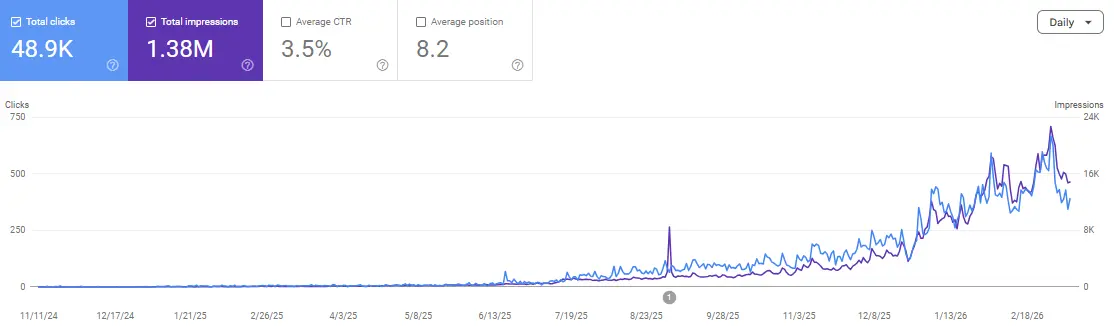
Programmatic SEO (pSEO) carries immense structural risk. A flawed setup can demote your entire domain, not just the newly generated pages. This danger stems from a single flaw: publishing thousands of pages that lack genuine, unique value. However, if you understand why search engines flag scaled content and build rigorous structural safeguards, you can scale traffic safely without risking your domain authority.
If you are weighing whether a programmatic project is worth the risk for your site, join the Scale-Xpert community on Discord. You can connect with practitioners sharing real outcomes, live traffic wins, search penalties, and advanced backlink strategies.
Why Programmatic SEO Is Inherently Risky
The core engine of pSEO creates a dangerous paradox. The exact database technique that produces thousands of highly useful pages can just as easily generate thousands of worthless ones. Search engines struggle to differentiate your intent based purely on raw output.
The Practitioner Perspective
Industry experts, including prominent practitioners like Lily Ray, openly emphasize these operational dangers. In deep-dive industry panels, Ray notes that programmatic executions inherently carry high risk. Google frequently views large-scale page generation as an attempt to manipulate search results for rapid traffic gains or ad revenue. This skepticism forms the default baseline for how modern search algorithms handle massive site updates.
The Presumption of Manipulation
When a domain suddenly indexes thousands of templated URLs, search systems treat the spike as a quality red flag by default. The burden of proof rests entirely on the publisher. You must actively demonstrate utility through robust user engagement metrics and proprietary data points. Simply ensuring your pages are technically unique does not guarantee search engines will value them.
Crucial Context: To safeguard your domain, you must first master the baseline execution mechanics. Review our foundational guide on what programmatic SEO is and how it works to map these algorithm risks directly to your structural codebase.
Decoding Google’s Scaled Content Policies
Google does not explicitly ban automated page generation. However, its core spam guidelines directly target the structural shortcuts that web developers often take during a programmatic launch.
       [Database Scale] ───► Creates 10,000+ Templated Pages
                                     │
             ┌───────────────────────┴───────────────────────┐
             ▼                                               ▼
   [Rank Manipulation Intent]                     [Genuine User Utility]
  • Zero proprietary data                        • High-intent unique datasets
  • Repetitive text logic                        • Contextual user value
             │                                               │
             ▼                                               ▼
  ⚠️ SCALED CONTENT PENALTY                       ✅ SAFE INDEXING & RANKING
The Scaled Content Abuse Framework
Google’s spam guidelines explicitly target scaled content abuse. This policy penalizes creators who generate large volumes of pages primarily to manipulate search visibility rather than serve human users. The algorithm evaluates the final value and intent of the page, regardless of whether automation, AI tools, or human writers built it.
Automation Is Not the Enemy
Search engines do not penalize automation itself. AI-assisted development pipelines remain perfectly acceptable if the final pages offer clear, high-quality utility. The violation triggers only when your core objective shifts from helping users to gaming search algorithms.
How Search Engines Infer Value
Since search systems cannot read your design briefs, they analyze observable behavioral signals:
-
Presence of substantial, proprietary data points.
-
Strong user retention metrics vs. instant bounces.
-
Unique information layers missing from competitive domains.
-
Clear structural trust signals across the entire site architecture.
Focusing heavily on these technical metrics determines whether algorithms flag your directory or reward your scaling efforts. This aligns perfectly with the core principles of creating genuinely SEO-friendly content.
The Three Most Common Programmatic Failures
                    ┌───────────────────────────────┐
                    │  Top 3 Programmatic Failures  │
                    └───────────────┬───────────────┘
                                    │
         ┌──────────────────────────┼──────────────────────────┐
         ▼                          ▼                          ▼
   [Thin Substance]          [Near-Duplicates]         [AI Overview Risk]
 Swapping single words     Cannibalizing internal    Replicating simple facts
 across static blocks.     keyword equity.           that AI answers directly.
1. Thin Content Triggers
The absolute quickest way to tank a domain is to deploy pages that swap out a single variable (like a city name) across large blocks of static text. Search quality systems easily catch these repetitive text blocks. Thin pages lack original data and offer zero reason for a visitor to stay, creating negative engagement signals that trigger algorithmic demotions.
2. Internal Cannibalization
When database logic yields pages that are too structurally similar, search engines treat them as duplicate content. They will index only a single variant or drop the entire cluster from search results completely. This layout dilutes your overall crawl budget. It also triggers severe keyword cannibalization, forcing your own pages to fight each other and tanking your overall organic performance.
3. Redundancy Against AI Overviews
The rapid expansion of AI Overviews changes the scaling calculation entirely. Search engines no longer need thousands of basic programmatic lookup pages for simple facts or area codes. If your templates only output information that an AI Overview can generate instantly at the top of the search page, you provide no real incentive for organic clicks.
The Realities of Site-Wide Demotions
Flawed programmatic plays rarely stay isolated. The resulting traffic losses can cripple your entire digital business.
Systemic Domain Penalties
Low-value directories regularly drag down healthy, hand-written content sections. Search engines assess quality across your entire domain. When a massive percentage of your URL footprint consists of thin, programmatic text, your site-wide quality score plummets.
Documented Core Update Traffic Hits
Following recent core algorithm updates, countless domains built on raw data scraping lost over 80% of their organic footprint. Industry data from leading analytics platforms highlights a clear trend: sites that prioritize indexing velocity over content depth face severe visibility losses.
The Long Road to Recovery
Algorithmic quality penalties do not resolve via quick manual reconsideration requests. You must manually audit your databases, delete low-value directories, and completely rewrite your page logic. Afterward, you must wait through multiple core algorithm updates for potential recovery, which often takes months with no guarantees.
Technical Safeguards: Injecting Original Value
To run a safe, successful project, you must build unique database features that add genuine depth to the web.
-
Integrate Proprietary Data: Never rely solely on public APIs that your competitors use. Mix in internal user metrics, custom surveys, or unique real-time pricing feeds.
-
Design for Human Actions: Ensure every URL provides immediate utility. Build interactive calculators, dynamic comparison tools, or localized search filters that help users execute tasks easily.
-
Create Interpretive Context: Raw tables are highly vulnerable to AI automation. Surround your structured data with human analysis, trend insights, and clear visual graphs.
-
Test Small Before Mass Deployment: Launch a ring-fenced pilot of 50 to 100 pages first. Track how search engine bots crawl, index, and rank this test batch before opening your entire database to the web. This step-by-step approach forms the foundation of a resilient SEO strategy for long-term growth.
Pre-Launch Risk Assessment Checklist
Run your development plans through this structural filter before updating your live sitemaps:
| Audit Question | Risk Focus | Action if Negative |
| Does each page contain unique data missing from public search results? | Core Spam Risk | Handoff to data engineering for custom data enrichment. |
| Will a real human find this specific page layout genuinely helpful? | User Retention | Redesign UI components to add practical tools and calculators. |
| Does the keyword pattern stem from verified search demand? | Crawl Efficiency | Prune programmatic paths that target low-intent keywords. |
| Can an AI Overview answer the query instantly on the search page? | Long-Term ROI | Pivot targeting toward complex, multi-variable user intents. |
| Do you have the engineering resources to maintain data accuracy? | Domain Trust | Implement automated cron-jobs to refresh stale database tables. |
Frequently Asked Questions
Can programmatic errors penalize my entire domain?
Yes. Quality algorithms evaluate your entire site layout. If a massive directory of thin programmatic pages ruins your overall quality balance, search engines will demote your highly valuable, hand-written pages too.
Does using AI in a pSEO pipeline violate webmaster guidelines?
No. Using AI or developer automation is perfectly safe if the final output offers unique value to real people. The penalty risk comes from scaling low-value, repetitive pages purely to manipulate search engine results.
How do I know if my automated layout is considered thin content?
Use the human utility test. If a real user gains no extra value compared to a standard search snippet, your pages are structurally thin. Watch for high bounce rates and low indexing rates in your search console dashboards.
What is the safest deployment cadence for a new programmatic database?
Avoid indexing 10,000 pages overnight. Deploy a ring-fenced test batch of 50 to 100 pages, monitor indexing health and user behaviors for a month, and expand your database footprint only after validating performance.
Conclusion
Programmatic architecture is a neutral, powerful tool. Deployed carelessly, it scales thin content and triggers major site penalties. Executed precisely with proprietary datasets and deep contextual value, it drives exceptional organic growth.
Protecting your overall domain authority is always more valuable than chasing quick traffic loops with risky pages. Build your platforms to create highly linkable pages that attract backlinks naturally.
To workshop your technical database layouts and pressure-test your programmatic infrastructure with experienced SEO engineers, join the Scale-Xpert Discord community. Let’s review your configurations before you open up your sitemaps to live search engine crawlers.