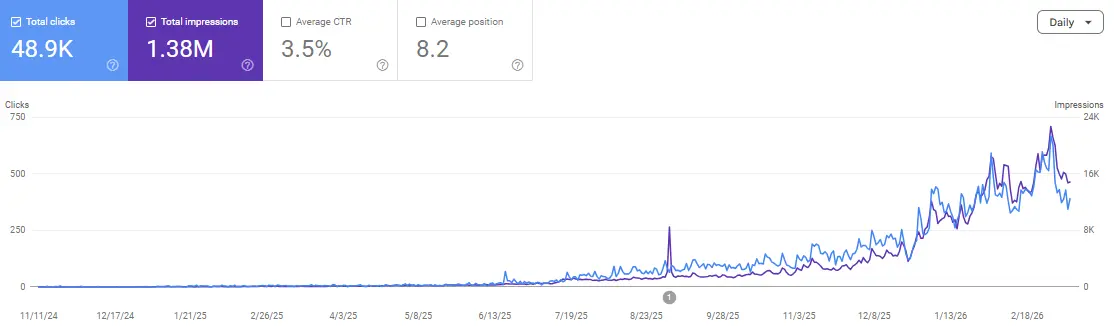
Optimizing for Navboost means building pages that generate good clicks. You also want to generate lastLongestClicks at a higher rate than competitors. This tactical framework comes from three converging sources. First, Google confirmed this behavior through DOJ testimony and API documentation. Second, Alejandro Meyerhans shared insights about on-page optimization acting as a ranking multiplier. Third, GA4 engagement data reveals measurable patterns that proxy what Navboost measures.
This guide covers specific on-page improvements that move click signal quality. We will explore how to audit your pages for content effort signals. You will also learn a six-step Navboost checklist for high-value pages. Finally, we explain how link building connects to Navboost uniquely.
If you want to work through this framework alongside other practitioners, join the Scale Xpert Discord community. It is an excellent hub for SEO learning and genuine backlink exchange.
The On-Page Multiplier Framework
Alejandro Meyerhans shared an actionable insight on The Edward Show. He introduced the “on-page multiplier” concept. If a page is highly refined, you need fewer backlinks to achieve top rankings. This refinement includes strong structured data, clear headings, and expert sourcing. Mediocre pages simply require more links to achieve the same result.
Navboost is the mechanism behind this powerful effect. A highly refined page generates better click signals from every impression. Consequently, Navboost reinforces its ranking strongly with each interaction. Conversely, a weak page generates mediocre signals. It needs more total impressions to accumulate positive ranking factors.
Sequence Your Efforts
The sequence of your optimization effort matters greatly. Meyerhans advises making high-value pages extremely sharp before chasing links. A backlink pointing to a poor page generates minimal Navboost benefit. The link drives traffic, but bad page quality yields mediocre click signals.
This logic makes topical authority and backlinks a sequenced strategy. Build page quality first to convert impressions into good clicks. Only then should you invest in link building.
Meyerhans identifies six elements of a highly refined page. These inputs drive the on-page multiplier. They include structured data, clear headings, expert sourcing, and answer-first openings. Specific factual content and fast technical performance complete the list. You can audit and improve each element individually.
Structured data contributes to Navboost through two indirect mechanisms. First, schema markup improves your click-through rate (CTR). It enables rich results that make snippets visually distinctive. Results with star ratings or FAQ expansions earn more clicks. This generates more raw click events for Navboost to evaluate.
Second, schema contributes directly to Glue signals. Glue is Navboost’s companion system for rich SERP features. Pages generating engaged rich result interactions produce positive Glue signals. This reinforces their ongoing appearance in rich features.
High-Impact Schema Types
Certain schema types offer the highest impact for search performance. FAQPage schema generates search result expansions that boost CTR. HowTo schema provides step-preview results that pre-qualify clicks nicely. Article schema with dateModified signals crucial content freshness. Finally, AggregateRating schema significantly increases CTR and reduces bad click probabilities.
Prioritize FAQPage schema for immediate Navboost optimization. Apply it to any page with an existing FAQ section. It directly increases CTR while providing structured content for Glue evaluation.
Our guide to schema markup types for rich results covers full implementation details.
Element 2: Heading Hierarchy That Guides Click Patterns
Your heading structure heavily influences whether users stay or bounce. Users scan H1 through H3 tags before committing to reading. A clear, logical hierarchy previews your content organization effectively. This reduces the cognitive uncertainty that causes early bad clicks.
An optimized heading structure has three main characteristics. First, each heading must be specific and declarative. “How Navboost Uses Click Data” is a strong, declarative H2. “Understanding Navboost” is vague and unhelpful. Specific headings tell users exactly what to expect.
Structuring for Engagement
Second, the heading sequence must follow a logical flow. Move from broad framing to progressively specific details. Do not jump erratically between levels of abstraction. Third, use H3s to subdivide larger sections into answerable sub-questions. This creates multiple engagement opportunities for readers.
Conduct a heading audit for your high-value pages today. Review each H2 and H3 critically. Does it specify what the user will learn? Or is it just a generic label? Rewrite vague categories into specific declarative headings immediately.
Element 3: Expert Sourcing and Authority Signals
Content featuring named experts and specific citations generates superior click signals. These authority signals interact positively with Navboost mechanisms.
Expert sourcing instantly increases perceived credibility. Users arriving from search results evaluate your trustworthiness immediately. Pages citing specific studies and domain experts prevent early bounce rates. This is especially critical for YMYL (Your Money or Life) topics.
Driving Longer Engagement
Additionally, expert sourcing actively increases engagement time. A reader seeing a specific DOJ trial reference knows it is verifiable. They often slow down to process the attribution carefully. Vague phrases like “Google confirmed” do not command the same attention.
Verifiable claims generate slower, highly engaged reading patterns. This contributes directly to valuable lastLongestClick signals.
Expert sourcing differs from backlinks, but they share a core principle. A backlink signals that your content is worth referencing. An internal expert citation signals that your content is well-grounded. Together, they create a trust stack that improves click signals.
Element 4: Answer-First Section Openings
Answer-first formatting is the best way to reduce bad clicks. It simultaneously improves your AI citation probability. Start every H2 and H3 section with a direct answer. Place this answer within the first two sentences.
This structure works by providing immediate intent confirmation. Users need to verify they found the right page within seconds. An answer-first opening gives them exactly what they want instantly. It removes the need to wade through heavy background context.
Reducing Pogo-Sticking
If the answer satisfies them, they stay to read supporting details. If not, they easily scan to the next section instead of leaving. This drastically reduces your pogo-stick probability.
The elaboration following the answer drives further engagement. Context, examples, and nuances provide progressive depth. This depth is what generates lastLongestClicks. Satisfied users leave with a short good click. Deep researchers stay to read comprehensively.
Rewrite sections that currently bury answers in long paragraphs. This is often your highest-leverage edit for Navboost improvement. Read what BLUF means and how it helps AI search for the complete theoretical framework.
Element 5: Content Effort Audit for LLM Evaluation
Google uses LLMs to evaluate “content effort” and informational gain. This explains why technically sound but thin content fails today. It simply cannot generate good click signals without unique value.
Running the Audit
The content effort audit asks one vital question. Does this section add original information missing from the top five results? Or does it merely recombine existing facts? Unoriginal sections severely disappoint users arriving from competitive SERPs. They generate bad clicks when visitors leave to find better sources.
Follow three steps to run a content effort audit. First, search your target query and analyze the top five results. Second, identify which claims on your page are truly unique. Note which facts are just repeated from competitors.
Third, upgrade the claims that appear across multiple competing pages. Add original data, specific examples, or unique practitioner insights. If a section cannot be made unique, cut it entirely.
Generating Unicorn Clicks
The sections surviving this audit drive excellent engagement. Users finding fresh information have a strong reason to stay. This depth is exactly what generates unicorn clicks.
Content effort connects deeply to modern SEO strategy. Learn why deep content matters in the AI search era and how to create non-commodity content. Both systems reward genuine informational value.
Element 6: Technical Performance
Technical performance forms the infrastructure of your click signals. Page speed and Core Web Vitals dictate whether users experience your quality. A brilliant page still generates bad clicks if it loads slowly. Users simply abandon it before the content renders.
Two metrics heavily influence bad click rates. Largest Contentful Paint (LCP) measures how fast main content appears. Interaction to Next Paint (INP) measures page responsiveness. An LCP above four seconds creates a massive bad click window. An INP above 500 milliseconds creates frustrating interaction friction.
Mobile-First Optimization
Prioritize mobile performance for Navboost optimization. Google’s mobile-first indexing relies primarily on mobile Navboost signals. Excellent desktop speed cannot save a slow mobile experience. You will still accumulate bad clicks from the majority of users.
Use PageSpeed Insights to audit your top five pages. Focus strictly on the mobile report data. Pages scoring below 50 suffer from severe technical issues. Fix these before investing in further content improvements.
This prioritized checklist provides a systematic audit process for high-value pages.
-
Step 1: Pull GA4 engagement and Search Console CTR data. Determine if the issue is low CTR or high bounce rate. This dictates your priority focus.
-
Step 2: Audit the title tag and meta description. Ensure it uses specific, declarative language. For low CTR pages, apply title tag optimization formulas immediately.
-
Step 3: Check mobile performance via PageSpeed Insights. If mobile LCP exceeds 2.5 seconds, fix the speed first. Slow loading ruins all subsequent content improvements.
-
Step 4: Review the first screen on a mobile device. Ensure visible content confirms relevance instantly. Apply answer-first formatting to the opening paragraph.
-
Step 5: Run the content effort audit on every H2. Add original data or specific insights to generic sections. Differentiate your content from the top five SERP competitors.
-
Step 6: Validate your structured data implementation. Verify FAQPage and Article schemas are present and accurate. Use the Rich Results Test to confirm technical validity.
Link building strategies must account for Navboost mechanics. Meyerhans advises building a complete link graph rather than isolated links. This relates directly to impression volume and click signal accumulation.
Moving from position eight to position three triples your impressions. Position eight gets about two percent of clicks. Position three receives roughly ten percent. This jump generates far more clicks and Navboost data points. Consequently, it refines your ranking with much greater signal strength.
The Compounding Effect
This creates a powerful compounding relationship. Backlinks pointing to highly refined pages yield massive Navboost benefits. These pages convert increased traffic into lastLongestClicks efficiently. Unrefined pages waste those new impressions on bad clicks.
Focus on high-authority, relevant link sources. Avoid high volumes of low-quality guest posts. A strong link increases rankings enough to boost impression volume meaningfully. A weak link provides marginal gains that barely affect click accumulation.
Our guide on how to build backlinks using free methods provides excellent context. It helps prioritize acquisitions that maximize click signals and ranking impact.
Navboost signals are invisible in standard SEO tools. Therefore, you must monitor proxy metrics that reflect click signal quality.
Check Search Console for average position and CTR shifts. An improving CTR at the same position is a great sign. It means more users are clicking, generating positive Navboost data.
Review GA4 engagement time and bounce rate for organic traffic. Improving engagement time indicates your page experience is working. A declining bounce rate shows you are reducing bad clicks effectively.
Track ranking positions over a 90-day window. Navboost operates on a 13-month rolling data cycle. Therefore, ranking shifts manifest over weeks or months, not days.
Read our guide to using GA4 for SEO for specific report configurations. It helps integrate organic engagement data into your regular workflow.
Frequently Asked Questions
What is the on-page multiplier concept?
It is a framework connecting on-page quality to backlink needs. Highly refined pages generate better click signals per impression. Navboost rewards this by requiring fewer backlinks to maintain rankings. Poorly refined pages demand more links to compensate for weak signals.
How does content effort affect rankings?
Google’s LLMs evaluate if content offers original informational gain. Low-effort content just recombines existing facts, causing bad clicks. High-effort content provides unique insights, generating good clicks. This effort directly dictates your Navboost click signal quality.
Bounce rate is the best proxy for bad click patterns. Average engagement time reflects the depth of good clicks. Finally, returning user rates indicate high satisfaction and brand trust.
In what order should I prioritize optimizations?
Fix technical performance first to stop immediate abandonment. Next, fix title tags to prevent expectation mismatches. Then, apply answer-first formatting and run a content effort audit. Finally, validate schema and improve internal linking.
Navboost uses a 13-month rolling data window. Ranking improvements usually manifest within four to eight weeks. Full reflection takes longer as current good clicks replace historical bad data.
Backlinks increase rankings and impression volume. This generates more click data for Navboost. Refined pages convert these impressions into compounding positive signals. Investing in page quality maximizes the Navboost return of every backlink.
Conclusion
Navboost optimization is deeply tied to content quality. It proves that excellent user experiences directly produce ranking signals. The on-page multiplier framework clarifies optimization priorities clearly.
Refined pages maximize the value of every new backlink. Unrefined pages simply waste backlinks on mediocre click signals. The content effort audit explains why original content always wins. Users finding unique information generate highly valuable unicorn clicks. Build pages that deserve good clicks, and rankings will follow.
Connect with practitioners working through these optimizations today. Join Scale Xpert on Discord for SEO learning and backlink exchange.