A strong backlink profile can move your site from page three of Google to page one, but you do not need a big budget to get there. When you learn how to build backlinks with free, repeatable methods, you can grow your traffic steadily without paying for links or pricey tools.
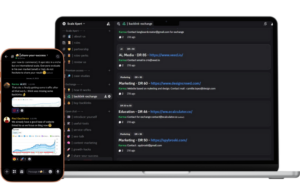
Want to build backlinks faster without spending money or doing cold outreach alone? Join our backlink exchange community and connect with us
Below, you will find practical, low cost ways to earn backlinks, plus simple habits to keep your link profile healthy over time.
Understand What Backlinks Really Do
Backlinks, also called inbound links, are hyperlinks from another website to yours. Search engines treat them like votes of confidence. If reputable sites link to your content, it signals that your pages are useful and trustworthy.
Quality matters more than quantity. A handful of links from topically relevant, authoritative websites will help you far more than hundreds of random directory links. Search engines look at:
- Relevance, how closely the linking site and page relate to your topic
- Authority, how trusted and established the linking domain is
- Placement, links in the main body content carry more weight than those in footers or sidebars
- Anchor text, the clickable words that should be descriptive but not stuffed with exact match keywords
You can think of link building like academic citations. The best citations come from respected sources that genuinely engage with your work, not from low quality publications that list everyone for a fee.
Set Up A Simple Backlink Baseline
Before you start building links, you need a clear baseline. This helps you see progress and catch problems like spammy links.
You can use free or freemium tools to do this. Moz Link Explorer, for example, lets you look at your existing backlink profile, see which domains link to you, and review basic metrics like Domain Authority or DA. You can also compare your site with competitors to spot gaps and opportunities.
Create a short baseline report with:
- Your current DA and the DA range of your main competitors
- The number of referring domains, unique websites linking to you
- Your top linked pages
- Any obvious toxic or irrelevant links that may need disavowing later
Save this as a simple spreadsheet. You will update it every month or quarter to track how your free backlink efforts are working.
Lay The Groundwork With Linkable Assets
If you want people to link to you, you need content that genuinely deserves links. These are often called linkable assets, and you can create them without spending money.
Pick Formats People Naturally Reference
Certain types of content attract backlinks more easily because they solve a clear problem or consolidate information. For example:
- In depth guides and tutorials that become a go to reference
- Research summaries, original data, or strong curated data with clear sources
- Checklists, templates, or calculators that save time
- Evergreen explainers that clarify tricky topics in your niche
The research you create or curate can later feed into digital PR pitches and resource page outreach. Mailchimp notes that long form guides and infographics are particularly effective link worthy assets for small businesses.
Plan Content With Links In Mind
When you plan new articles or resources, ask a few simple questions:
- Would another site owner in my niche be happy to send their audience here as a useful resource
- Does this page answer a specific question better or more clearly than what already exists
- Can I add data, visuals, or step by step instructions that competitors do not provide
If the answer is yes, you are on the right track. Publish these assets in a clear, easy to navigate structure on your site so they are simple to reference.
Use Guest Posting Strategically And For Free
Guest posting is one of the most straightforward ways to build backlinks when you have more time than budget. You contribute useful content to another website, and in return you usually receive a byline link and sometimes a contextual link inside the article.
Find Relevant Sites That Accept Contributions
Look for niche relevant websites that:
- Publish content similar to yours
- Have a real audience and organic traffic
- Show a reasonable backlink profile and DA using tools like Moz Link Explorer
You can search in Google for combinations like:
- “[your topic] write for us”
- “[your niche] guest post guidelines”
- “[your industry] contributor”
Review each site manually. Avoid blogs that exist only to sell links or that publish anything with minimal editing. High quality guest posting involves adhering to content standards and being prepared for potential link removal if you do not meet expectations. You can also explore guest posting in SEO
Pitch Ideas That Fill A Gap
Before you email an editor, read several of their recent posts. Note the topics they cover often and any gaps you could fill.
Then write a short, specific pitch that includes:
- One or two headline ideas tailored to their audience
- A 2 to 3 sentence outline for each idea
- A link to a strong sample of your writing
Mention how your article will add value rather than focusing on the link you want. Since digital PR and guest posting rely on trust, a concise, credible pitch goes much further than a generic template.
Want to skip the struggle of finding quality backlink partners? Join our community where members actively exchange backlinks and share real opportunities
Earn Links With Broken Link Building
Broken link building sounds technical, but at its core, it is a simple trade. You find broken links on other sites, offer your working content as a replacement, and both sides benefit.
Step 1: Find Broken Links On Relevant Pages
Use search operators in Google to locate resource pages or blog posts in your niche. For example:
- “best resources for [your topic]”
- “[your niche] useful links”
- “inurl:resources [your keyword]”
Visit these pages and use a browser extension or online checker to identify broken outbound links. You are looking for 404 errors or pages that no longer exist.
Step 2: Match Or Create A Replacement Resource
If you already have content that covers the same topic as the dead link, perfect. If not, you can create a focused, evergreen piece that serves a similar purpose. Remember, the replacement should genuinely help the site’s readers. You can also learn more about broken link building
Then send a polite, brief email explaining:
- You found a broken link on their page
- Where it appears and what it points to
- That you have a relevant, working replacement they might consider
You are not demanding a link. You are helping them fix an issue and offering a convenient alternative.
Turn Unlinked Mentions Into Backlinks
As your brand grows, you may be mentioned in articles, roundups, or forum posts without a link. These unlinked brand mentions are low friction opportunities because the author already knows and trusts you.
Step 1: Discover Where You Are Mentioned
You can use Google search operators and alerts to monitor your brand name, product names, or key phrases. For example:
- Search for your brand in quotes to find pages that mention you
- Set up Google Alerts for “[your brand] + review” or “[your brand] + tutorial”
Some SEO tools also surface unlinked brand mentions, but you can start for free with manual searches.
Step 2: Request A Simple Link Update
When you find a mention that is not linked, reach out and thank the author for including you. Then ask, in one or two sentences, if they would consider adding a link to help their readers find you more easily.
Because they have already chosen to reference you, many site owners are happy to update the article. Over time, this can add several high quality backlinks with very little extra work.
Get Listed On Relevant Directories And Resource Pages
Not all directories are helpful, but a selective approach can earn you solid, free backlinks.
Focus on:
- Niche specific directories related to your industry
- Local business directories with real editorial standards
- Professional associations or membership pages
- Curated resource lists that are actually maintained
Avoid spammy directories that accept any site instantly or that require payment for inclusion just to pass PageRank. Quality backlinks from relevant, authoritative websites carry more SEO weight than many low quality directory links.
When you submit your site, write a clear, concise description and choose the most relevant category. Keep track of where you submit in your backlog or spreadsheet so you can follow up later if needed.
Use Digital PR Without A Big Budget
Digital PR is often associated with agencies and press releases, but you can use the same principles on your own. The goal is to earn media coverage and authoritative mentions by sharing stories, data, or insights that journalists find useful.
Create Simple, Newsworthy Hooks
You do not need a massive dataset to be newsworthy. You might:
- Run a small survey in your audience and summarize the results
- Analyze anonymized usage data or trends from your product
- Compile a seasonal guide or prediction based on your expertise
The key is to be transparent about your methodology and to tie your story to a timely angle. Seasonality matters here. Journalists are more likely to cover topics when they are already on the public agenda.
Pitch Concisely And Clearly
When you contact journalists or bloggers:
- Open with one or two lines summarizing your story or data
- Explain why it is relevant now
- Include a link to your full resource or report on your own site
Avoid attachments, and keep your email short and factual. If your content is strong and accessible, writers are more inclined to quote you and link back as their source.
Build Real Relationships, Not Just Links
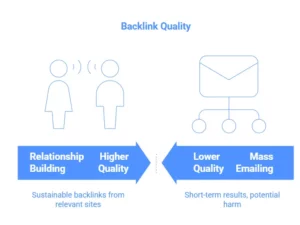
Many beginner link builders send mass emails and hope a few links appear. This might work in the short term, but long term, you will get more and better backlinks by investing in relationships.
You can:
- Comment thoughtfully on articles in your niche
- Share and genuinely engage with others on social media
- Join industry communities and answer questions in depth
When you understand another site owner’s audience and goals, you can offer targeted value, such as a guest post that fills a gap, a co hosted webinar, or joint research. These partnerships tend to result in higher quality, more sustainable backlinks than one off link swaps.
Quality backlinks from relevant, authoritative websites carry far more SEO weight than a large number of low quality links. Buying links or accepting irrelevant backlinks can even harm your rankings, so it is worth building patiently.
Monitor And Maintain Your Backlink Profile
As you gain more backlinks, you must also monitor their quality. Using tools like Moz’s Link Explorer, you can:
- Track new backlinks and referring domains over time
- Identify unusual spikes that might indicate spam
- Review anchor text patterns to avoid over optimized, repetitive phrases
- Spot toxic or spammy backlinks that you may need to disavow
Set a simple schedule to review your backlinks, such as:
- Once per month if you are actively building links
- Once per quarter if your efforts are slower
This steady maintenance helps you preserve a natural link profile that supports your rankings instead of risking penalties.
Put Your Free Backlink Plan Into Action
To keep things manageable, focus on a small set of free strategies and do them consistently. For example, over the next three months you might:
1. Create one strong linkable asset, such as an in depth guide or tool.
2. Publish one or two guest posts on niche relevant sites.
3. Run a monthly broken link review on a handful of resource pages.
4. Check for new unlinked mentions and request links.
By treating link building as an ongoing practice instead of a one time campaign, you will gradually build a healthier backlink profile. You will also learn which methods work best for your niche so you can invest your time where it has the greatest impact.
You do not need a large budget to learn how to build backlinks effectively. You need clear goals, link worthy content, and simple, repeatable habits that prioritize relevance and quality over shortcuts.
FAQs
1. How long does it take to see results from backlink building?
It typically takes 1 to 3 months to see early movement and 3 to 6 months for stronger results depending on your niche.
2. Are free backlink strategies really effective?
Yes, free strategies can be highly effective if you focus on quality and consistency rather than volume.
3. What is the safest way to build backlinks?
The safest methods include guest posting, digital PR, and earning links through high quality content.
4. How many backlinks should I build per month?
It depends on your competition, but consistency is more important than hitting a specific number.
5. Can I rank without backlinks?
It is possible in low competition niches, but backlinks are still one of the strongest ranking factors.
6. What should I avoid in link building?
Avoid spammy directories, paid link schemes, and irrelevant backlinks that can harm your SEO.
Ready to build backlinks consistently and connect with real website owners? Join our backlink exchange community and start growing your SEO the smart way
Conclusion
Building backlinks with free methods is not about shortcuts, but about consistency and strategy. When you focus on creating valuable content, building relationships, and applying repeatable systems like guest posting and broken link building, your backlink profile will grow naturally over time.