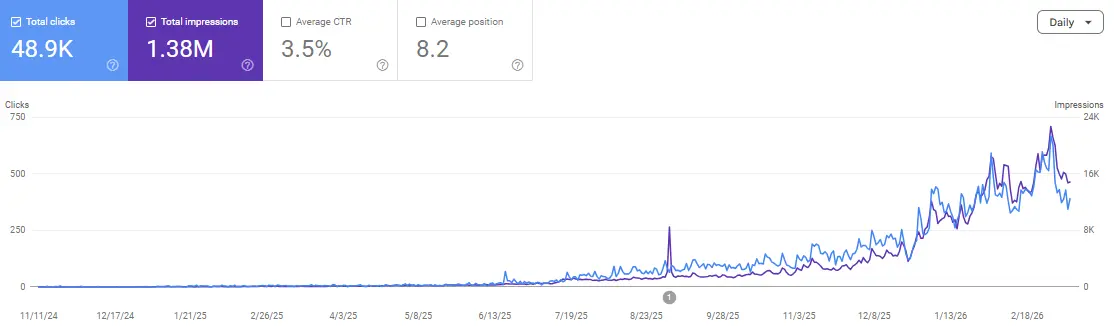
A few years ago, you focused your SEO efforts almost entirely on blue links in Google. Now, your potential visitors are also getting answers from ChatGPT, Google Gemini, AI Overviews, Perplexity, and other generative engines. Generative Engine Optimization (GEO) is how you position your site so these AI tools actually cite you, send traffic, and recommend your brand.
If you’re starting to explore this shift, you’ll notice many SEO practitioners are already sharing experiments, testing visibility inside AI tools, and even collaborating behind the scenes. Some of those discussions happen in smaller circles, like this SEO-focused Discord community, where people exchange insights and opportunities more organically.
In this guide, you will learn what generative engine optimization is, how it compares to traditional SEO, and what practical steps you can take right now to prepare your site for AI-driven search.
Understand What Generative Engine Optimization Is
Generative engine optimization is the practice of making your content easy for generative AI systems to find, understand, and reuse in their answers. Instead of only chasing rankings in search results, you also optimize to be mentioned inside AI responses.
As a beginner, it helps to see GEO as an extension of your existing SEO foundation. If you’re still building that base, understanding concepts like what is SEO content will give you the clarity needed before layering AI-focused strategies on top.
In practical terms, GEO means structuring content so large language models can easily interpret it. You are still targeting user intent, but you are also aligning with how AI understands entities, relationships, and authority.
See How GEO Differs From Traditional SEO
There is strong overlap between GEO and traditional SEO, but the goals shift slightly.
Traditional SEO focuses on:
- Ranking higher in search results
- Increasing clicks from blue links
- Building backlinks and authority
Meanwhile, GEO focuses on:
- Being cited inside AI-generated answers
- Becoming a trusted source AI tools quote
- Increasing recommendation frequency
This shift changes how you measure success. Instead of only tracking traffic, you also track visibility inside AI responses.
To support both strategies, your off-page signals still matter. For example, understanding how search engines evaluate backlinks becomes even more important, because AI engines often rely on authority signals from across the web not just your site.
Learn How Generative Engines Choose What To Show
If your goal is to be cited, you need to understand how AI decides what to include.
Different engines prioritize different signals, such as:
- Mentions in authoritative lists
- Reviews and ratings
- Social sentiment
- Brand authority and consistency
For instance, some engines rely heavily on aggregated sources like directories and review platforms, while others lean toward structured web content and domain authority.
Because of this, GEO is not just about your website. It also includes your broader digital presence.
Align GEO With Classic SEO Best Practices
You do not need to abandon traditional SEO. In fact, GEO works best when built on strong fundamentals.
You should still:
- Maintain clean site structure
- Optimize titles and meta descriptions
- Improve page speed and UX
- Use internal linking strategically
If you want to strengthen that foundation, revisiting a structured approach like this beginner SEO guide can help align your basics before scaling into GEO.
The difference now is intentional formatting. Your content must be easy to extract, summarize, and quote.
Create AI-Friendly Content That Earns Mentions
This is where GEO becomes actionable.
Start With Definition-First Answers
AI prefers clear, concise definitions. Opening with a strong explanation increases your chances of being quoted directly.
Use Question-Based Headings
Structure your headings like real queries:
- What is generative engine optimization?
- How does GEO increase traffic?
This aligns your content with how users interact with AI tools.
Structure Content For Easy Extraction
AI favors structured clarity. Use:
- Short paragraphs
- Logical headings
- Lists and summaries
Here’s a quick comparison:
| Aspect | Traditional SEO | GEO Focus |
|---|---|---|
| Goal | Rank on SERPs | Be cited in AI answers |
| Metric | Traffic | Mentions & recommendations |
| Style | Keyword-focused | Question & intent-focused |
| Structure | Optimized for crawl | Optimized for extraction |
At this stage, many SEOs begin testing how their content appears inside AI tools. Interestingly, some even coordinate experiments or share wins in small groups often in spaces like this SEO networking Discord, where collaboration happens naturally.
Add Multimodal And Structured Elements
Generative engines are evolving beyond text.
To stay relevant, consider:
- Adding images with descriptive alt text
- Embedding short videos
- Using structured data (schema)
Schema types like:
- Article
- FAQ
- Product
…help AI understand your content more precisely.
Measure GEO Success Beyond Clicks
Traditional metrics are no longer enough.
You now also track:
- Brand mentions in AI responses
- Position inside generated answers
- Recommendation frequency
Instead of asking “How much traffic did I get?”, you also ask:
- “Am I being cited?”
- “Is my brand mentioned?”
This shift moves SEO closer to brand visibility and authority not just clicks.
Take First Steps Toward GEO On A Small Team
You do not need a large budget to start.
Begin with:
- Auditing existing content
- Improving structure and clarity
- Adding schema markup
- Strengthening authority signals
- Monitoring AI responses manually
Small, consistent improvements compound quickly in GEO.
Frequently Asked Questions
1. Is Generative Engine Optimization Replacing SEO?
No. GEO complements SEO. You still need strong fundamentals while expanding into AI visibility.
2. Which AI Platforms Should You Focus On?
ChatGPT, Google Gemini, AI Overviews, and Perplexity are currently the most influential.
3. How Is GEO Different From AEO?
GEO focuses on generative engines that synthesize answers, while AEO focuses on direct answer systems more broadly.
4. Do You Need Special Tools For GEO?
Not at the beginning. Start with structure, clarity, and content improvements.
5. What Content Works Best For GEO?
Clear, structured, question-driven content like guides, FAQs, and comparisons.
6. How Long Does GEO Take To Work?
Results vary, but expect gradual improvements as AI systems update and re-evaluate sources.
Conclusion
Generative engine optimization is not just another trendit is a shift in how visibility works.
As AI becomes a primary way people discover information, your success depends on whether these systems trust and reference your content.
By combining SEO fundamentals with GEO principles, you position your site to:
- Be cited in AI answers
- Gain authority beyond rankings
- Capture high-intent visibility
And if you prefer not to figure this out alone, there is real value in being part of conversations where people actively test strategies, share backlink opportunities, and exchange insights spaces like this growing SEO community where collaboration tends to open unexpected doors.
Because in this new landscape, visibility is no longer just about ranking it is about being part of the answer.