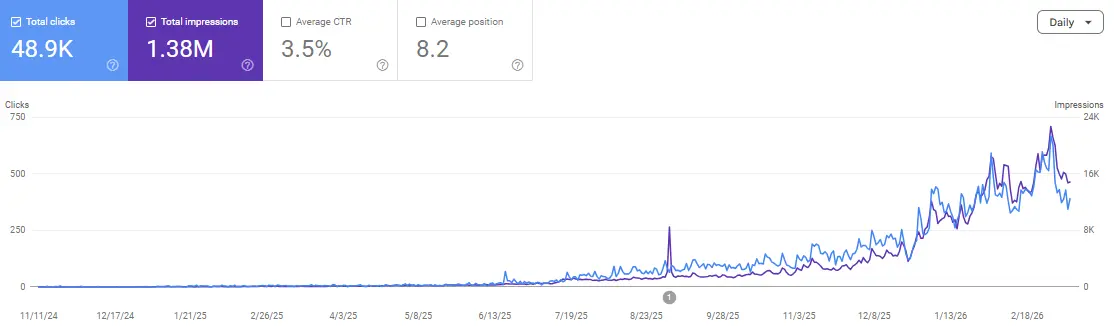
AI systems recommend brands they genuinely trust. This trust stems from specific signals extending far beyond basic content quality. ChatGPT, Perplexity, and Claude do not make random recommendations based on publishing volume. Instead, they run complex evaluations of brand authority.
These signals span branded search demand, off-site reputation, entity recognition, E-E-A-T credentials, and direct AI citation history. Content creation alone fails to generate AI recommendations today. Consistently cited brands build a robust signal stack. AI systems use this stack as verifiable evidence of genuine expertise and community trust.
This guide covers 12 brand authority signals organized into four measurable tiers. You will learn the core three signals driving compounding authority (tracked weekly). Next, we cover off-site signals building external credibility (tracked monthly). Then, we explore entity and E-E-A-T signals establishing AI-recognized expertise (tracked quarterly). Finally, we detail the AI-era direct measurement signal closing the loop. You will discover what each signal measures, why AI cares, and specific actions for improvement. Join Scale Xpert’s Discord community to discuss brand authority building. Compare your progress on specific signals with other SEO practitioners focused on genuine learning and quality backlink exchange.
The Brand Demand Flywheel: Why These Signals Compound
Understand how brand authority signals compound over time. This clarifies why investing in them produces accelerating, not linear, returns. The brand demand flywheel operates through a powerful reinforcing cycle.
First, strong brand authority signals increase AI recommendation frequency. These recommendations expose your brand to high-intent audiences. Consequently, that exposure drives branded search volume and direct site visits. These behavioral signals then strengthen your brand entity’s recognition. Google’s Knowledge Graph and AI training data absorb this behavioral data rapidly. Finally, this recognition increases AI recommendation confidence for future queries. Each signal actively feeds the others continuously.
This flywheel explains a vital 2026 trend. Brands gaining AI recommendation share fastest rarely possess the absolute best content. Instead, they boast the strongest brand authority signal stacks. Their signals compound into a self-reinforcing pattern that pure content quality cannot replicate.
Do not build all 12 signals simultaneously. Identify your current position in the signal stack first. Determine which tier’s signals appear weakest for your brand. Concentrate initial effort there before expanding sequentially to the next tier.
Tier 1: The Core Three Brand Signals (Track Weekly)
Tier 1 signals are foundational demand indicators. They reveal whether your brand has genuine community recognition. Investing in off-site or entity signals produces limited returns without these basics established first.
Signal 1: Branded Search Volume
Branded search volume is the total monthly search demand for your brand name and its close variations. It directly measures how many people know you exist and actively search for you.
-
Why AI systems care: AI systems associate high branded search volume with genuine market demand. Consistent, growing branded queries prove real users independently seek out your brand. This organic demand signal remains significantly harder to fake than content production volume.
-
How to measure it: Open Google Search Console. Navigate to the Performance Report and filter by your brand name queries. Track monthly query counts and click volumes. Utilize Google Keyword Planner or Ahrefs to track broader keyword trends over time.
-
How to improve it: PR coverage, social media presence, and community building drive this volume heavily. Frequent citations in AI recommendations push users to search your brand name. Read why entity mentions outrank backlinks in 2026 to understand this behavioral signal deeply.
Signal 2: Brand Co-Occurrence Queries
Co-occurrence queries combine your brand name with specific modifiers. Examples include problems, categories, use cases, or competitor names (e.g., “Scale Xpert vs Ahrefs”).
-
Why AI systems care: AI systems encounter web content consistently associating your brand with specific categories. They build a semantic entity model positioning your brand as a recognized player. Rich co-occurrence data positions your brand as a valid category participant.
-
How to measure it: Filter the GSC Performance Report to brand-inclusive queries. Sort by query to view all variations. Track the category terms and competitor names frequently co-occurring with your brand name.
-
How to improve it: Publish content naturally creating these desired associations. Comparison pages and use case landing pages generate perfect textual context for AI training. Earn reviews on category-specific platforms to amplify this signal organically.
Navigational searches are extremely high-intent queries. The user explicitly tries reaching your website or product function. Examples include “[brand] login” or “[brand] pricing.”
-
Why AI systems care: This behavioral signal proves users trust your brand explicitly. They seek it directly rather than searching for generic category solutions. AI systems recognize this pattern as an indicator of deep user confidence.
-
How to measure it: Filter GSC for brand queries containing terms like “login,” “pricing,” or “tutorial.” Volume and click-through rates here show active user engagement levels.
-
How to improve it: High navigational search volume stems from building a returning user base. Ensure these specific pages load fast and remain well-optimized. Master Google Search Console effectively for SEO monitoring to track all Tier 1 signals accurately.
Tier 2: Off-Site Authority Signals (Track Monthly)
Tier 2 signals establish your brand’s credibility and reputation externally. AI systems weight third-party validation heavily for authority assessments.
Signal 4: Backlink Quality (Editorial Citations)
AI authority focuses strictly on editorial citations from relevant sources, ignoring raw link counts. An editorial citation means a writer placed a link strictly because your content warranted it.
-
Why AI systems care: Editorial citations are the web’s clearest signal of peer recognition. The specific sources matter immensely here. Citations from high-authority industry publications contribute heavily to AI authority assessment.
-
How to measure it: Export your referring domains using Ahrefs or Semrush. Filter specifically for editorial link types. Track citation sources quarterly, monitoring for industry-leading publications.
-
How to improve it: Learn how to build backlinks with original data research. Original research and proprietary data earn the highest-quality editorial citations available.
Signal 5: Unlinked Brand Mentions
Unlinked mentions occur when your brand name appears online without a hyperlink. AI language models encounter your brand name contextually across sources, building a semantic model of your reputation instantly.
-
Why AI systems care: Frequent mentions in relevant reviews or news articles build a rich training footprint. AI systems use this contextual data to form confident recommendations. Mentions in authoritative contexts carry immense weight independently.
-
How to measure it: Set up Google Alerts for your brand name. Use tools like Brand24 or Ahrefs Content Explorer. Track mention volume and context quality monthly.
-
How to improve it: Convert unlinked mentions in authoritative publications into linked mentions via outreach. Discover how to find unlinked brand mentions for link building to execute this strategy.
Signal 6: Third-Party Reviews and Sentiment
Reviews on platforms like G2, Trustpilot, and Google Business Profile provide structured sentiment data. They represent pure user-generated validation from direct experience.
-
Why AI systems care: Review data is explicitly included in AI training datasets. Volume, recency, and average sentiment directly influence AI characterizations in recommendations.
-
How to measure it: Check your review profiles regularly across relevant platforms. Track your average rating, total review count, and review recency closely.
-
How to improve it: Implement a systematic review generation strategy for satisfied customers. Master Google Reviews strategy and how to get genuine reviews that help local rankings to build a sustainable profile.
Signal 7: Earned Media and Editorial Coverage
Earned media includes press coverage and expert interviews resulting from PR outreach. It creates high-authority unlinked and linked brand mentions simultaneously.
-
Why AI systems care: Editorial coverage from respected publications represents supreme third-party validation. It reflects independent journalistic judgment regarding your brand’s expertise.
-
How to measure it: Track earned media mentions in Google Alerts. Document the domain authority of publications covering your brand and track new placements monthly.
-
How to improve it: Data that journalists find newsworthy generates high-authority coverage naturally. Understand why digital PR outpaces guest posting for domain rating growth to execute effective campaigns.
Tier 3: Entity and E-E-A-T Signals (Track Quarterly)
Tier 3 signals address whether AI systems have formed a stable, accurate knowledge representation of your brand. These signals build slowly but remain incredibly durable.
Signal 8: Knowledge Graph Presence
Google’s Knowledge Graph is a massive database of entities and relationships. A brand with a presence here is recognized as a distinct real-world entity.
-
Why AI systems care: A distinct Knowledge Graph entity has passed Google’s strict recognition threshold. AI systems feel highly confident recommending brands with established, verifiable entity recognition.
-
How to measure it: Search your brand name in Google. Observe if a Knowledge Panel appears on the right side. Check if your website and social profiles link correctly within it.
-
How to improve it: Build an authoritative data foundation. Use consistent Organization schema on your website with accurate details. Read what schema markup is and how it works for SEO and AI search to implement this perfectly.
Signal 9: Entity Consistency
Entity consistency measures how uniform your brand’s information is across the entire web. Inconsistencies create confusion in AI entity models, severely reducing citation confidence.
-
Why AI systems care: AI synthesizes brand information from multiple sources. When sources agree on facts, recommendation confidence increases rapidly. Conflicting information forces AI systems to hedge their bets.
-
How to measure it: Manually audit your brand’s information across authoritative external sources quarterly. Check LinkedIn, Crunchbase, and industry directories against your website.
-
How to improve it: Create a master brand entity factsheet. Systematically update every authoritative web presence to match this canonical data exactly.
Signal 10: E-E-A-T Strength
E-E-A-T (Experience, Expertise, Authoritativeness, Trustworthiness) evaluates deep content quality. For brand authority, it ensures your collective expertise remains easily verifiable.
-
Why AI systems care: Content featuring verifiable named experts earns higher citation confidence instantly. Anonymous or non-credentialed sources score poorly, especially for YMYL topics.
-
How to measure it: Quarterly audit your content for named authors with specific credentials. Check if independent sources cite your research and verify editorial transparency policies.
-
How to improve it: Establish named expert authors with external references. Review the E-E-A-T for health content guide covering how to build medical authority AI systems trust for advanced tactics applicable to any niche.
Topic share of voice measures your brand’s visibility within specific categories. A brand dominating its core specialty is highly likely to receive AI recommendations.
-
Why AI systems care: A brand consistently providing comprehensive coverage develops massive topical authority. Niche specialists often receive more consistent AI recommendations than broad generalists.
-
How to measure it: Use Semrush to measure organic visibility specifically within core topic categories. Compare this visibility against primary competitors.
-
How to improve it: Utilize cluster architectures. Read topical authority and semantic SEO: how to build topic clusters that rank to build measurable topic share of voice.
Tier 4: The AI-Era Direct Signal (Track Monthly)
Tier 4 contains the direct measurement of your brand’s AI recommendation performance. This represents the ultimate outcome metric.
LLM citation rate shows how often AI systems recommend your brand for category-relevant questions. AI share of voice compares this frequency against specific competitors.
-
Why AI systems care: This signal measures whether AI systems already recommend you actively. A rising citation rate confirms AI systems recognize your Tier 1-3 authority signals.
-
How to measure it: Track citations across ChatGPT, Perplexity, and Claude monthly. Monitor your share of voice relative to primary competitors. Explore the best AI visibility tools guide for every budget for tracking solutions.
-
How to improve it: Publish original research and ensure answer-first content structures. Earn citations on third-party authoritative sources. Understand why RAG is the foundation of AI SEO visibility to master the technical extraction mechanisms.
The Priority Starting Point
The four-tier framework implies a natural progression, but your starting point depends entirely on your brand’s current stage.
Brands with low recognition must prioritize Tier 1 signals immediately. Investing in Tier 3 entity signals yields limited returns without meaningful branded search volume. Concentrate heavily on community building, social presence, and PR.
Established brands with weak off-site authority should focus tightly on Tier 2. Branded search proves market awareness, but AI systems demand external validation. Concentrate on digital PR, review generation, and original research.
Companies possessing strong Tier 1 and 2 signals but weak entity recognition must tackle Tier 3. Inconsistent entity information prevents AI systems from confidently recommending your brand. Focus on entity data consistency and Knowledge Graph presence.
Brands scoring well across Tiers 1 through 3 should target Tier 4. Run the AI visibility measurement process regularly. Apply targeted content interventions for specific gaps. Learn how AI search engines pick their sources across all major platforms to inform your specific Tier 4 interventions.
Frequently Asked Questions
Brand authority signals are measurable data points AI systems use for evaluation. They determine if a brand is trustworthy enough to recommend. These include behavioral signals, external credibility signals, and entity recognition. These signals compound dramatically over time.
No single signal dominates entirely. Branded search volume (Signal 1) is the most measurable leading indicator. AI systems interpret this as genuine market demand. Original research earning editorial citations produces the fastest direct improvements.
Tier 1 signals respond to marketing activity within weeks. Tier 2 signals build over two to six months of consistent PR. Tier 3 signals typically require six to eighteen months. Tier 4 improvements usually become measurable within 30 to 45 days of fixing earlier tiers.
Absolutely. Tier 1 signals build through community participation. Tier 2 relies on original research and systematic review generation rather than paid placements. Consistent execution over time matters far more than a massive budget.
Track the signals in their recommended cadences. Check Tier 1 weekly in GSC. Monitor Tier 2 monthly through backlink tools. Audit Tier 3 quarterly for entity consistency. Rising branded search volume and positive review growth confirm your stack is strengthening.
Conclusion
AI recommendation relies heavily on brand authority signals compounding across four distinct tiers. These include behavioral demand signals confirming market recognition and off-site credibility signals providing external validation. Entity and E-E-A-T signals establish AI-recognized expertise flawlessly. Finally, direct AI citation measurement reveals if these investments translate into tangible outcomes.
No single signal creates AI recommendation dominance. Content quality cannot substitute for external validation and entity recognition. Assess your current position across the four tiers today. Identify where your signal stack appears weakest relative to competitors. Concentrate initial investment there, expanding systematically as each tier strengthens. Brands investing consistently over 12 to 24 months build a compounding flywheel producing unstoppable AI recommendation growth. Connect with practitioners building brand authority signal stacks at Scale Xpert on Discord. It is an excellent community for SEO learning and genuine backlink exchange.