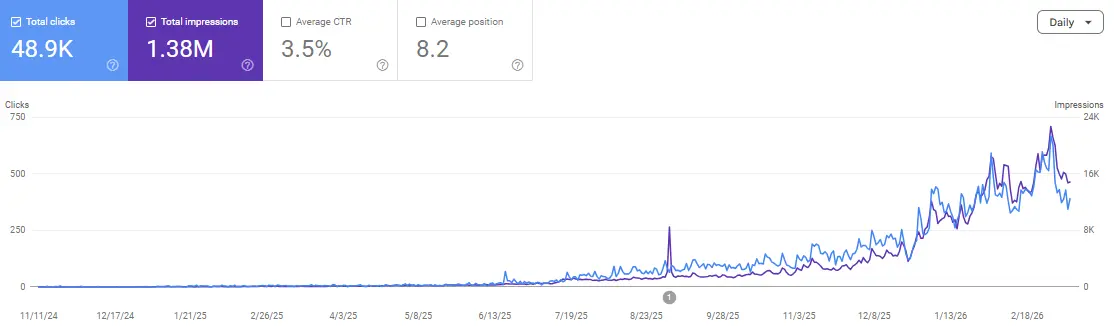
The debate between traditional link acquisition and creative media outreach often centers on a single metric: speed of authority growth. For an engineer-turned-SEO, the choice between these two methodologies isn’t about preference; it is about calculating the most efficient path to increasing a site’s “Link Equity” pool. While Guest Posting has served as the industry’s baseline for a decade, recent shifts in how Google treats link footprints suggest that the linear growth provided by guest blogging may no longer be the optimal route for competitive niches.
Before we break down the technical differences in link equity distribution, you might want to join a group of peers who are actively testing these metrics in real-time. We share raw data and outreach scripts that move beyond generic templates. You can connect with us right here.
The Linear Trap of Manual Guest Posting
Guest posting is essentially a linear scaling operation. If you want ten links, you must produce ten articles, pitch ten webmasters, and manage ten separate editorial cycles. From an informatics perspective, this is an $O(n)$ operation. The resource cost whether in time or capital increases proportionally with the number of links acquired.
Furthermore, many sites that openly accept guest posts have become “link farms” or are part of semi-public PBNs. Google’s spam detection algorithms, which likely utilize pattern recognition and graph analysis, can identify these footprints. When you analyze competitor backlink strategies, you will often notice that sites relying solely on guest posts experience a plateau in their Domain Rating (DR). This happens because the “Link Juice” from a DR 40 site has a diminishing return once your own site reaches a similar threshold.
The Exponential Lift of Digital PR
Digital PR operates on a fundamentally different mathematical model. It is more akin to an $O(log n)$ or even an $O(1)$ effort for exponential results. By creating a single “Linkable Asset” such as a data-driven study or an interactive tool you pitch a high-authority seed (like a major news outlet). If the story is picked up, it triggers a “Syndication Effect.”
One successful pitch can lead to hundreds of natural, high-DR backlinks as other journalists cite the original source. This is exactly how to build backlinks with original data research. The authority gain from a DR 90+ site like The New York Times or BBC provides a massive “Authority Injection” that dozens of smaller guest posts could never replicate.https://www.google.com/search?q=https://scale-xpert.com/how-to-build-backlinks-with-original-data-research/
If you are encountering high bounce rates on your pitch emails or struggling to find the right data to mine for these campaigns, we have a section in our community dedicated to advanced scraping techniques and API integrations. You can find those discussions and contribute your own findings in our Discord.
Link Equity and the ‘Whale’ Effect
In the world of PageRank and its modern iterations, not all nodes in the graph are equal. A link from a site with millions of outbound links (like a generic directory or a low-tier blog) distributes its equity so thinly that the value transferred is negligible. Conversely, a link from a major authority site which typically has a high “Link Equity” to “Outbound Link” ratio acts as a “Whale.”
The probability of a DR increase is significantly higher when your site is associated with these high-authority entities. This is a core component of domain authority explained. When a site like CNN links to you, Google’s trust in your “Entity” increases. This trust is what drives the DR metric up faster than any other tactic. Digital PR is the only reliable way to capture these whales at scale.
Strategic Implementation: Finding the Equilibrium
While Digital PR offers faster growth, it requires a higher upfront technical investment. You must know how to create linkable content that attracts backlinks naturally and have the infrastructure to support it.
The most effective link building tactics for SEO usually involve a hybrid approach. Use Digital PR to raise the authority ceiling of your domain, and use targeted outreach for niche-relevant guest posts to build the “floor” and stabilize rankings for specific commercial keywords. This ensures that your link profile looks organic and avoids the “spike-and-drop” pattern associated with poorly executed PR stunts.
FAQs
Is guest posting still safe in 2026?
It appears to be safe as long as the sites you are targeting have real traffic and a natural outbound link profile. If the site exists only to sell links, the probability of a future penalty or “link devaluation” is extremely high. Always check the “Traffic to Outbound Link” ratio before committing resources.
How do I calculate the ROI of a Digital PR campaign?
The ROI should be measured by comparing the cost of the campaign against the “Market Price” of the acquired links. If a campaign costs $5,000 and earns 50 links from sites with an average DR of 70, the cost per high-authority link is $100—significantly lower than the $400-$600 price tag usually found on the grey market for such sites.
Can I use automated tools for Digital PR outreach?
While automation can help with data collection, the pitching phase appears to require a high degree of personalization. Most Tier-1 journalists use sophisticated spam filters. If your email lacks the specific technical context of the journalist’s recent work, it will likely be flagged, damaging your domain’s sender reputation.
Why does my DR stay stagnant despite getting guest post links?
This is likely due to the “Authority Gap.” If your domain is already at a DR 50, getting links from DR 30-40 sites provides almost zero upward momentum. To move the needle, you must acquire links from domains with a higher DR than your own. This is where Digital PR becomes a mechanical necessity.
What is the most linkable type of content for engineers?
Interactive calculators, real-time data dashboards (using WebSockets or periodic API polling), and comprehensive security audits appear to have the highest “Link-to-Pitch” conversion rate. Journalists love assets that provide value to their readers without requiring a login or a subscription.
How often should I run a Digital PR campaign?
For a medium-sized enterprise, a quarterly “Big Rock” campaign appears to be the most sustainable rhythm. This provides enough time for data collection, asset development, and a 4-week outreach cycle, while allowing the acquired links to be crawled and indexed by Google.
Conclusion
When comparing Digital PR and Guest Posting, the winner for authority growth is clear: Digital PR provides the exponential scale required to dominate modern SERPs. Guest posting remains a useful tool for surgical keyword targeting, but it is no longer a viable engine for overall domain authority growth.
If you’re ready to stop trading time for linear gains and want to build a system that scales authority automatically, come and join our technical discussions. We help each other bridge the gap between informatics and marketing.
Scale your authority with our community: ScaleXpert Discord Community