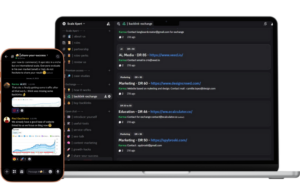
The digital landscape is currently experiencing a massive shift toward data privacy and localized computing power. For many years, modern creators and businesses relied heavily on centralized cloud systems to process complex machine learning models. However, these remote platforms frequently introduce steep subscription fees, restrictive API usage caps, and complex data governance challenges. A major breakthrough in this decentralized processing movement is the recent release of Odysseus. This software functions as a highly sophisticated open source local artificial intelligence chat interface and productivity workspace created by PewDiePie.
According to a technical deep dive by the popular AI educator Professor Patterns, this application marks a major milestone for local infrastructure. The project gained thousands of stars on GitHub within just hours of its public release. This immediate popularity proves that the tech community is eager for powerful desktop alternatives that bypass corporate networks completely. Specifically, the software provides a robust structural framework that executes natural language processing directly on your personal computer components. Therefore, your sensitive proprietary information never leaves your local disk drive to enter external commercial server clusters. If you want to discuss your unique configuration setups or share processing tips with other proactive builders, you can enter our interactive community hub and join the learning group here.
The Economics of Local AI vs Premium Cloud Subscriptions
Building an independent local workspace is rapidly becoming an essential financial strategy for modern digital operations. Many professionals are currently reviewing corporate software expenses to see if cloud dependencies are sustainable over a multi year period. For example, digital marketing teams are actively calculating whether investing in chatgpt pro monthly plans yields an appropriate return on investment when compared to hardware ownership. Centralized computing models require constant high speed internet connectivity and recurring credit card transactions.
Furthermore, premium single user tiers are starting to rival enterprise infrastructure costs in terms of annual operational budgets. Agencies are carefully analyzing if the high cost of claude max subscriptions justifies the long term financial commitment for standard text generation tasks. Odysseus enters this competitive arena as an entirely non commodity solution that demands no monthly entry payments. Consequently, it democratizes access to advanced text processing by using the computing power already available inside your desktop machine. While massive multinational organizations often choose to deploy custom platforms like claude enterprise, individual practitioners can run this streamlined application surface for zero ongoing operational cost.
Core Architecture and Open Source Foundation
The technical foundation of Odysseus rests upon a fully transparent open source philosophy. The codebase carries a highly permissive MIT license, meaning that developers are free to modify, distribute, and fork the application infrastructure. This open model ensures that the software undergoes constant peer review and security auditing by global contributors. In his comprehensive code evaluation, Professor Patterns highlighted that the underlying codebase remains clear of hidden telemetry scripts. This configuration ensures that your administrative actions and input prompts remain completely confidential.
In addition, the application architecture separates the frontend presentation layer from the backend execution engine. This modular approach allows the system to remain incredibly lightweight and fast during heavy inference cycles. The software communicates directly with your operating system kernel rather than running through heavy commercial web containers. As a result, the tool minimizes system idle overhead and maximizes the processing efficiency of your graphics processing unit.
| Architectural Component | Primary Operational Role | Licensing Framework |
| Frontend Presentation Layer | Interactive chat window, document editing, visual theme configuration | MIT License Open Source |
| Backend Core Engine | API routing, file storage systems, local database management | MIT License Open Source |
| Local Model Provider | Handles local large language model integration via Ollama framework | Open Source Community Driven |
Explaining the Intelligent Hardware Cookbook
One of the most innovative systems built directly into Odysseus is the Intelligent Hardware Cookbook. Typically, setting up local large language models requires deep technical knowledge regarding quantization levels and parameter scales. Beginners often struggle to select models that match their physical video random access memory limitations.
To solve this widespread issue, the built in Cookbook acts as an automated system hardware analyzer. It instantly inspects your physical computer specifications upon initial startup. Specifically, it reads your graphic memory limits, central processor core counts, and available system RAM threads. After completing this diagnostic routine, the platform presents a personalized chart of model recommendations. Professor Patterns demonstrated that this feature prevents system crashes by blocking models that exceed your system capacity.
Furthermore, the Cookbook includes a convenient dashboard for comparing model benchmarks and accuracy scores. Users can view how specific models perform during creative writing or logical reasoning tasks. Once you make a selection, the platform provides a one click download tracking utility. This system communicates directly with local model managers to fetch the required model files safely.
Advanced Document Management and Visual Customization
The workspace goes far beyond standard conversational text windows by offering a complete digital document production system. Within the specialized Media Gallery and Document Library, users can execute complex file management workflows effortlessly. For instance, a creator can upload massive textual data files directly into the local application database.
After loading the material, the integrated local model can perform real time text editing and comprehensive document transformations. Professor Patterns showcased how an offline model running via Ollama can translate a complex document into multiple foreign languages simultaneously. Because all processing occurs locally, corporate data safety is maintained at one hundred percent.
Core Visual Workspace Customization Features
-
Visual Theme Synchronization: The application supports extensive layout styling adjustments. Users can switch between beautiful visual interfaces that mirror popular cloud designs, including dedicated Claude and GPT interface styles.
-
Autonomous Agent Modules: The application surface provides native access to specialized productivity systems named Brain, Calendar, and Deep Research. These tools allow the workspace to organize information over time and coordinate multi step workflows.
-
Custom API Extensibility: In addition to running purely offline models, the system can connect to external developer pipelines. Users can plug in their custom API keys to blend local models with external cloud processing.
FAQs
What is PewDiePie Odysseus?
Odysseus is a self hosted open source AI chat interface and productivity workspace carrying an MIT license. It allows users to run powerful large language models locally on their own machines for free without sending data to cloud servers.
Does Odysseus require a paid monthly subscription?
No, the application is completely free to download and use. It eliminates recurring cloud fees by utilizing your local computer hardware resources to process all computing logic.
What did Professor Patterns discover during his code review?
Professor Patterns confirmed that the platform runs with zero hidden telemetry or cloud dependencies. Consequently, it delivers complete data sovereignty and excellent hardware processing efficiency.
What is the purpose of the built in Cookbook feature?
The Cookbook automatically analyzes your physical computer hardware specifications upon initial boot. Consequently, it recommends the best language models that your specific machine can run efficiently without crashing.
Can I manage documents and files inside this application?
Yes, the platform features a Document Library and Media Gallery designed for advanced file management. Users can perform real time text editing, summarization, and language translation locally.
Is it possible to use cloud APIs alongside local models?
Yes, the system architecture includes custom API extensions. Therefore, you can connect your own external developer keys from providers like OpenAI or Anthropic if you wish to run hybrid workflows.
Conclusion
PewDiePie Odysseus marks a pivotal turning point in the democratization of artificial intelligence systems. By converting standard consumer computers into secure private reasoning hubs, it proves that open source platforms can successfully compete with expensive corporate subscription models. As verified by expert educators like Professor Patterns, this tool gives individual creators immense operational leverage while maintaining absolute data sovereignty. As the open source community continues to refine the codebase, local workspaces will become the definitive standard for private computing.