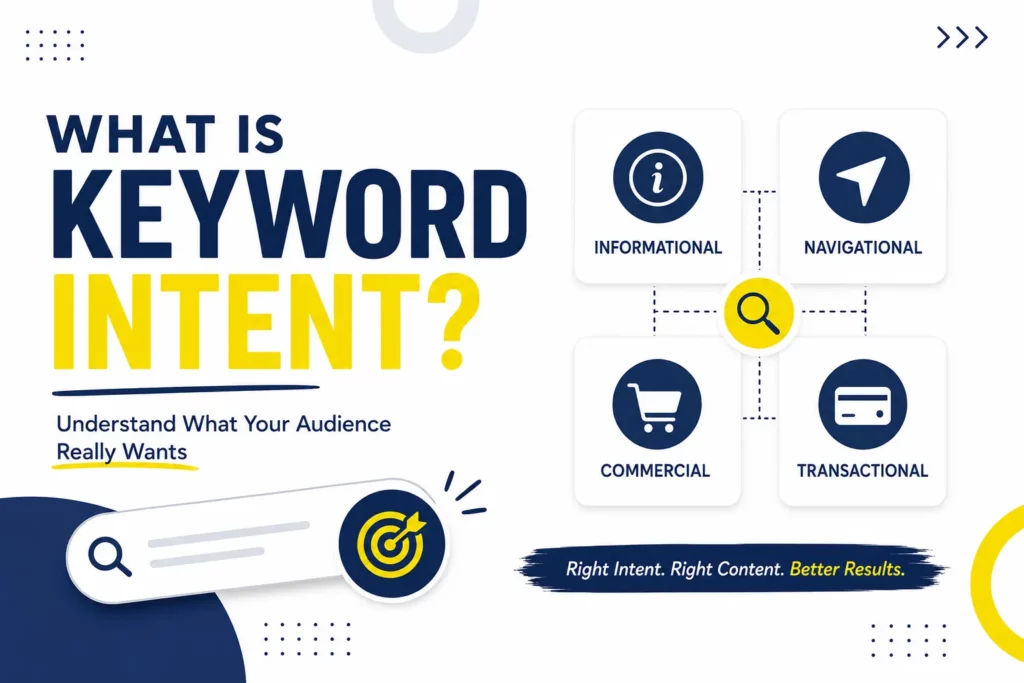
What is keyword intent? It is the reason someone enters a particular word or phrase into a search engine. The searcher may want to learn something, reach a specific website, compare available options, or complete an action.
Understanding that goal helps you decide whether to create a tutorial, comparison, category page, product page, tool, or another content format. However, intent cannot always be determined from the keyword alone.
For practical feedback while analyzing keywords, you can join an SEO discussion community and compare your findings with other website owners.
Quick Answer
Keyword intent, also called search intent, describes what a person wants to accomplish with a search query.
SEO professionals commonly group queries into four categories: informational, navigational, commercial, and transactional. However, some keywords have mixed intent, so you should review the current search results before selecting a page type.
Keyword Intent vs Search Intent
Keyword intent and search intent are usually used to describe the same general concept: the purpose behind a search.
The term keyword intent focuses on evaluating a specific keyword during research. Meanwhile, search intent focuses more broadly on the searcher’s expected goal and the results that may satisfy it.
Before analyzing intent, beginners should understand what SEO keywords are and how they connect searchers with relevant pages.
Why Matching the Searcher’s Goal Matters
A page can discuss the correct subject while using the wrong content format.
For example, suppose you target “free keyword clustering tool” with a long definition article. Although the article discusses keyword clustering, searchers may expect an interactive tool they can use immediately.
Matching the dominant intent can help you:
- Choose a suitable page type
- Structure the answer more clearly
- Create a relevant call to action
- Avoid targeting incompatible keywords together
- Reduce content overlap
- Build more focused topic clusters
However, intent alignment does not guarantee rankings. Google uses many systems and signals to determine which pages are relevant and useful, including quality, authority, context, and technical accessibility.
Four Common Types of Search Intent
The four-category framework is useful for content planning, but it is not a rigid rule. Some queries fit more than one category.
1. Informational Intent
Informational intent appears when someone wants to learn, understand, or solve a problem.
Examples include:
- what is keyword intent
- how to conduct keyword research
- why website impressions are dropping
- beginner guide to internal linking
Suitable formats often include:
- Definitions
- Tutorials
- Checklists
- Educational articles
- Videos
- Reference resources
A strong informational page should answer the main question early. In addition, it should provide examples and practical next steps rather than using the article mainly as a sales pitch.
Navigational intent occurs when a searcher wants to reach a known brand, platform, or page.
Examples include:
- Google Search Console login
- YouTube homepage
- Ahrefs backlink checker
- Semrush Keyword Magic Tool
The user normally knows where they want to go. Therefore, the best result is usually the official website, login page, tool, or branded destination.
Competing with another company for its navigational keyword is often unrealistic unless the query also shows informational or commercial results.
3. Commercial Intent
Commercial intent appears when someone is researching options before making a decision.
Examples include:
- best keyword research tools
- Ahrefs vs Semrush
- keyword clustering software comparison
- best SEO tools for small businesses
Suitable content includes:
- Product comparisons
- Reviews
- Alternatives lists
- Buyer guides
- Recommendation pages
Commercial content should provide clear evaluation criteria, strengths, limitations, pricing context, and appropriate use cases.
4. Transactional Intent
Transactional intent indicates that the searcher is ready to complete an action.
The action might involve buying, booking, downloading, subscribing, requesting a quote, or creating an account.
Examples include:
- buy Semrush subscription
- book an SEO consultation
- download keyword research template
- SEO audit service pricing
Suitable pages include product pages, service pages, checkout pages, pricing pages, and focused landing pages.
Therefore, transactional content should make the next step clear and remove unnecessary friction.
Can a Keyword Have Mixed Intent?
Yes. The same query can represent several possible goals.
For example, “keyword research tool” may return:
- Free interactive tools
- Product landing pages
- Comparison articles
- Tutorials
- Videos
This mixture suggests that different searchers expect different results. It may also show that Google has not identified one dominant page type.
When you find mixed intent:
- Identify the most common result type.
- Decide whether that format fits your website.
- Look for a smaller but realistic intent group.
- Avoid forcing one page to satisfy every possible goal.
- Review the results again later because intent can change.
SEO tool labels can provide a starting point. However, the live search results usually provide more useful context than one automated classification.
How to Determine What Searchers Want
Use this workflow before assigning a keyword to a page.
Step 1: Define the Apparent Goal
Begin with a simple question: what does the searcher probably want to achieve?
The apparent goal may be to learn, find a destination, compare choices, or take action. Treat this answer as a hypothesis rather than a final decision.
Step 2: Review the Dominant Page Type
Search the keyword and examine the leading results.
Look for:
- Blog articles
- Product pages
- Category pages
- Service pages
- Homepages
- Free tools
- Videos
- Forums
- Local listings
When category pages dominate, a basic blog post may not satisfy the same expectation.
Step 3: Check the Content Format
Pages with the same general intent can still use different formats.
Common formats include:
- Definition
- Step-by-step guide
- List
- Comparison
- Review
- Template
- Calculator
- Case study
For example, a list of tools and a tutorial can both be informational, but they answer different needs.
Step 4: Identify the Dominant Angle
The angle describes how successful pages frame the answer.
Look for recurring promises such as:
- For beginners
- Free
- Fast
- Complete
- For small businesses
- Without paid tools
- Step by step
You do not need to copy the same angle. However, you should understand why it fits the audience.
Step 5: Review Search Features
Search features can reveal the expected answer format.
Check for:
- Videos
- Images
- Product results
- Local results
- Discussions
- Featured snippets
- People Also Ask
- AI-generated summaries
For example, several video results may indicate that users benefit from a visual demonstration.
Step 6: Check for Mixed Results
Do not assign one label automatically when different page types appear throughout the first page.
Instead, estimate which intent is dominant and whether your proposed page could realistically satisfy it.
Step 7: Validate After Publishing
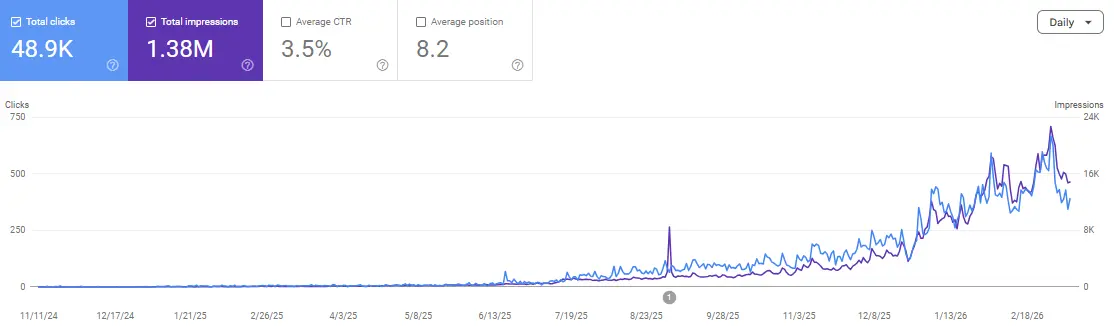
Use Google Search Console to review the queries generating impressions for the page.
Ask:
- Do the queries match the intended audience?
- Is the page appearing for unexpected intent variations?
- Should some queries receive separate pages?
- Are impressions growing after the update?
- Does the search-result title accurately describe the page?
This turns intent analysis into an ongoing process rather than a one-time label.
Query Modifiers Are Clues, Not Proof
Certain words can provide an early clue:
| Modifier | Possible intent |
|---|---|
| what, why, how | Informational |
| login, website, official | Navigational |
| best, review, comparison | Commercial |
| buy, price, book, download | Transactional |
However, modifiers are not conclusive.
For example, “best way to clean a laptop” is probably informational, even though it contains “best.” Similarly, “Google Search Console” could be navigational for one person and informational for another.
Therefore, always validate the phrase through SERP analysis.
Match Each Query With the Right Page
| Intent | Suitable content | Important elements | Typical CTA |
| Informational | Definition, guide, tutorial | Direct answer, examples, steps | Read a related guide |
| Navigational | Homepage, login, branded page | Clear identity and navigation | Visit or sign in |
| Commercial | Review, comparison, alternatives | Criteria, evidence, pros and cons | Compare or start a trial |
| Transactional | Product, pricing, service page | Benefits, trust, clear next step | Buy, book, or subscribe |
Once you have identified the intent, use keyword research to evaluate demand, relevance, and competition.
Next, apply keyword clustering to decide which phrases can share one page.
Keyword Intent Mapping Example
Consider this group of keyword-clustering queries:
| Keyword | Intent | Recommended page |
| what is keyword clustering | Informational | Definition guide |
| how to cluster keywords | Informational | Tutorial section or guide |
| keyword clustering examples | Informational | Example section |
| best keyword clustering tools | Commercial | Separate comparison article |
| keyword clustering software pricing | Transactional | Product or pricing page |
| Semrush Keyword Strategy Builder | Navigational | Official branded page |
The first three keywords may fit one comprehensive article because their topic, format, and expected goal are closely related.
However, the tool-comparison and pricing queries require different pages. Similar wording alone does not mean every keyword belongs in one cluster.
Common Keyword Intent Mistakes
Relying Only on Tool Labels
SEO tools can categorize large keyword lists quickly. Nevertheless, automated labels may oversimplify mixed or changing search results.
Choosing Keywords Only by Search Volume
A high-volume query has limited value when you cannot create the page or experience users expect.
Matching the Topic but Not the Format
A guide, category page, and free tool can cover the same subject while serving completely different goals.
Combining Conflicting Intent
Do not turn an educational guide into an aggressive sales page simply because one supporting keyword has transactional intent.
Creating Several Pages for the Same Goal
Multiple pages targeting the same topic, format, and intent may compete with one another.
Before creating another article, check whether the keyword should be added to an existing page. Improving your on-page SEO structure may be more useful than publishing a duplicate.
Assuming Intent Never Changes
Search results may change as products, terminology, platforms, and user behavior develop. Therefore, review important target queries periodically.
Keyword Intent Checklist
Before creating a page, confirm that:
- You understand the apparent searcher goal.
- You reviewed the current search results.
- You identified the dominant page type.
- You checked the expected content format.
- You reviewed the common content angle.
- You looked for mixed intent.
- Your website can create the expected experience.
- Related phrases share the same intent and format.
- The page has an appropriate call to action.
- You can measure its queries after publication.
FAQs
What is keyword intent in simple terms?
Keyword intent is the goal behind a search query. It explains what the searcher expects to learn, find, compare, or do.
Is keyword intent the same as search intent?
The terms are commonly used interchangeably. Keyword intent usually refers to evaluating a specific keyword, while search intent describes the broader purpose behind a search.
What are the four types of keyword intent?
The four common categories are informational, navigational, commercial, and transactional intent.
Can one keyword have more than one intent?
Yes. Some keywords produce mixed results because different people use the same phrase for different purposes.
How do I identify intent behind a keyword?
Review the leading search results, dominant page type, content format, angle, and visible search features. Use keyword modifiers and SEO tools only as supporting clues.
Can SEO tools identify search intent accurately?
They can provide useful initial labels, particularly for large keyword lists. However, manually review important keywords because tools may miss mixed or changing intent.
What is the difference between commercial and transactional intent?
Commercial searchers are still comparing options. Transactional searchers are closer to completing an action, such as buying, booking, or subscribing.
Should keywords with different intent appear on one page?
Usually not when they require different page types or user experiences. However, closely related informational phrases may fit one comprehensive guide.
Can search intent change over time?
Yes. Intent can shift when terminology, products, available features, or searcher behavior changes.
Does matching keyword intent guarantee rankings?
No. It improves relevance, but rankings also depend on content quality, authority, competition, technical accessibility, links, and other signals.
Conclusion
Understanding what is keyword intent helps you move beyond collecting phrases based only on search volume.
Start by identifying the likely user goal. Then review the current search results, dominant page type, content format, angle, and signs of mixed intent. Finally, assign each keyword group to the page most capable of satisfying that expectation.
Google recommends creating substantial, helpful content for people rather than pages designed mainly to manipulate rankings. Intent analysis supports that goal by helping you create the answer or experience users are actually seeking.
To compare difficult keywords, review mixed search results, or get feedback on a content map, continue the discussion with other SEO learners.