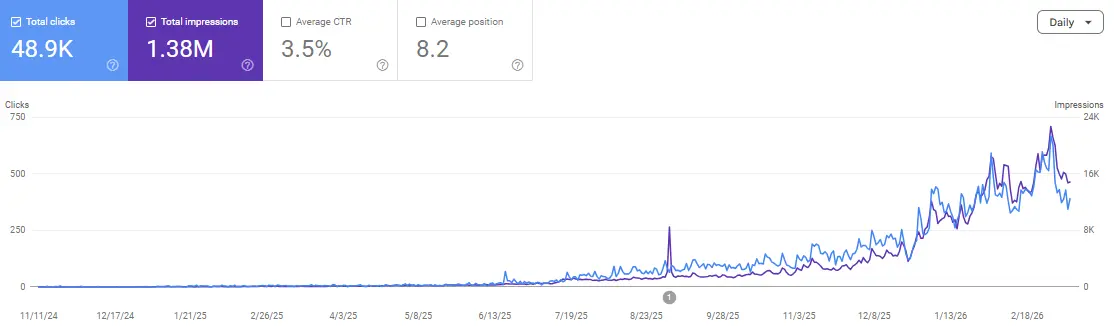
What is keyword research? Keyword research is the process of finding the words and phrases people type into search engines when they want answers, products, services, or solutions. It matters for SEO because it helps you create content people are already searching for, and in this guide, you will learn how keyword research works, why it matters, and what to do next.
What Is Keyword Research?
Keyword research is the process of discovering search terms your target audience uses online.
For example, someone who wants to learn SEO may search for “what is keyword research,” “how to find keywords,” or “best keyword research tools.” These phrases tell you what the reader wants to learn.
In simple terms, keyword research helps you answer three questions:
- What are people searching for?
- Why are they searching for it?
- Can my website create a useful page for that query?
Good keyword research is not only about finding high-volume keywords. Instead, it is about finding topics that match your audience, your website strength, and the type of content you can create well.
Why Keyword Research Matters for SEO
Keyword research matters because it connects your content to real search demand.
Without keyword research, you may publish articles that sound useful but do not match what people search for. As a result, your content may get little or no organic traffic.
Keyword research helps you:
- Find topics people already care about
- Understand search intent
- Choose realistic keywords
- Plan blog articles, landing pages, and guides
- Avoid writing duplicate or overlapping content
- Build a stronger SEO content strategy
- Prioritize pages based on traffic potential
For example, a beginner blogger might want to write about “SEO tips.” However, that keyword may be too broad and competitive. A more realistic keyword could be “SEO tips for new bloggers” or “how to do keyword research for a blog.”
This is why keyword research is one of the first steps in SEO content planning.
How Keyword Research Works
Keyword research works by starting with a broad idea and narrowing it into useful keyword targets.
A simple keyword research process looks like this:
- Start with a seed topic
Choose a broad topic related to your niche, product, or audience. For example, “keyword research,” “internal linking,” or “backlinks.” - Find related keyword ideas
Use tools like Google Search Console, Google Keyword Planner, Semrush, Ahrefs, or AI tools to expand the topic. - Check search intent
Ask what the searcher wants. Do they want a definition, tutorial, comparison, tool list, or step-by-step guide? - Review keyword difficulty
Check whether your website has a realistic chance of ranking. Beginners should usually start with more specific, lower-competition keywords. - Analyze the SERP
Look at the pages already ranking. This shows what Google currently sees as useful for that query. - Choose the best content format
Decide whether the keyword needs a blog post, checklist, comparison page, product page, or tutorial. - Plan internal links
Connect related articles so readers and search engines can understand your content structure.
For example, if you find the keyword “what is keyword difficulty,” the best content format is likely a beginner explainer. If you find “Ahrefs vs Semrush,” the best format is likely a comparison page.
For deeper planning, you can link this article to your guide on [what is keyword difficulty in SEO].
Example of Keyword Research
Let’s say you run a beginner SEO blog and want to write about backlinks.
Your seed topic is:
backlinks
After research, you may find keyword ideas like:
- what are backlinks
- what is backlink analysis
- how to check backlinks
- backlink outreach mistakes
- free backlink checker tools
- competitor backlink analysis
Next, you check the search intent.
For example:
| Keyword | Likely search intent | Best content type |
|---|---|---|
| what are backlinks | Beginner definition | What-is article |
| how to check backlinks | Tutorial | Step-by-step guide |
| backlink outreach mistakes | Problem-solving | List article |
| competitor backlink analysis | Learning process | How-to guide |
| free backlink checker tools | Tool research | Tool list |
This simple table helps you avoid choosing keywords blindly.
Instead of writing one broad article about backlinks, you can build a content cluster. One article explains the basics, while other articles cover tools, analysis, outreach, and mistakes.
This approach also helps prevent content cannibalization, where multiple pages compete for the same search intent. You can add an internal link to your article on [what is content cannibalization] here.
What Should You Do Next?
Start with one topic that is important to your audience.
Then follow this simple checklist:
- Write down 5 to 10 seed keywords.
- Expand them using Google, Semrush, Ahrefs, Google Search Console, or AI tools.
- Group similar keywords by search intent.
- Pick one primary keyword for each page.
- Check the SERP before writing.
- Choose the best content format.
- Add internal links to related articles.
- Review performance after publishing.
If you are a beginner, do not try to target every keyword at once. Instead, build one useful page at a time.
For example, start with a “what is” article, then create supporting guides, comparison pages, and practical tutorials around the same topic.
FAQs
What is keyword research in SEO?
Keyword research in SEO is the process of finding search terms people use in Google and other search engines. It helps you choose topics that match real search demand.
Why is keyword research important?
Keyword research is important because it helps you create content people are already looking for. It also helps you understand search intent, competition, and content opportunities.
What is a seed keyword?
A seed keyword is a broad starting keyword used to find more specific keyword ideas. For example, “SEO” can be a seed keyword for “SEO tools,” “SEO tips,” and “SEO checklist.”
What tools can I use for keyword research?
You can use Google Search Console, Google Keyword Planner, Semrush, Ahrefs, Google autocomplete, People Also Ask, and AI tools. However, always validate important metrics with reliable SEO tools.
How many keywords should one page target?
One page should usually focus on one primary keyword and several related secondary keywords. This keeps the page focused and helps avoid content overlap.
Conclusion
What is keyword research? It is the process of finding the search terms your audience uses and turning them into useful SEO content ideas.
Good keyword research helps you choose better topics, understand search intent, avoid wasted content, and build a stronger SEO strategy. Start with one topic, validate the keyword, check the SERP, and create the most useful page you can.
If you want to learn keyword research and SEO planning with other beginner and semi-intermediate site owners, join the Scale Xpert community here.