Learning how to increase website traffic organically is one of the best ways to grow a website without depending only on paid ads or short-term promotion.
This guide focuses specifically on organic search traffic. That means visitors who find your website through Google or other search engines after searching for a topic, problem, or question.
If you want a broader traffic overview across SEO, social media, email, and other channels, read our guide on how to increase traffic on a website. This article goes deeper into the SEO side, including topic clusters, search intent, long-tail keywords, content refreshes, internal linking, and Google Search Console.
What Organic Website Traffic Means
Organic website traffic comes from unpaid search results.
For example, someone searches “how to find low competition keywords,” clicks your article, and lands on your website. That visit is organic traffic.
Organic traffic is valuable because it can keep bringing visitors after the article is published. However, it usually takes time to build. You need useful content, clear site structure, technical basics, and consistent updates.
The goal is not to publish random articles. The goal is to build a website that search engines and readers can understand.
1. Build Topic Clusters Instead of Random Articles
Many websites struggle because they publish disconnected blog posts.
One week they write about SEO tools. The next week they write about social media. Then they publish a random listicle with no clear connection to the rest of the site.
That makes it harder to build topical authority.
A better approach is to use topic clusters.
How topic clusters work
A topic cluster has two main parts:
- Pillar page: A broad guide about one main topic.
- Supporting pages: Smaller articles that answer specific questions related to the main topic.
For example, if your pillar page is about keyword research, your supporting pages could cover:
- What is keyword difficulty?
- How to find long-tail keywords
- Free keyword research tools
- Keyword cannibalization
- Search intent examples
- How to use Google Search Console for keywords
Each supporting page should link back to the pillar page. The pillar page should also link to the supporting pages.
This helps readers move through your website naturally. It also helps search engines understand which topics your site covers deeply.
2. Match Search Intent Before Choosing the Content Format
Before writing, you need to understand what the searcher wants. This is called search intent.
If your content format does not match the intent, the page can struggle even if the keyword looks good.
Common search intent types
| Search intent | What the searcher wants | Best content format |
|---|---|---|
| Informational | They want to learn or solve a problem | Guides, tutorials, checklists |
| Commercial | They are comparing options | Reviews, comparisons, best tools lists |
| Transactional | They want to buy or take action | Product pages, service pages, landing pages |
| Navigational | They want a specific brand or page | Homepage, login page, brand page |
Search intent example
If someone searches “how to increase website traffic organically,” they likely want a practical SEO guide.
They are not looking for a sales page. They want steps, examples, tools, and a clear process. So the best content format is a guide, not a product page.
Before writing any article, search your target keyword and check what already ranks. Look at the top pages and ask:
- Are they guides, tools, product pages, or listicles?
- Are they beginner or advanced?
- Do they include examples?
- Do they answer the question directly?
- What useful details are missing?
This helps you create content that fits the query instead of forcing the wrong page type.
3. Target Long-Tail Keywords First
If your website is new or still growing, broad keywords can be too competitive.
For example, ranking for “SEO” or “website traffic” is difficult because many strong websites already target those terms.
Long-tail keywords are usually better starting points.
Broad keywords vs long-tail keywords
| Broad keyword | Long-tail keyword |
|---|---|
| website traffic | how to increase website traffic organically |
| SEO tools | best free SEO tools for keyword research |
| backlinks | how to find backlinks to your website for free |
| keyword difficulty | what is keyword difficulty in SEO |
Long-tail keywords usually have lower search volume, but they are more specific. That makes them easier to match with useful content.
They also help you attract readers who know exactly what they need.
Where to find long-tail keywords
You can find long-tail keyword ideas from:
- Google autocomplete
- People Also Ask
- Google Search Console
- Reddit discussions
- Competitor headings
- YouTube search suggestions
- Customer questions
- SEO tools like Ahrefs, Semrush, or Ubersuggest
Do not choose a keyword only because it has low difficulty. Make sure it matches your audience, your topic cluster, and your business goals.
For more help, read our guide on [what is keyword difficulty in SEO].
4. Add Original Value to Your SEO Content
Search results are full of similar articles.
If your article repeats the same basic advice as every other page, it becomes harder to stand out. To increase website traffic organically, your content needs to offer something useful that competing pages do not.
This can be simple.
You do not always need a big original study. You can add value through practical examples, better structure, screenshots, templates, or clearer explanations.
Ways to make content more useful
Add elements like:
- Screenshots from your own process
- Step-by-step examples
- Simple templates
- Original diagrams
- Beginner-friendly decision points
- Common mistakes
- Before-and-after examples
- Short checklists
- Real notes from your own SEO work
For example, if you write about content refreshing, show a simple table of pages that lost clicks and explain what you would update.
That is more useful than saying “update old content” without showing how.
5. Refresh Existing Content Before Publishing More
Publishing new articles is not the only way to grow organic traffic.
Sometimes the fastest improvement comes from updating pages you already have.
Older articles can lose traffic because:
- Search intent changes
- Competitors improve their content
- Your examples become outdated
- Your title is weak
- Internal links are missing
- Your article does not answer the query fully
- Multiple pages compete for the same keyword
This is often called content decay.
How to find content decay
Use Google Search Console and check pages where:
- Clicks are falling
- Impressions are falling
- Average position is dropping
- The page ranks but has a low click-through rate
- The page gets impressions but very few clicks
Start with pages that already have some visibility. These pages are often easier to improve than brand-new articles.
What to update in old articles
Improve old content by adding:
- Better headings
- Fresh examples
- New FAQs
- Updated screenshots
- More direct answers
- Stronger internal links
- A better title tag
- Clearer formatting
- A stronger conclusion and CTA
A content refresh should make the page more useful, not just longer.
6. Fix Keyword Cannibalization
Keyword cannibalization happens when multiple pages on your website target the same keyword or the same search intent.
This can make your site harder to understand.
Instead of having one strong page, you may have several weaker pages competing with each other.
Keyword cannibalization example
You may have three articles:
- SEO tips for beginners
- Beginner SEO tips for small websites
- Best SEO tips for new bloggers
If all three answer the same search intent, they may overlap too much.
How to fix keyword cannibalization
Use this process:
- Find pages targeting the same keyword or intent.
- Check which page has the best traffic, backlinks, and content quality.
- Choose one main page to keep.
- Merge useful sections from weaker pages into the main page.
- Redirect duplicate or outdated URLs when needed.
- Update internal links so they point to the main page.
Do not delete or redirect pages without checking whether they have traffic, backlinks, or conversions.
For a deeper guide, read our article on [keyword cannibalization].
7. Strengthen Internal Links
Internal links help readers and search engines move through your site.
They are especially important if you are building topic clusters.
A strong internal linking system can help:
- Connect related articles
- Support pillar pages
- Improve crawl paths
- Guide readers to useful next steps
- Pass authority to important pages
- Reduce orphan pages
Internal linking examples
Use natural internal links like:
- Link from a long-tail keyword article to the main pillar page.
- Link from an old article to a newer, more detailed guide.
- Link from a traffic article to a conversion-focused page.
- Link from beginner guides to more advanced tutorials.
- Link from related backlink articles to your outreach checklist.
Keep anchor text descriptive.
Instead of “click here,” use anchor text like:
- organic traffic strategy
- keyword difficulty guide
- backlink outreach checklist
- content refresh process
- internal linking guide
Do not force too many links into one section. Add them where they help the reader.
8. Build Relevant Backlinks to Important Pages
Content quality and internal links matter, but backlinks can still help your best pages compete in search.
The key is relevance.
Do not chase random backlinks from unrelated websites. A small number of relevant editorial links is often better than many weak links from low-quality sites.
Safer backlink methods for organic traffic
Use methods like:
- Resource page outreach
- Broken link building
- Guest post outreach
- Expert contributions
- Digital PR
- Original templates
- Useful data or research
- Community mentions
Avoid link farms, spammy guest post networks, and bulk outreach to irrelevant sites.
Backlinks should support useful content, not cover up weak content.
For more help, read our guide on [backlink outreach mistakes].
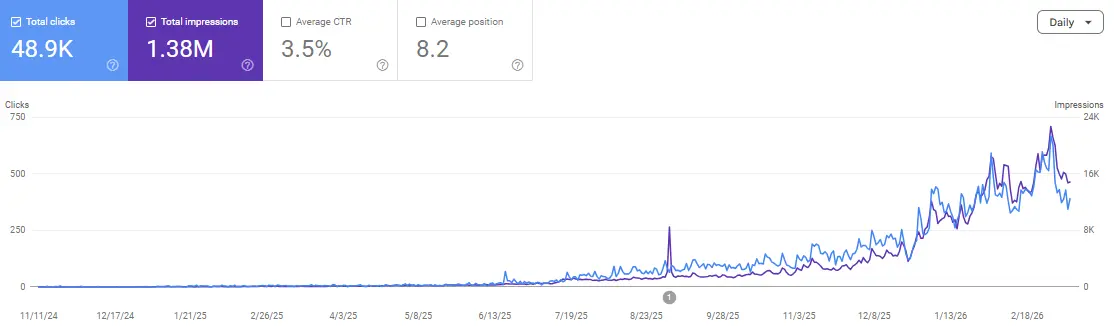
9. Measure Organic Traffic With Google Search Console and GA4
You need measurement to know whether your SEO work is improving.
Use Google Search Console and Google Analytics 4 together.
What to check in Google Search Console
Track:
- Clicks
- Impressions
- Average position
- Click-through rate
- Queries by page
- Pages gaining visibility
- Pages losing visibility
- Keywords close to page one
Google Search Console is best for understanding search performance.
What to check in GA4
Track:
- Organic users
- Engaged sessions
- Landing pages
- Conversions
- Returning users
- Traffic by channel
- What users do after landing on your site
Do not measure SEO only by traffic.
Also track whether organic visitors join your email list, contact you, click important pages, join your community, or buy from you.
10. Use a Monthly Organic Traffic Workflow
Organic traffic grows through repeatable work.
Use this simple monthly workflow:
- Check Google Search Console for declining pages.
- Refresh old content with better examples and answers.
- Find new long-tail keyword opportunities.
- Add supporting articles to your topic clusters.
- Improve internal links between related pages.
- Build relevant backlinks to your most important pages.
- Review organic clicks, rankings, and conversions.
- Repeat the process next month.
This is how you increase website traffic organically without relying on random publishing.
It is not a quick hack. It is a system.
FAQs
What is the best way to increase website traffic organically?
The best way to increase website traffic organically is to build a structured SEO system.
Start with topic clusters, match search intent, target long-tail keywords, update old content, fix keyword cannibalization, improve internal links, and build relevant backlinks to important pages.
How long does it take to increase website traffic organically?
SEO usually takes time.
Some low-competition pages may gain traffic within weeks, but meaningful organic growth often takes several months of consistent content publishing, updating, internal linking, and link building.
Should I publish new content or update old content first?
Start with pages that already have impressions or rankings.
Updating an existing page can sometimes produce faster results because the page already has search history. After that, publish new supporting articles to fill topic gaps.
What tools should I use to measure organic traffic?
Use Google Search Console and Google Analytics 4.
Google Search Console shows search queries, clicks, impressions, and ranking movement. GA4 shows what organic visitors do after they reach your site.
What are long-tail keywords?
Long-tail keywords are longer and more specific search queries.
For example, “SEO tools” is broad, while “best free SEO tools for keyword research” is long-tail. Long-tail keywords are often easier to target and better for newer websites.
Why is my organic traffic not growing?
Your organic traffic may be flat because your content targets keywords that are too competitive, does not match search intent, lacks internal links, has weak backlinks, or overlaps with other pages on your site.
It may also happen because older content is decaying and needs to be refreshed.
Do backlinks help organic traffic?
Yes, backlinks can help organic traffic, especially for competitive keywords.
However, link quality and relevance matter more than volume. Focus on links from real websites that are relevant to your topic and useful to readers.
Conclusion
Learning how to increase website traffic organically is about building a clear SEO system.
Do not publish random articles and hope they rank. Build topic clusters, match search intent, target long-tail keywords, refresh older pages, fix keyword cannibalization, improve internal links, and support your best content with relevant backlinks.
This organic SEO process takes time, but it gives your website a stronger foundation for long-term search growth.
For broader traffic strategies beyond SEO, read our guide on how to increase traffic on a website.
If you want to improve your SEO strategy with other growth-minded site owners and marketers, join the Scale Xpert community here.