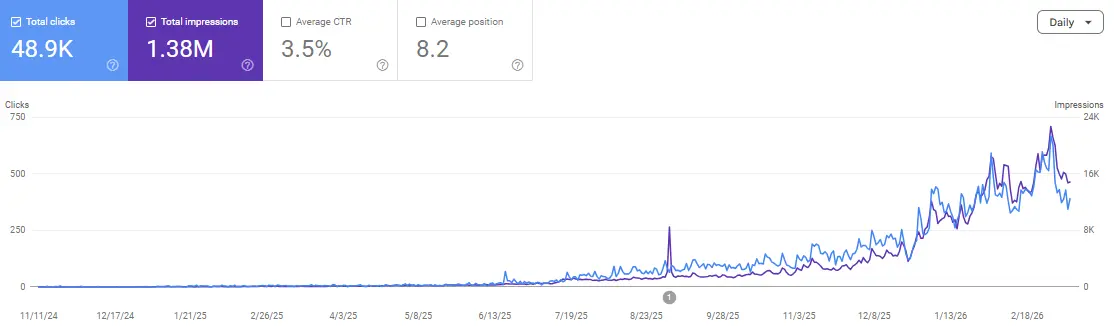
In the digital landscape of 2026, the boundary between technical SEO and User Experience (UX) has completely dissolved. Search engines no longer just look at your keywords or backlinks; they monitor how users interact with your interface in real-time. Signals such as engagement depth, interaction readiness, and visual stability are now primary ranking factors. To compete at the highest level, static optimization is no longer enough. You must leverage Artificial Intelligence to create a dynamic, frictionless environment that adapts to every visitor’s needs.
Using AI to optimize UX allows you to identify and fix friction points before they impact your search rankings. Instead of relying on heatmaps that show past behavior, AI-driven tools can predict how a user will navigate your site, allowing for proactive adjustments. When your website feels intuitive and responsive, dwell time increases and bounce rates plummet, sending a powerful “quality signal” to search algorithms.
If you are ready to implement these advanced technical strategies and want to collaborate with a network of growth-focused engineers, you should join the Scale-Xpert growth community on Discord. Our members are actively sharing the latest AI-driven UX frameworks to stay ahead of the curve.
The Intersection of AI, UX, and SEO Performance
Historically, SEO and UX were treated as separate departments. However, with the maturity of Core Web Vitals and generative search, Google has made it clear that “Helpful Content” is inseparable from a “Helpful Experience.” AI serves as the ultimate bridge between these two disciplines. By analyzing massive datasets of user behavior, AI can pinpoint exactly where a user gets frustrated whether it is a slow-loading element, a confusing navigation menu, or a lack of relevant internal links.
Optimizing the user journey is crucial for building topical authority. If a user lands on your site and finds exactly what they need through an AI-enhanced search bar or a personalized recommendation engine, they are more likely to view your brand as the definitive authority in your niche. Consequently, high-quality UX directly feeds into your long-term SEO success by reinforcing your site’s perceived expertise.
How AI Enhances UX for SEO:
-
Predictive Navigation: Anticipating the user’s next move and pre-loading relevant assets.
-
Automated A/B Testing: AI can run thousands of variations of a layout to find the one that converts best.
-
Personalized Content Delivery: Showing different modules based on the user’s past search intent.
1. AI-Powered Visual Stability and Load Speed
Load speed has always been a factor, but in 2026, “Visual Stability” (Cumulative Layout Shift) is paramount. AI tools can now automatically optimize images and code delivery based on the user’s device and connection speed. By using AI to compress assets without losing quality, you ensure that your site remains fast and stable, which is a core component of what is technical SEO.
Furthermore, AI-driven CDNs (Content Delivery Networks) can predict traffic spikes and allocate resources accordingly. This prevents the “jankiness” that often occurs when a site is under heavy load. A stable, fast-loading site keeps users engaged, reducing the likelihood of them returning to the search results page—a behavior known as “pogo-sticking” that can severely hurt your rankings.
2. Dynamic Search Intent Alignment
One of the most powerful uses of AI in UX is aligning the page layout with the user’s specific search intent. Not every visitor wants the same thing. Some are looking for a quick answer, while others want a deep-dive tutorial. AI can analyze the referring keyword and dynamically rearrange the page elements to suit that intent.
For example:
-
Informational Intent: The AI prioritizes the text, bullet points, and “Key Takeaways” at the top of the page.
-
Transactional Intent: The AI brings the call-to-action (CTA) buttons and pricing tables forward.
-
Navigational Intent: The AI highlights the search bar and category menus.
This level of personalization ensures that the user finds value immediately, which is the cornerstone of what makes content SEO-friendly. When the UX matches the intent, the search engine sees a successful “transaction” between the user and your website.
3. Implementing AI Chatbots for Real-Time Assistance
Modern AI chatbots have evolved from annoying pop-ups into sophisticated personal assistants. Integrating an LLM-powered chatbot into your UX allows users to ask questions directly about your content. This keeps them on your site longer and provides instant value. Instead of scrolling through 2,000 words to find a specific detail, the user can simply ask the bot.
| UX Feature | Traditional Approach | AI-Enhanced Approach |
| Search Bar | Keyword-based, often fails | Semantic search that understands context |
| Content Suggestions | Based on “Latest Posts” | Based on user behavior and intent |
| Accessibility | Manual alt-text and tags | AI-generated descriptions and voice nav |
| User Support | Static FAQ pages | Interactive AI assistants |
If you are looking for the best tools to implement these features without slowing down your site, you can explore free SEO and UX tools on Discord. The Scale-Xpert community is always testing new plugins and scripts that bring AI capabilities to standard CMS platforms like WordPress or Next.js.
4. Accessibility as a Ranking Signal
Google’s commitment to an inclusive web means that accessibility is no longer optional. AI can automatically audit your site for accessibility gaps, such as missing alt-text for images, poor color contrast, or non-descriptive link text. By using AI to fix these issues at scale, you improve the experience for millions of users, which in turn boosts your site’s overall quality score.
An accessible site is inherently a more “crawlable” site. When you use AI to ensure your structure is logical and your elements are clearly labeled, you are making it easier for search engine bots to understand your content. This synergy between accessibility and technical SEO is a major growth lever for 2026.
5. Analyzing User Friction with AI Heatmaps
Traditional heatmaps tell you where people click, but AI heatmaps tell you why they are clicking there. AI can simulate thousands of user sessions to identify “rage clicks” or areas where users get stuck. By identifying these friction points, you can make surgical improvements to your UX that lead to immediate gains in user retention.
High retention rates are a signal to Google that your site is a “destination” rather than just a “stop.” This increases your chances of ranking for competitive terms. As you refine your UX, always keep an eye on how these changes affect your Core Web Vitals. Continuous improvement is the only way to maintain a top position in the SERPs.
FAQs
1. Will adding AI tools to my site slow it down?
It can if not implemented correctly. Always use “Asynchronous” loading for AI scripts so they don’t block the main rendering of the page.
2. Does Google care about UX as much as backlinks?
In 2026, UX and backlinks are weighted almost equally. A site with great links but terrible UX will eventually be outranked by a site that users love to visit.
3. Can AI help with mobile SEO specifically?
Yes. AI can optimize layouts for thousands of different mobile screen sizes, ensuring that your text is readable and your buttons are “tap-friendly” on every device.
4. Is AI-driven personalization good for privacy?
Most modern AI UX tools use anonymized data. You should always ensure your implementation is GDPR and CCPA compliant by clearly stating your data usage in your privacy policy.
5. How do I start with AI UX optimization?
Start with an AI-powered search bar or a recommendation engine. These are “low-hanging fruit” that provide immediate value to your visitors.
6. Can I use AI to write my UX micro-copy?
Yes, AI is excellent at writing short, persuasive copy for buttons, error messages, and tooltips that guide the user through your site.
Conclusion
The websites that rank #1 in the future won’t just be the ones with the most content; they will be the ones that provide the most seamless experience. Using AI to optimize user experience is the most effective way to align your site with the sophisticated needs of modern searchers. By focusing on speed, intent alignment, and real-time assistance, you create a website that both users and search engines will reward.
Mastering this intersection of tech and design is a journey. As you continue to experiment with these AI tools, remember to always prioritize the human at the other end of the screen. Technology should enhance the experience, not distract from it.
Ready to see how AI-driven UX can transform your traffic? Join the Scale-Xpert Discord community and get direct insights from SEO architects who are building the next generation of high-performance websites.