Google Image Search turned 25 years old in July 2026. Google marked this milestone with its most significant redesign since the original 2001 launch.
The change goes far beyond cosmetics. Google Image Search no longer opens to a simple search box. Instead, it launches a gallery-based discovery experience. Google curates and places images directly in front of users before they type a single character.
This fundamentally changes how visual discovery works on the platform. It shifts optimization priorities for publishers and accelerates Google Images’ transformation into a true content discovery feed. This guide explains exactly what changed, why Google made these moves, and how you can optimize your visuals for this new layout.
If you want to compare your Google Images traffic data with other publishers navigating the same changes, the Scale Xpert Discord community is an excellent resource. It provides a collaborative hub for SEO learning and genuine backlink exchanges.
What Google Announced for the 25th Anniversary
Google officially celebrated the 25th anniversary of Image Search on July 14, 2026. The Search blog announced multiple simultaneous changes to how images surface across the ecosystem. The gallery-first homepage and AI image generation inside AI Overviews represent the most significant updates.
Google described the new homepage as a place to “browse and discover visual content in a whole new way.” Previously, users saw a dominant search bar upon loading the page. Now, a curated image gallery takes over the screen immediately. The search bar remains accessible, but it no longer dominates the first impression.
Google also expanded its visual search capabilities through Circle to Search. New features allow users to identify specific objects within images much more accurately. While Circle to Search operates separately from the homepage redesign, it contributes to the same broader goal. Google wants interactive, generative, and discovery-focused visual products.
Google explicitly linked these changes to evolving user behavior. People no longer just search for specific, known images. They actively browse the web for ideas, inspiration, and information. The gallery-first redesign directly caters to this behavioral shift.
How the Gallery-First Homepage Changes Discovery
This shift drastically alters how people discover images online. The new mechanics differ greatly from traditional Google Images behavior.
In the past, users initiated discovery by typing a query. Algorithms simply ranked the best images for that specific text. The primary question was always about ranking for specific keywords.
Today, discovery begins without a query. Users open Google Images and immediately view a curated feed. Google curates these images using search history, location signals, and trending topics. It functions very much like the Instagram Explore or Pinterest home feeds.
This completely changes your core optimization goal. You must stop asking, “How do I rank for this query?” Instead, ask, “How do I qualify for algorithmic gallery placement?”
The signals controlling gallery placement overlap with traditional ranking factors, but they remain distinct. Understanding how AI search engines pick sources provides a great framework here. Google evaluates your visual content for gallery surfacing using very similar logic.
The Algorithm Signals Driving Gallery Placement
Google has not published explicit documentation on the exact signals controlling gallery placement. However, we can deduce several highly influential categories based on Google’s stated goals and existing systems.
-
Topic Relevance: This forms the foundation. Google personalizes the gallery for every user. If a user frequently engages with your specific topic, your images have a much higher chance of appearing in their feed.
-
Computational Quality: Google computationally evaluates resolution and composition. Flawless, high-quality images naturally score better and secure more prominent features.
-
Domain Authority: Google presents this gallery as a list of trusted recommendations. Your overall topical authority heavily dictates your eligibility for curation.
-
Freshness and Trends: Timely content matters immensely. Images tied to breaking news or seasonal trends frequently dominate the gallery during peak interest windows.
-
User Engagement: Google tracks how users interact with your visuals. Clicks, saves, and subsequent site visits teach the algorithm exactly which images satisfy searchers.
Optimizing for Gallery Discovery vs. Query Ranking
Gallery optimization requires a different approach than traditional query ranking. You must adjust your priorities accordingly.
For query-based ranking, you prioritize alt text, structured data, and surrounding page text. These signals matter most during the exact moment a user types a search.
Gallery discovery demands consistent, high-quality production across a specific topic. You must organize your content to signal massive topical authority. Technical perfection also remains crucial.
Visual consistency serves as your biggest asset here. Imagine a food blogger publishing flawless photography across hundreds of recipes. Google easily recognizes this site as a premium visual source. Conversely, a few decent food photos buried inside a general tech blog send weak, confusing signals.
Topic clusters matter immensely. Building a deep, coherent visual library proves your expertise. The connection between topical authority and AI search visibility applies directly to this new image feed.
Technical Image Optimization Remains Critical
The technical foundations of image SEO still dictate whether Google indexes your files at all.
-
File Formats: WebP remains the recommended standard. It offers superior compression and faster loading times compared to legacy JPEG or PNG files.
-
Page Speed: Slow pages restrict Google’s crawling capacity. Core Web Vitals—specifically Largest Contentful Paint—directly impact your image indexing efficiency.
-
Image Sitemaps: These XML files provide Google with a direct inventory of your visual assets. A detailed sitemap accelerates indexing and clarifies your site architecture.
-
Lazy Loading: Improper lazy loading hides images from crawlers entirely. Always use the native
loading="lazy"attribute so Googlebot processes your visuals correctly. -
Structured Data: ImageObject schema feeds Google explicit details about your content. It highlights the subject, location, and creator, drastically improving your chances for rich features.
The Intersection with AI Image Generation
The gallery redesign and AI Overviews image generation operate simultaneously. They serve different user needs but share one strategic goal. Google wants image discovery to feel immediate, personalized, and frictionless.
As we covered in our pillar guide on AI Overviews image generation, generative features handle queries requiring custom, abstract visuals. The gallery redesign handles discovery for real, existing photography.
These two updates create a massive shift in user behavior. Users wanting custom visuals use AI Overviews without ever visiting the image tab. Users wanting inspiration scroll the new Google Images feed.
Your strategic response must address both surfaces. Publish authentic, highly specific visual content that AI cannot easily fake. Organize this media into tight topic clusters. This secures your place in the curated gallery while protecting your traffic against generative AI replacement.
Tracking Google Images Traffic Post-Redesign
You must track your referral traffic with strict granularity to measure these changes accurately.
Inside Google Analytics 4 (GA4), image traffic defaults to the organic search channel. You must create a custom channel group to isolate traffic originating directly from images.google.com. Establish these segments immediately to baseline your data.
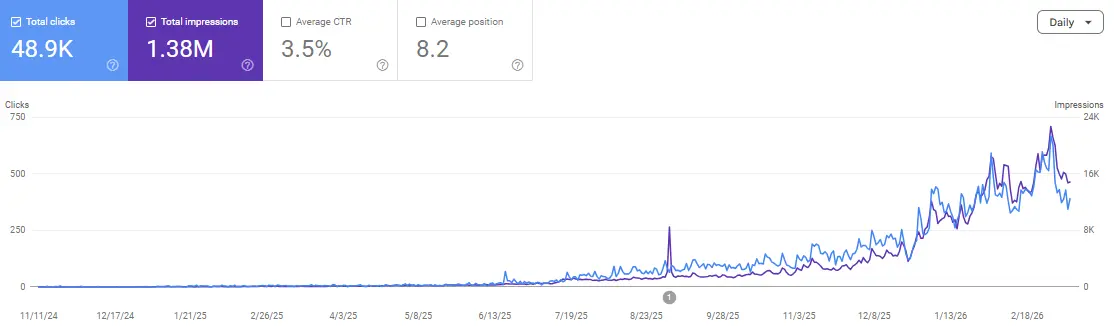
Inside Google Search Console (GSC), utilize the Performance Report. Filter the Search Type specifically to “Image.” This reveals your exact impression and click counts for image results. It tells you exactly how the new gallery impacts your click-through rates.
If you have never tracked image traffic separately, start today. You need baseline data to measure future performance accurately. Our complete guide to GSC features covers these specific tracking capabilities in deep detail.
Content Strategy Implications for Publishers
Highly visual publishers face the biggest strategic shifts today. This includes recipe blogs, travel guides, photography portfolios, and e-commerce stores.
The gallery redesign massively rewards publishers maintaining deep, organized visual libraries. It punishes sites treating images as mere afterthoughts. Visual-first publishers now hold an asymmetric advantage.
If you historically treated images as decorative filler, you must pivot. Investing in premium visual content now unlocks incredible discovery value.
If you already boast a strong visual library, audit your technical execution immediately. Ensure your schema markup and site architecture make your images perfectly accessible to Google’s curation algorithms. Building an effective content strategy for SEO now requires treating images as primary assets, not just text support.
Frequently Asked Questions
What changed in the 25th anniversary redesign?
Google redesigned the homepage to show an algorithmically curated image gallery. This feed loads before users even type a query. It transforms the product from a search tool into a personalized browsing experience similar to Pinterest.
When did Google Images turn 25?
Google Image Search celebrated its 25th anniversary in July 2026. Google originally launched the product on July 12, 2001, featuring an initial index of 250 million images.
How does the new gallery-based homepage work?
The new homepage displays a curated gallery immediately upon loading. Google personalizes this feed based on your search history, location, and trending topics. Users simply scroll to discover visual content and click through for full details.
How do I optimize for this new gallery experience?
Focus on building a highly coherent visual library within a specific topic area. Implement ImageObject schema markup to feed Google explicit details. Ensure you technically optimize your files for speed. Finally, publish high-quality images consistently to prove your topical authority.
Does this redesign kill traditional query rankings?
No. Query-based ranking still functions perfectly when users conduct specific text searches. Traditional optimization practices—like keyword-rich alt text and surrounding context—remain highly relevant. The redesign simply adds a massive new discovery surface.
Should I still use WebP formatting?
Yes. WebP provides superior compression and faster loading times than legacy JPEG or PNG files. Google perfectly indexes WebP images, and the format heavily benefits your Core Web Vitals scores.
Conclusion
The 25th anniversary redesign marks a massive transition in visual search behavior. The gallery-first homepage transforms Google Images into a proactive content feed. It surfaces visual inspiration before users even articulate what they want.
This shift severely punishes publishers who treat images as decorative filler. Instead, it highly rewards creators maintaining organized, high-quality visual libraries. Technical SEO foundations still matter, but topical authority and visual consistency now dictate your ultimate reach.
Publishers who adapt to these new algorithmic signals—while focusing on authentic imagery that AI cannot replicate—will dominate this new discovery environment.
Connect with visual content publishers and SEO practitioners navigating these massive changes at Scale Xpert on Discord.