Your brand appears in a ChatGPT answer. A prospect clicks through. Another reads the recommendation and never visits your website. Today, those experiences can leave very different traces in your reporting.
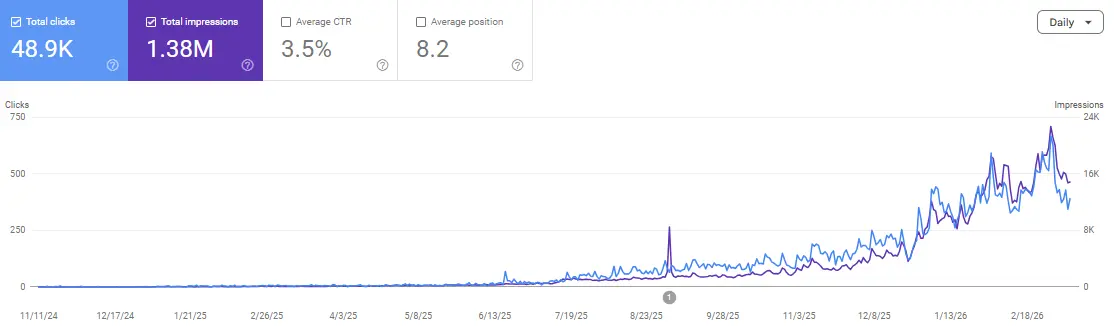
OpenAI is reportedly developing business-facing tools that could make part of that visibility easier to measure. The reported analytics would show daily appearances and website clicks, alongside a broader business-management experience.
But there is an important limit: a chart showing more visibility would not, by itself, explain which questions triggered it, which sources shaped the answer, or which marketing activity caused the change.
For SEOs, the opportunity is to connect better measurement with better decisions. That means separating brand mentions, citations, visits, and conversions before treating any new dashboard as proof that an AI visibility strategy works.
What Has Actually Been Reported?
On November 6, 2026, search-industry reports described a business-claiming interface spotted by Marketplace Pulse founder Juozas Kaziukėnas.
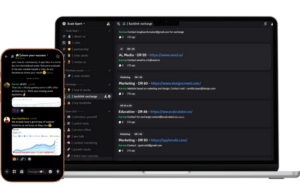
In his original LinkedIn post, Kaziukėnas describes a work-in-progress Business Hub with daily impressions and website clicks. He also describes ownership verification, giving a connected Shopify store as an example. According to that observation, the analytics does not expose prompts, user data, competitor benchmarks, or rankings.
That is an external observation of development, not an OpenAI announcement establishing general availability. As of this article’s November 7 research cutoff, we have not located public OpenAI documentation confirming a general launch, pricing, supported markets, or a complete eligibility process for this specific tool.
Do not assume a ChatGPT Business subscription unlocks it. Do not assume the Shopify example establishes access for every merchant, service business, or software company.
The useful status description is reported testing and development, with important product details still unconfirmed.
Analytics Appears to Be Part of a Broader Business Experience
Search Engine Roundtable’s report reproduces an invitation to claim a business, with three themes: measuring appearances, maintaining business and product information, and using a business agent to help answer customer questions.
These are distinct functions. A business-information editor would supply context. An agent would be an interaction surface. Analytics would measure defined activity. Evidence of one does not establish the final capabilities of the others.
In particular, providing business information should not be described as controlling every independent ChatGPT recommendation. A banner about supplying context is not a promise that a brand can dictate comparisons, erase criticism, or guarantee citations.
For now, treat the reported interface as a direction of development rather than a finished product specification.
Is This a Search Console for ChatGPT?
The comparison is understandable: businesses want platform-supplied visibility data rather than relying entirely on outside observations.
However, the nickname can create expectations the evidence does not support. Do not assume query reports, page-level breakdowns, indexing diagnostics, API exports, historical backfill, or geographic filters will exist because another search platform offers them.
Start with the product’s eventual metric definitions and coverage. A useful evaluation would ask:
- What event counts as an impression?
- Does it measure a business name, a product appearance, a link, or multiple formats?
- Are repeat appearances counted separately?
- Which ChatGPT surfaces and account experiences are included?
- How are reporting dates, time zones, and delays handled?
- What can be exported and compared over time?
These are questions to resolve when documentation becomes available, not features established by the screenshot.
A Mention Is Not a Citation, and a Citation Is Not a Visit
Consider three hypothetical answers to the same buying question.
Answer one names your brand but links elsewhere. That is an observed mention. It does not show that your own website supplied the supporting evidence.
Answer two links to your research without recommending your product. That is an observed citation to your page. It may establish usefulness as a source without establishing commercial preference.
Answer three names your product, cites a review, and sends a visitor to your pricing page. The mention, evidence source, and business destination are different parts of the journey.
OpenAI’s ChatGPT search documentation says web-search responses may include citations, and that the Sources view can contain cited sources and other relevant links. Open the actual source and check which claim it supports.
The reported business analytics should not yet be called a complete citation audit. Public reporting describes appearances and clicks; it does not establish a source-by-source account of why an answer selected your brand.
That distinction matters when planning the page someone reaches next. An AI search visitor may already have an answer, while still needing evidence, limitations, or a clear next step from your site.
Do Not Confuse This With Workspace Analytics or Ads Reporting
The phrase “ChatGPT business analytics” can refer to different jobs.
OpenAI’s ChatGPT Business release notes document administrative analytics about workspace adoption and activity. That concerns an organization’s use of the product, rather than how often its brand appears in customers’ answers.
Paid campaign reporting is another separate measurement context. A sponsored appearance and an independent answer mentioning a brand should not be combined into a single claim of organic visibility.
Before including a number in an SEO report, label its source, scope, and paid or unpaid context. If those are not defined, leave the ambiguity visible rather than filling it with an assumption.
What Better Numbers Would Still Leave Unanswered
Suppose a future dashboard shows a rise in business impressions after you update several pages. It is tempting to credit those updates immediately.
Other explanations remain possible: more people asking relevant questions, a product launch, seasonal demand, media coverage, changes to the platform, or a change in the report’s coverage.
First-party counts can improve observation without establishing causation. External prompt testing can add context, but it does not automatically reveal the questions behind an aggregate chart either.
A prompt panel is a sample of questions you chose. Its answers are evidence about those runs, at those times, under those conditions. They are not a census of all customer conversations.
The same discipline applies when measuring the effect of Reddit brand mentions: a change after an activity is a reason to investigate, not sufficient proof that the activity caused it.
Build a Measurement Baseline Before Access Arrives
You do not need to wait for a new dashboard to organize the evidence already available.
1. Define the Business Outcome
Choose a result that matters: a qualified enquiry, a product trial, a purchase, or a useful visit to a decision page. Keep visibility as a supporting measure rather than silently equating it with revenue.
Record which pages should help that outcome. A source citation to a research article and a visit to a product comparison may need different next steps.
2. Check What Your Website Analytics Actually Records
Review identifiable ChatGPT referrals, their landing pages, and the actions visitors complete. Note gaps and exclusions in the measurement setup.
When reviewing GA4 channel groups, inspect source and medium details alongside the broad channel label. A category name alone does not explain which individual interaction brought someone to the site.
If platform click counts later differ from analytics sessions, investigate the definitions before calling either dataset wrong. A click and a recorded session are different events. Consent choices, implementation, repeat clicks, and reporting periods can also complicate comparison.
3. Keep a Small, Stable Set of Buyer Questions
Select questions representing genuine decisions: suitability, alternatives, compatibility, cost conditions, and limitations. Include unbranded questions as well as questions explicitly naming your product.
Save the exact prompt, date, relevant location context, search mode where observable, answer, and cited URLs. Mark whether the brand was named and whether your own page was linked.
Do not rewrite the question each week and then interpret the results as a clean comparison. Keep exploratory testing separate from your stable monitoring sample.
4. Maintain a Change Log
Record page updates, product changes, PR coverage, distribution activity, and relevant technical changes. If new reporting becomes available, record that date and its documented coverage too.
A change log will not eliminate uncertainty. It will make “what else changed?” answerable when a chart moves.
Improve the Evidence Behind Answers, Not Just the Dashboard Number
The practical SEO work remains specific: remove ambiguity about what your business offers and make useful evidence available on the pages people need.
For a product page, check whether it clearly explains the intended user, use cases, compatibility, pricing conditions, and relevant limitations. For an informational page, check whether important claims have visible support and whether examples resolve a real question.
Our approach to creating non-commodity content emphasizes material with a reason to exist: documented experience, original evidence, or a clear method. Use those inputs where they improve the answer; avoid adding an invented case study simply to appear distinctive.
Technical access remains a separate requirement. OpenAI’s crawler documentation distinguishes OAI-SearchBot from GPTBot and explains that their controls are independent. Search access and training preferences should not be treated as one setting.
Review your intended policy and actual access before interpreting a missing mention. As with AI crawlers finding sitemaps and RSS feeds, discovering a URL is not proof that its content will be cited.
None of these improvements guarantees selection. Their purpose is to make the underlying information accessible, accurate, useful, and easier to verify.
A Practical Example: More Appearances, Fewer Useful Visits
Imagine a hypothetical software company whose future dashboard shows rising appearances while identifiable website visits remain flat.
An unhelpful conclusion would be “our AI SEO is working” or “the traffic tracking is broken.” Neither follows from those two observations alone.
A better review would examine whether the reporting scope changed, which destination pages receive measurable visits, and what the stable prompt sample shows. The company might find that it is discussed mainly for a free feature while its commercial pages fail to explain a relevant paid use case.
That finding would support a clearer page and more focused monitoring. It would not justify claiming that every unseen conversation has the same pattern.
The decision is stronger because each action follows an observed gap, rather than a universal rule about how to get cited.
Frequently Asked Questions
Has OpenAI officially launched these business visibility tools?
The evidence reviewed for this article describes development and testing. We have not located public OpenAI documentation confirming general availability as of November 7, 2026. Treat access instructions, pricing, and eligibility as unconfirmed until documented.
Will the tool reveal why ChatGPT mentions my business?
The reported version does not provide the prompt and competitor detail needed for that explanation. Counts can show movement; interpreting causes requires additional evidence and careful comparison.
Will claiming a business guarantee recommendations or citations?
No such guarantee is established by the reporting. Supplying business context and being selected in an independent answer are separate matters.
Can I compare ChatGPT clicks directly with GA4 sessions?
You can investigate the relationship, but do not assume equality. First compare event definitions, date ranges, reporting scope, and your site’s collection setup.
Will third-party AI visibility tools become unnecessary?
Not necessarily. Sampled answer testing and platform-supplied counts can answer different questions. Evaluate each tool’s coverage and definitions rather than assuming one replaces the other.
What should an SEO team do now?
Establish a baseline of identifiable referrals, maintain a stable buyer-question sample, and fix verified information or access gaps. Wait for documented functionality before designing a workflow around an unannounced feature.
Turn Visibility Data Into Better Questions
Business analytics inside ChatGPT could help close an important measurement gap. The value will depend on what the final product counts, which experiences it covers, and how clearly those limits are documented.
Prepare by separating mentions from citations, citations from visits, and visits from business outcomes. Better reporting becomes useful when it leads to a specific improvement you can investigate and review.
If you are bringing SEO, content, and Reddit visibility into one ongoing workflow, connect with Paul Gautheron on LinkedIn. Scale Xpert approaches that work month by month, with attention to the evidence behind progress rather than mentions alone.