Whether to opt out of Google AI Overviews is not a single question with a single right answer. The right decision for a breaking news publisher is different from the right decision for a recipe blogger, a B2B SaaS content team, or an e-commerce retailer. Each publisher type has a different traffic source mix, a different monetization model, and a different exposure to the specific harms that make opting out worth considering. This guide provides a structured decision framework for each major publisher type, the specific data thresholds that indicate when opt-out is more likely to help than hurt, the measurements to take before deciding, and the questions to answer before touching the Search Console toggle.
If you want to work through your specific situation with data alongside other publishers who have measured their AI Overview exposure, Scale Xpert’s Discord community is where those conversations happen. It is a community for SEO learning and genuine backlink exchange.
The Core Tradeoff: What You Give Up vs What You Gain
Every opt-out decision involves the same tradeoff expressed in different magnitudes depending on publisher type. Opting out removes your content from AI Overviews, AI Mode, and Discover’s generative AI features. In exchange, you stop contributing to the zero-click search behavior where AI Overviews satisfy user queries without delivering traffic to your site.
What you gain by opting out is the removal of a feature that was reducing your click-through rate from organic ranking positions. Research from Ahrefs found AI Overviews reduce clicks to top-ranking pages by approximately 58 percent for informational queries. Seer Interactive’s analysis found up to 61 percent CTR decline for non-branded queries when AI Overviews were present. These figures represent the maximum potential gain from opting out: you stop losing clicks to AI Overview synthesis and return to the pre-AI-Overview click rate for queries where you rank.
What you give up by opting out is AI Overview impressions that provide brand exposure even without clicks, the traffic that does come through AI Overview citations (which is not zero even if lower than pre-AI levels), and whatever ranking boost, if any, comes from being selected as an AI Overview source. You also potentially lose Top Stories visibility if your Top Stories carousels are rendering inside AI Overviews, as NewzDash data from July 2026 documented at 15.5 percent of US trending news queries.
The size of each side of this tradeoff varies dramatically by publisher type, which is why the decision framework produces different outputs for different publisher categories.
Before Any Decision: The Four Measurements to Take
Regardless of publisher type, four measurements provide the factual foundation for a data-driven decision rather than a reactive one. Take all four before touching any control.
Measurement 1: AI Overview impression volume and trend. Open Google Search Console and navigate to the Generative AI Performance Report if your account has access. Note your total AI impressions over the last 90 days, which pages are generating the most AI impressions, and whether the volume is growing or stable. Pages with high AI impressions but declining organic clicks are experiencing the cannibalization pattern that opt-out addresses.
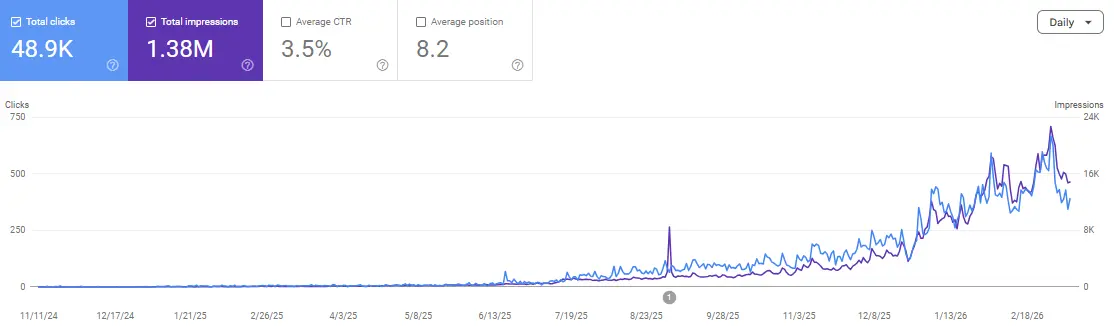
Measurement 2: Organic CTR trend for your top queries. In the standard Search Console Performance Report, compare your click-through rate for your top 20 queries over the last 6 months against the same queries from 12 months ago. A declining CTR with stable or improving average position is the clearest diagnostic signal of AI Overview click cannibalization on those specific queries.
Measurement 3: Organic traffic revenue impact. In Google Analytics 4, calculate the revenue or conversion value attributed to organic search sessions over the past 12 months. Divide this by your organic session count to get revenue per organic session. Apply the percentage CTR decline you measured in step 2 to project the revenue impact of continued AI Overview expansion. This converts the abstract CTR decline into a dollar figure that anchors the opt-out decision in business terms.
Measurement 4: For news publishers specifically, Top Stories impression share and format. Use Google Search Console’s Performance Report filtered by the News search type to document your Top Stories impression volume. Separately, manually check your top 10 to 20 news queries in Google Search and note whether Top Stories carousels are appearing inside AI Overviews or in standalone positions below them. This measurement is the primary additional data point that separates the news publisher decision from other publisher types.
Understanding how to use Google Search Console AI impressions data to improve your AI search visibility covers the analytical workflow for Measurement 1 in detail with specific report configurations and comparison methodologies.
News Publishers: The Highest-Stakes Decision
News publishers face the most complex opt-out decision of any publisher type because they have the most to lose from both opting in and opting out.
The case for opting out is the direct click cannibalization documented across news content. News content generates AI Overviews at high rates because news queries trigger informational AI responses. If AI Overviews are appearing for a significant percentage of your top news queries and CTR has declined proportionally, the traffic loss translates directly to advertising revenue loss at scale.
The case against opting out, or for delaying the decision, is the Top Stories interaction documented by NewzDash. If approximately 15.5 percent of US trending news queries now render Top Stories inside AI Overviews, and the Search Console toggle governs those embedded carousels alongside the AI content itself, opting out of AI features may simultaneously reduce Top Stories impressions on those queries. Top Stories is a primary traffic driver for news publishers, and reducing it is a material business risk.
The decision threshold for news publishers is: if your AI Overview impression volume is significant AND your measurable CTR decline correlates to meaningful revenue loss AND you have confirmed that your Top Stories traffic is primarily coming from standalone carousel positions rather than AI-embedded positions, the opt-out is worth considering. If any of these conditions is not met, or if the Top Stories format picture is unclear, waiting for Google’s clarification on the Top Stories interaction and for the December 2026 click data addition provides more information before a permanent property-level decision.
The specific question to answer before opting out as a news publisher: what percentage of your Top Stories impressions are coming from queries where the carousel appears inside an AI Overview versus in a standalone position? If you cannot answer this question from your current data, you do not have sufficient information to make the opt-out decision confidently. NewzDash’s publisher intelligence tools track this specifically and are worth the investment for news publishers facing this decision.
Informational Content Publishers: The Clearest Case for Evaluation
Publishers whose primary content is informational, whose primary traffic source is organic search, and whose primary revenue model is pageview-based display advertising face the most direct case for evaluating the opt-out seriously.
The harm mechanism for this publisher type is direct and well-documented. AI Overviews appear most frequently for informational queries. Informational queries are the primary content of most content publishers. AI Overviews satisfy informational queries within the search interface at high rates. The result is that content publishers see impressions maintained while clicks decline, which means ranking well without receiving proportional traffic.
Ahrefs’ data on Inspired Taste’s situation, documented in their investigation with Adam and Joanne Gallagher, showed clicks declining despite top rankings as AI Overviews captured user satisfaction. This is the canonical example of the informational publisher harm pattern.
The decision threshold for informational publishers is a specific CTR calculation. Pull your top 30 informational queries from Search Console. For each query where an AI Overview now appears, compare the current CTR against the CTR from 12 months ago. Calculate the average CTR decline for AI-Overview-affected queries. If the average CTR decline exceeds 20 percent and the queries affected account for more than 30 percent of your total organic traffic, the traffic loss is material enough that the opt-out calculation deserves serious evaluation.
The complication for informational publishers is the same data gap that affects all publisher types: click data for AI Overview impressions is not yet available in the AI Performance Report, making it impossible to calculate directly how much of your remaining traffic comes through AI Overview citations. Until December 2026 when click data is expected to be added, the calculation is necessarily indirect.
The opt-out decision for informational publishers should also consider their revenue diversification. Publishers with significant newsletter revenue, subscription revenue, or affiliate commission revenue are less dependent on pageview volume than publishers with exclusively display advertising revenue. A 40 percent click reduction for a publisher with 60 percent newsletter revenue is less catastrophic than the same reduction for a publisher with 95 percent display advertising revenue. The opt-out decision is ultimately a revenue model decision as much as a traffic model decision.
The broader strategic context for informational publishers, covering traffic diversification through newsletters and video alongside the opt-out decision, is covered in the creator traffic survival strategy guide.
E-Commerce Publishers: A Segmented Decision
E-commerce publishers face a fundamentally different AI Overview landscape than informational publishers because the relationship between query type and AI Overview frequency differs significantly for commercial versus informational content.
Transactional queries, which are the primary high-value traffic for e-commerce sites, trigger AI Overviews at lower rates than informational queries because AI Overviews are less suited to satisfying purchase intent than to satisfying information needs. A user searching “buy Nike Air Max 2026 size 10 black” has intent that an AI Overview cannot satisfy because the user needs to actually complete a transaction. AI Overviews appear less frequently and satisfy intent less completely for these query types.
Informational content that e-commerce publishers produce, including buying guides, category explanations, comparison articles, and how-to content related to their products, does trigger AI Overviews at rates similar to standalone informational publishers. This creates a segmented situation within a single e-commerce publisher’s site.
The decision framework for e-commerce publishers is therefore a page-type segmentation rather than a property-level binary. The right decision may be to opt out for informational blog and guide content while maintaining AI feature presence for product and category pages. This is exactly the page-level control that is not available until March 2027, which makes the current property-level opt-out a blunt tool for e-commerce publishers.
The practical guidance for e-commerce publishers with the current tools is to measure AI Overview exposure separately for their informational content and their product content. If informational content is experiencing significant CTR decline from AI Overviews but product content is not, and if the revenue from informational content pageviews is material, the option is either a property-level opt-out that also affects product pages (accepting that tradeoff) or waiting for page-level controls in March 2027.
E-commerce publishers with Merchant Center listings should confirm that the Search Console generative AI toggle does not affect their Shopping product appearances, which are governed separately through Merchant Center. The toggle has no effect on product listing ads or organic Shopping appearances.
B2B Content Publishers: The Weakest Case for Opt-Out
B2B publishers whose primary conversion goal is lead generation, trial signups, or newsletter subscriptions rather than pageview volume face the weakest case for opting out of AI features in most scenarios.
The harm mechanism that drives opt-out consideration for informational and news publishers, which is that AI Overviews satisfy user needs without delivering traffic, is less severe for B2B publishers because their conversion goals do not require high pageview volume. A B2B SaaS company that generates 10 qualified leads per month from organic search does not lose those leads proportionally just because AI Overviews appear for more queries. The users who click through after seeing an AI Overview may be higher-intent leads than average organic visitors because they chose to seek more information beyond what the AI provided.
AI Overview impressions also provide brand exposure value for B2B publishers. Being cited as a source in an AI Overview for queries in your market positions your brand as an authority to users who may not click but do notice the attribution. For B2B markets where brand trust is a significant factor in purchase decisions, this exposure has value even without the click.
The case for B2B publishers to consider the opt-out is specifically when AI Overviews are misrepresenting their brand or synthesizing their content inaccurately in ways that damage brand perception. The Frankenstein content problem documented by Ahrefs and experienced by Inspired Taste applies to B2B content as much as to recipe content. If AI Overviews are attributing synthesized content to your brand that you did not write and that contains inaccuracies, the brand harm may outweigh the exposure benefit.
The guide to monitoring and reporting AI Overview brand misrepresentation using the Frankenstein Tracker covers the systematic audit process for detecting whether this problem exists for your brand before making an opt-out decision based on brand protection concerns.
The Waiting Strategy: Why Timing Matters
For publishers not in acute crisis, the timing of the opt-out decision matters alongside the decision itself. The current control landscape has two significant improvements scheduled that change the decision calculus.
December 2026 is when the CMA’s conduct requirement mandates that Google add click data and click-through rate metrics to the AI Performance Report. This addition transforms the opt-out calculation from directional to quantitative. Instead of estimating that AI Overviews are probably reducing your clicks based on CTR trend analysis, you will be able to directly measure how many clicks AI Overview impressions are generating and calculate the actual conversion rate of those impressions to site visits. This makes the tradeoff calculation concrete rather than estimated.
March 2027 is when the CMA requires page-level controls for generative Search features. This transforms the opt-out decision from a binary property-level choice to a nuanced page-by-page decision. Instead of choosing between including your entire site and excluding your entire site, you will be able to exclude your highest-harm pages (where AI Overviews generate high impressions but nearly zero clicks) while maintaining inclusion for lower-harm pages (where AI Overviews provide brand exposure with adequate click-through).
The waiting strategy is not indefinite inaction. It involves taking the four measurements described above now to establish a baseline, continuing to monitor AI Overview impressions and organic CTR trends monthly, and being prepared to act quickly if the harm accelerates to the point where waiting is more costly than deciding. But for publishers whose current AI Overview impact is material but not catastrophic, the December 2026 and March 2027 improvements provide better information and better tools than are available today.
The decision timeline is: measure now, monitor monthly, decide with click data in December 2026 if the impact justifies action before page-level controls, implement page-level controls in March 2027 for surgical exclusion of high-harm pages while maintaining inclusion for lower-harm pages.
The Decision Matrix
Combining the publisher-type frameworks and the timing considerations into a single decision matrix produces clear guidance for the most common publisher situations.
News publisher with significant Top Stories traffic and unclear Top Stories-AI interaction: wait and monitor. The Top Stories risk from opting out may exceed the click cannibalization harm. Measure the Top Stories format breakdown first and monitor NewzDash for direct testing results.
News publisher with confirmed Top Stories traffic from standalone positions and significant AI Overview CTR cannibalization: evaluate opt-out seriously. The Top Stories risk is lower when carousels are appearing in standalone positions, and significant CTR decline on news queries translates to revenue loss at scale.
Informational publisher with more than 20 percent CTR decline on AI-Overview-affected queries and more than 30 percent of traffic from affected queries: strong consideration for opt-out. The harm is material and concentrated. Calculate the revenue impact and compare against brand exposure benefit before deciding.
Informational publisher with less than 15 percent CTR decline or less than 20 percent of traffic from affected queries: monitor and wait for December 2026 click data. The harm is not yet severe enough to justify a permanent property-level decision with incomplete data.
E-commerce publisher: wait for March 2027 page-level controls. The right answer is likely to opt out for informational content and maintain inclusion for product content, which requires the page-level controls not yet available. Opting out at the property level now sacrifices product page AI presence unnecessarily.
B2B publisher with accurate AI Overview citations: do not opt out. The brand exposure from AI citations benefits long-term authority building in ways that clicking through does not measure. Monitor for brand misrepresentation specifically and revisit if Frankenstein content issues emerge.
B2B publisher with documented brand misrepresentation in AI Overviews: consider opt-out specifically for brand protection. Run the Frankenstein Tracker audit first to document the problem before using the opt-out as a remedy.
Frequently Asked Questions
How do I know if I should opt out of Google AI Overviews?
The decision depends on your publisher type and the specific harm you are experiencing. Measure your AI Overview impression volume, your organic CTR trend over the past 12 months, and the revenue impact of your click decline before deciding. For news publishers, also measure your Top Stories impression format. The decision framework varies significantly by publisher type and current harm severity.
What data do I need before making the opt-out decision?
The four measurements to take before deciding are: AI Overview impression volume and trend from the Search Console Generative AI Performance Report, organic CTR trend for your top queries comparing current versus 12 months ago, organic traffic revenue impact calculated from GA4, and for news publishers, Top Stories impression volume and format breakdown. Click data for AI Overview impressions is not yet available but is expected to be added by December 2026.
When is the best time to make the opt-out decision?
For publishers not in acute traffic crisis, December 2026 (when click data is added to the AI Performance Report) and March 2027 (when page-level controls become available) provide significantly better information and tools for this decision than are currently available. Publishers with severe, measurable, revenue-impacting AI Overview harm may not be able to wait. For everyone else, establishing a baseline now and deciding with better data later is the recommended approach.
Should e-commerce publishers opt out of AI Overviews?
E-commerce publishers face a segmented situation where informational blog content is more harmed by AI Overviews than product and category pages. The right answer for most e-commerce publishers is page-level exclusion of informational content while maintaining product page inclusion, which requires the March 2027 page-level controls not yet available. Opting out at the property level now would unnecessarily affect product pages.
Does opting out hurt my Google rankings?
Google has confirmed that the Search Console generative AI exclusion toggle does not affect standard organic search rankings. Your pages should continue to rank in the same positions in traditional search results after opting out. The opt-out affects only your presence in AI Overviews, AI Mode, and Discover’s generative AI features.
How do I calculate whether opting out will help or hurt my traffic?
Calculate your organic CTR for queries where AI Overviews appear, compare it against your CTR for the same queries from 12 to 18 months ago, and multiply the CTR decline by your impression volume for those queries to estimate the click loss. This gives you an upper bound on what opting out might recover. Compare this against the brand exposure value of AI Overview impressions (which you cannot yet quantify with click data) to assess the tradeoff.
What should B2B publishers do about Google AI Overviews?
Most B2B publishers should not opt out of AI Overviews. Brand exposure from AI citations builds authority in ways that pageview metrics do not capture. The exception is when AI Overviews are misrepresenting your brand through Frankenstein content synthesis. Run a systematic audit of AI Overview content attributed to your brand before deciding, and consider opt-out only if documented misrepresentation is causing actual brand harm.
Conclusion
The opt-out decision is correctly framed as a publisher-type decision rather than a universal recommendation. News publishers face unique Top Stories interaction risk. Informational publishers face direct click cannibalization with a clear revenue calculation. E-commerce publishers face a segmented situation best addressed with page-level controls not yet available. B2B publishers face the weakest case for opt-out in most scenarios. The timing dimension further differentiates the decision: December 2026 click data and March 2027 page-level controls transform the decision from a partially-informed binary to a data-grounded, surgical assessment. For most publishers who are not in acute crisis, the recommendation is to measure now, monitor monthly, and decide with better tools and data rather than with the incomplete information available today.
Connect with publishers comparing their opt-out decisions and AI Overview impact data at Scale Xpert on Discord, a community for SEO learning and genuine backlink exchange.