How to optimize content for AI Overviews means making your page clear, helpful, technically accessible, and easy for Google to understand. This matters because AI Overviews can summarize information from web pages and show links for deeper reading.
In this guide, you will learn a page-level workflow using direct answers, query fan-out, examples, schema, Search Console, and technical SEO.
What Are AI Overviews?
AI Overviews are Google Search features that use generative AI to summarize answers for some queries. They can appear above or near traditional results and may include links to supporting pages.
For SEO, this means your content has to work for both humans and search systems. In addition, Google says its generative AI features in Search are still rooted in core Search ranking and quality systems, so AI Overviews optimization is still SEO, not a separate trick.
Why AI Overviews Optimization Matters
AI Overviews optimization matters because search behavior is becoming more answer-first. A 2026 academic study of 55,393 trending queries found that AI Overviews activated for 13.7% of all tested queries and 64.7% of question-form queries, which shows why question-based content structure matters.
However, visibility does not guarantee clicks. Another 2026 study on Wikipedia found that AI Overview exposure reduced daily traffic to English Wikipedia articles by about 15%, so publishers need clearer content that can earn visibility and still encourage deeper clicks.
How to Optimize Content for AI Overviews With Search Intent
Start with search intent before editing the page. If the article does not match what users want, better headings or schema will not fix it.
Use this simple table:
| Query type | Example | Best content format |
| How-to | how to optimize content for AI Overviews | Step-by-step guide |
| Definition | what are AI Overviews | Beginner explanation |
| Comparison | AI Overviews vs featured snippets | Comparison table |
| Troubleshooting | why is my page not showing in AI Overviews | Checklist guide |
Because of this, choose topics that need explanation, steps, examples, or comparison. These formats are easier to structure into clear answer blocks.
Step 1: Start With a Direct Answer
The first section should answer the main question quickly. This is useful for readers, featured snippets, and AI-generated search results.
Weak intro:
AI search is changing how people use Google, and many websites want to adapt.
Better intro:
AI Overviews optimization means improving your content so Google can understand, summarize, and potentially cite it in AI-generated search results.
This style is called answer-first writing. As a result, the page becomes easier to scan, extract, and summarize.
Step 2: Build Sections Around Query Fan-Out
Google explains that AI Mode uses a query fan-out technique, where it issues related searches across subtopics and data sources to answer a broader question.
You can apply the same idea when planning your content. Instead of answering only the main keyword, add sections for the follow-up questions a reader may ask next.
Example:
| Main query | Supporting question |
| how to optimize content for AI Overviews | What content format works best? |
| how to optimize content for AI Overviews | Does schema help? |
| how to optimize content for AI Overviews | How do I track performance? |
| how to optimize content for AI Overviews | What mistakes should I avoid? |
This makes your page more complete. In addition, it supports AI Overviews SEO because the page covers related questions in one clear structure.
Step 3: Use Clear Headings, Lists, and Tables
Structured content is easier to read and easier to extract. Use clear H2s, short paragraphs, bullet points, numbered steps, and comparison tables.
Good headings include:
- What Are AI Overviews?
- How Do AI Overviews Choose Sources?
- How to Structure Content for AI Overviews
- Does Schema Help AI Overviews?
- How to Track AI Overviews Visibility
Avoid vague headings like Method 1 or More Tips. Instead, make every heading describe the exact answer inside the section.
Step 4: Add Examples and Original Insight
Generic summaries are easy to ignore. Therefore, add examples, screenshots, data, and your own observations where possible.
Useful additions include:
- before and after paragraph examples
- simple checklists
- Google Search Console screenshots
- comparison tables
- short definitions
- expert notes from your own testing
- examples from real SEO workflows
For example, do not only say “write helpful content.” Show how to rewrite a vague introduction into a direct answer block. This makes AI Overviews content optimization more useful for beginners.
Step 5: Support Claims With Reliable Sources
AI search results optimization should not rely on unsupported claims. When you mention Google behavior, technical SEO, schema, or data, cite reliable sources.
Use sources such as:
- Google Search Central documentation
- Search Console Help
- original research
- first-party data
- credible industry studies
Google says pages need to meet Search technical requirements, be indexed, and be eligible to show a snippet to appear in generative AI features in Search. Therefore, technical and source quality both matter.
Step 6: Use Schema Markup When It Fits
Schema markup can help Google understand page meaning, but it is not a magic button for AI Overviews. Google says structured data gives explicit clues about the meaning of a page and uses a standardized format to classify page content.
Use schema only when it matches visible content. Good options include:
- Article schema
- FAQPage schema, when appropriate
- Breadcrumb schema
- Organization schema
- Product schema for product pages
- Review schema when it follows Google guidelines
However, do not add fake schema or mark up content that users cannot see. Google also says structured data eligibility does not guarantee a rich result.
Step 7: Keep Technical SEO Clean
Google AI Overview optimization still depends on basic technical SEO. If Google cannot access, index, or understand your page, your content has a weaker chance of appearing.
Check these items:
- page is indexable
- no accidental noindex
- robots.txt does not block important content
- canonical tag is correct
- internal links point to the page
- main content is visible in HTML
- page is eligible for snippets
- sitemap includes the URL
Google’s AI optimization guide says technical clarity helps content be ready for discovery and indexing. Because of this, do not skip technical SEO when improving AI-friendly content.
Step 8: Track Performance in Search Console
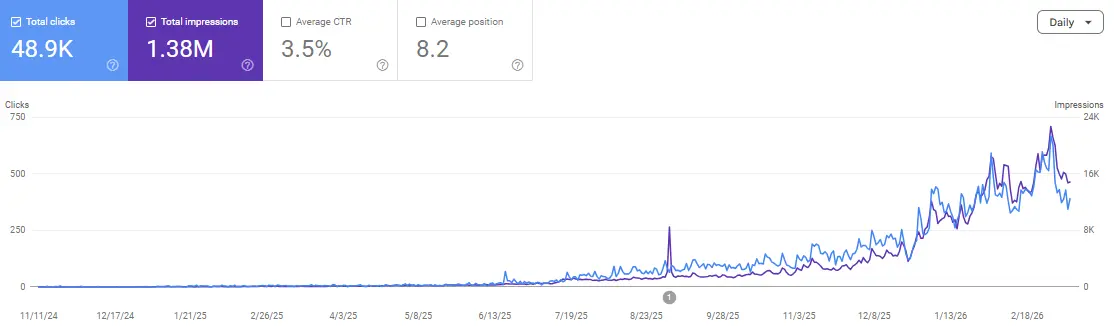
Use Google Search Console to monitor whether your page is gaining visibility. The Performance report shows clicks, impressions, average CTR, and average position for your selected time period.
Track these signals:
- target query impressions
- clicks from organic search
- CTR changes
- average position
- pages gaining visibility
- new question queries
- manual AI Overview checks for priority keywords
In addition, compare performance before and after content updates. This helps you see whether your AI Overviews optimization work also improves normal SEO performance.
Common AI Overviews Optimization Mistakes
Many beginners look for shortcuts. However, Google’s guidance focuses on useful content, technical clarity, and strong SEO foundations.
Avoid these mistakes:
- writing only for AI systems
- hiding the answer too low
- using vague introductions
- skipping examples
- adding schema that does not match the page
- publishing generic AI-written content
- ignoring internal links
- blocking snippets accidentally
- chasing GEO or AEO hacks without improving the page
Instead, optimize content for AI Overviews by making the page more useful, clearer, and easier to verify.
FAQs About AI Overviews Optimization
What is AI Overviews optimization?
AI Overviews optimization is the process of improving content so Google can understand, summarize, and potentially surface it in AI-generated search results.
How do I optimize content for AI Overviews?
Start with a direct answer, match search intent, answer related questions, use clear headings, add examples, support claims, apply relevant schema, and keep technical SEO clean.
Does schema help AI Overviews?
Schema can help Google understand page meaning, but it does not guarantee AI Overview visibility. Use schema only when it matches visible content.
Do I need to rank first to appear in AI Overviews?
Not always. However, Google says generative AI features are rooted in core Search ranking and quality systems, so strong SEO fundamentals still matter.
Can AI Overviews reduce traffic?
They can. One 2026 study found that AI Overview exposure reduced daily traffic to English Wikipedia articles by about 15%, although results may vary by site and topic.
What should beginners fix first?
Fix the introduction, headings, search intent match, examples, internal links, indexability, and snippet eligibility first. These changes help both AI Overview SEO and normal SEO.
Conclusion
How to optimize content for AI Overviews starts with strong SEO basics, not shortcuts. A good page gives a direct answer, matches search intent, covers related questions, uses clear structure, supports claims, and stays technically accessible.
For beginners, optimize content for AI Overviews one page at a time. Start with the main answer, add query fan-out sections, include examples, apply schema when relevant, check Search Console, and keep improving the page based on real search data.
Want help improving AI Overviews optimization, GEO, AEO, or SEO content? Join the Scale Xpert community.