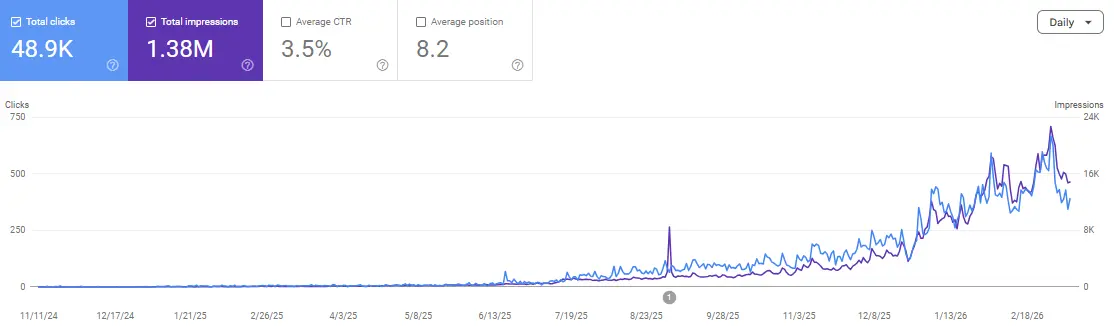
A keyword research checklist helps you choose SEO keywords with a clear process instead of guessing. It matters because the wrong keyword can waste time, while the right keyword can bring targeted traffic and better content ideas.
In this guide, you will learn how to find keyword ideas, check search intent, review keyword difficulty, and turn keywords into article topics.
What Is a Keyword Research Checklist?
A keyword research checklist is a step-by-step process for finding, filtering, and choosing keywords before writing content. It helps you move from a broad seed keyword to a focused article topic.
For example, instead of targeting a broad keyword like SEO, you can use the checklist to find better ideas like SEO keyword research checklist, how to find long-tail keywords, or low-competition keywords for beginners.
This process is useful because beginner SEO often fails when content starts with random ideas. Therefore, your checklist should help you confirm relevance, search intent, difficulty, and content opportunity before writing.
Why a Keyword Research Checklist Matters for SEO
A keyword research checklist keeps your SEO content strategy focused. Instead of choosing keywords only by search volume, you review whether the keyword is realistic, useful, and connected to your website.
For example, a niche site may not rank quickly for keyword research. However, it may have a better chance with keyword research checklist for beginners because the intent is clearer and the competition may be easier.
In addition, a checklist helps you avoid keyword cannibalization. If two pages target the same primary keyword, they may compete with each other instead of supporting your topic cluster.
Step 1: Start With Seed Keywords
Every keyword research checklist should start with seed keywords. A seed keyword is a broad topic you use to begin keyword discovery.
Good seed keyword examples include:
- backlinks
- keyword research
- search intent
- local SEO
- content pruning
- SEO tools
Next, turn each seed keyword into keyword ideas. For example, keyword research can lead to long-tail keywords, keyword difficulty, keyword mapping, Google Keyword Planner, and SEO keyword research.
Step 2: Collect Keyword Ideas
After choosing a seed keyword, collect related keywords from several sources. This gives you a better keyword list and helps you avoid depending on one tool.
Use these sources:
- Google Autocomplete
- People Also Ask
- Google Search Console queries
- Google Keyword Planner
- Semrush Keyword Magic Tool
- Ahrefs Keywords Explorer
- Reddit, forums, and community questions
- Competitor articles
However, do not save every keyword variation. Keep only keyword ideas that match your audience, topic, and content planning goals.
Step 3: Check Search Intent
Search intent means the reason behind a search query. This is one of the most important parts of any SEO keyword research checklist.
Use this table as a quick guide:
| Keyword | Intent | Best content type |
|---|---|---|
| what is keyword research | Informational | Beginner guide |
| best keyword research tools | Commercial | Comparison article |
| Google Keyword Planner login | Navigational | Tool page |
| buy SEO audit | Transactional | Service page |
Before writing, search the keyword on Google and study the top results. If Google mostly ranks comparison posts, do not write a simple definition page.
Step 4: Review Keyword Difficulty
Keyword difficulty helps you estimate how hard it may be to rank for a keyword. However, it should guide your decision, not control it completely.
Check these points:
- Are big websites ranking?
- Are small blogs ranking?
- Do top pages have many backlinks?
- Is the content detailed and fresh?
- Can your article be more useful?
- Does the topic fit your website authority?
For beginner SEO, start with low-competition keywords and long-tail keywords. As a result, you can build topical relevance before targeting harder SEO keywords.
Step 5: Check Search Volume and Traffic Potential
Search volume shows how often people search a keyword, but it does not tell the full story. A keyword with lower search volume can still be valuable if it brings the right audience.
For example, keyword research checklist may attract readers who are ready to follow a practical process. Meanwhile, a broad keyword like keywords may be too vague and less useful for content optimization.
Also check related keywords and secondary keywords. Sometimes one article can rank for many keyword variations when the page fully answers the topic.
Step 6: Analyze the SERP Manually
SERP analysis means reviewing the search results before choosing a target keyword. This helps you understand what Google is already rewarding.
Look for:
- content format
- title angles
- freshness
- examples
- screenshots
- FAQs
- content depth
- weak or outdated pages
- forums or small blogs ranking
If the SERP has weak pages, that may be a keyword opportunity. However, if every result is strong, updated, and from trusted websites, the keyword may be harder than the tool score suggests.
Step 7: Group Keywords Into Clusters
Keyword clustering means grouping similar keywords under the same topic. This helps you avoid writing separate thin articles for every small variation.
Example:
| Main topic | Cluster keywords |
|---|---|
| Keyword research | seed keyword, long-tail keywords, low-competition keywords, keyword mapping |
| Backlinks | types of backlinks, local backlinks, backlink exchange, backlink analysis |
| Search intent | keyword intent, user intent, commercial intent, informational intent |
This step improves your SEO content strategy because related pages can support each other with internal linking. In addition, topic clusters make your website easier to organize.
Step 8: Turn Keywords Into Article Topics
A keyword list is not enough. You need to turn keyword ideas into practical article topics.
| Keyword | Article topic |
|---|---|
| keyword research checklist | Keyword Research Checklist for Beginners |
| seed keyword examples | Seed Keyword Examples for SEO |
| long-tail keywords | Long-Tail Keywords: Practical SEO Guide |
| how to find low-competition keywords | How to Find Low-Competition Keywords |
After that, choose one primary keyword for each article. Then, add secondary keywords, related keywords, FAQs, and internal link targets.
Step 9: Choose One Primary Keyword Per Page
Each page should have one clear primary keyword. This keeps the article focused and helps readers understand the main topic quickly.
You can still use secondary keywords naturally. For example, an article targeting keyword research checklist can also mention keyword planning, keyword difficulty, search intent, and keyword mapping.
However, do not target too many unrelated SEO keywords on one page. Instead, create separate articles when the intent or content type is different.
Final Keyword Research Checklist
Use this checklist before writing any SEO article:
- Choose a seed keyword
- Collect keyword ideas
- Check Google Autocomplete
- Review People Also Ask
- Check Google Search Console queries
- Use keyword research tools
- Review search intent
- Check keyword difficulty
- Check search volume
- Analyze the SERP manually
- Group similar keywords
- Choose one primary keyword
- Add secondary keywords
- Create an article title
- Plan internal links
- Add FAQs
- Track performance in GSC
This checklist gives you a repeatable keyword research workflow. Therefore, every article starts with a clear purpose.
Common Keyword Research Mistakes
Many beginners choose keywords only because they have high search volume. However, high volume does not always mean good traffic.
Avoid these mistakes:
- ignoring search intent
- targeting keywords that are too broad
- skipping SERP analysis
- using too many primary keywords
- ignoring long-tail keywords
- choosing unrelated keyword ideas
- not checking keyword difficulty
- forgetting internal linking
- publishing without a content plan
Instead, choose keywords based on relevance, difficulty, intent, and content value. This makes your SEO content more useful and easier to grow.
FAQs About Keyword Research Checklist
What is a keyword research checklist?
A keyword research checklist is a step-by-step process for finding, filtering, and choosing keywords before creating SEO content.
Why is keyword research important for SEO?
Keyword research helps you understand what people search for. As a result, you can create content that matches user intent and brings more relevant traffic.
How do beginners find keywords?
Beginners can find keywords using seed keywords, Google Autocomplete, People Also Ask, Google Search Console queries, keyword tools, and competitor pages.
What should I check before choosing a keyword?
Check search intent, keyword difficulty, search volume, SERP quality, relevance, and whether the keyword fits your content strategy.
How many keywords should one article target?
One article should target one primary keyword. However, it can also include secondary keywords, related keywords, keyword variations, and FAQ terms.
What tools should I use for keyword research?
You can use Google Keyword Planner, Google Search Console, Semrush Keyword Magic Tool, Ahrefs Keywords Explorer, and free Google search features.
Conclusion
A keyword research checklist helps you choose better keywords before writing. It keeps your keyword strategy focused on search intent, keyword difficulty, content planning, and realistic SEO opportunities.
Start with seed keywords, collect keyword ideas, analyze the SERP, group keywords into topic clusters, and choose one primary keyword per page. Then, improve your article with secondary keywords, FAQs, and internal links.
Want help building your keyword research checklist? Join the Scale Xpert community here.