Many beginners feel the same problem: link building takes too long. You search for websites, check quality, send outreach emails, wait for replies, and still may not get a backlink.
That can feel frustrating. However, slow link building is not always a bad sign. Good backlinks usually take more effort because they need relevance, trust, and natural placement.
The real problem is not only time. The problem is wasting time on weak websites, unclear outreach, and poor planning. Better SEO Backlink Strategies help you work smarter, not just harder.
This guide shows why link building takes time and how beginners can make the process more practical.
Why Link Building Takes Too Long
Link building takes time because you depend on other websites. Unlike editing your own content, you cannot fully control whether another website accepts your link.
You also need to check quality before you build the backlink. A fast backlink from a weak website may not help your SEO. In some cases, it can create risk.
Link building usually takes time because you need to:
- Find relevant websites
- Check content quality
- Find contact details
- Write outreach messages
- Wait for replies
- Create guest posts or resources
- Track published links
- Review results after a few weeks
Therefore, the goal is not to make link building instant. The goal is to remove wasted steps.
Is Slow Link Building Normal?
Yes, slow link building is normal. A good backlink often needs research, communication, and trust.
However, link building should not feel completely random. If you spend weeks contacting websites with no replies, your process may need fixing.
Slow link building is normal when:
- You target high-quality websites
- You personalize outreach
- You create useful content
- You check each opportunity carefully
- You build links naturally
Slow link building becomes a problem when:
- You contact unrelated websites
- You use weak outreach messages
- You have no prospect list
- Your content is not worth linking to
- You do not track your efforts
Good SEO Backlink Strategies help you see the difference between useful effort and wasted effort.
Step 1: Start With One Target Page
Many beginners waste time because they try to build links to too many pages at once. This makes the process messy.
Start with one page. Choose a page that has clear SEO value.
Good target pages include:
- A strong blog guide
- A service page
- A comparison article
- A checklist
- A free tool
- A case study
- A resource page
Before outreach, ask yourself:
Is this page worth linking to?
If the answer is not clear, improve the page first. A backlink works better when the target page is useful.
Step 2: Fix the Page Before Outreach
If your page is weak, outreach becomes harder. Website owners need a reason to link to your content.
Before building links, check the page:
- Does it answer the keyword clearly?
- Is the article useful for beginners?
- Are headings easy to scan?
- Does it include examples?
- Are internal links added?
- Is the page mobile-friendly?
- Does the title match search intent?
A backlink can support a good page. However, it cannot fully save a page that does not help readers.
This step may take time at first, but it saves time later. Better content usually gets better outreach responses.
Step 3: Build a Smaller Prospect List
A huge prospect list can look productive, but it often creates more work. A smaller list of relevant websites is usually better.
Start with 20 to 30 websites instead of hundreds. Then, review each website manually.
Add these columns to your spreadsheet:
| Website | Topic | Contact | Link Type | Quality Check | Status |
Where to find prospects:
- Google search
- Competitor backlinks
- Resource pages
- Guest post pages
- SEO communities
- Existing partners
A smaller list helps you focus on quality. In addition, it keeps your SEO Backlink Strategies easier to manage.
Step 4: Use Better Search Operators
Search operators help you find backlink opportunities faster. They make Google searches more specific.
Try these:
- keyword + guest post
- keyword + write for us
- keyword + resources
- keyword + useful links
- keyword + recommended tools
- keyword + expert roundup
- keyword + submit article
For example, if your topic is SEO, you can search:
SEO guest post
or:
digital marketing resources
However, do not contact every result. Open the website first and check if it is relevant.
Step 5: Check Website Quality Fast
You do not need to spend 30 minutes checking every website. Use a simple first filter.
Reject a website quickly if it has:
- Random topics in every niche
- Thin or copied content
- Too many outbound links
- No clear audience
- Poor formatting
- Spammy categories
- No indexed pages
Keep the website if it has:
- Related topics
- Useful articles
- Real audience
- Clean outbound links
- Clear author or brand
- Natural link placement
This one step can save hours. Many link opportunities look good in a spreadsheet but weak when you open the page.
Step 6: Use Simple Outreach Messages
Long outreach emails often get ignored. Website owners are busy, so make your message short and specific.
Use this simple structure:
- Mention their page.
- Say why your content fits.
- Explain the value for readers.
- Keep the message polite.
Example:
Hi [Name],
I found your article about [topic] and liked the section about [specific point].
I have a guide about [your topic] that may help readers who want [benefit].
It could fit naturally in the section about [related topic].
Either way, nice article.
This works better than a generic message because it shows you checked their content.
Step 7: Reuse Outreach Templates Carefully
Templates save time, but copied messages can feel spammy. Use a template only as a base.
Change these parts for each website:
- Website name
- Article topic
- Specific section
- Your content angle
- Reason the link fits
Good SEO Backlink Strategies balance speed and personalization. You do not need to rewrite every email from zero, but every message should feel relevant.
Step 8: Choose Faster Link Building Methods
Some backlink methods take longer than others. Beginners should start with methods that are easier to manage.
Guest posting
Guest posting takes effort, but it gives you control over the content. It works best on relevant websites.
Resource page outreach
This is useful when your page is a guide, checklist, or tool. Resource pages already link to helpful content.
Expert quotes
Expert quotes can be faster because you provide a short answer instead of a full article.
Niche partnerships
Partners, clients, and related businesses can create natural link opportunities.
Community networking
SEO communities can help you find feedback, examples, and possible backlink opportunities faster.
Step 9: Track Replies and Follow-Ups
Many beginners lose time because they do not track outreach. They forget who replied, who rejected the pitch, and who needs a follow-up.
Track:
- Date contacted
- Response status
- Follow-up date
- Accepted or rejected
- Published URL
- Anchor text
- Target page
Follow up once after 5 to 7 days. However, do not send too many follow-ups. If there is no reply after one or two messages, move on.
Step 10: Measure Results After 30–60 Days
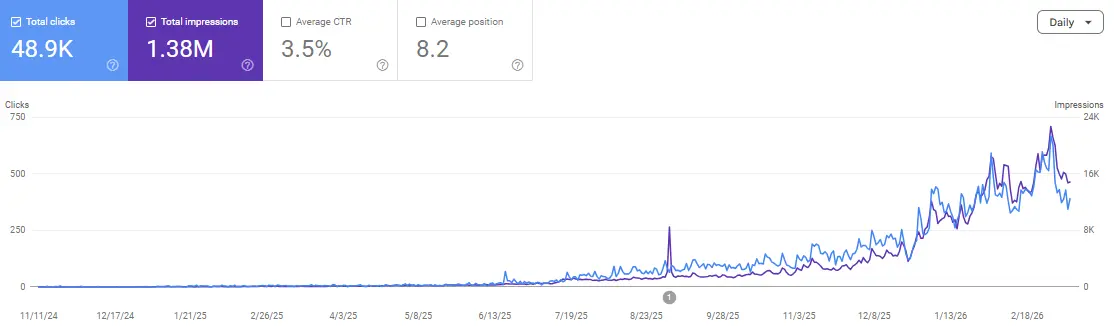
Link building feels slow when you do not track results. After a backlink goes live, review the impact.
Check:
- Is the backlink still live?
- Is the linking page indexed?
- Did impressions increase?
- Did rankings improve?
- Did referral traffic appear?
- Did the target page get more clicks?
Use Google Search Console and Google Analytics. In addition, keep a manual spreadsheet for every backlink.
Do not expect instant results. However, tracking helps you see which links are worth repeating.
Practical Ways to Save Time
Use this checklist when link building takes too long:
- Work on one target page at a time.
- Build a smaller prospect list.
- Reject weak websites faster.
- Use search operators.
- Prepare one strong outreach template.
- Track every contact.
- Follow up once.
- Focus on relevant websites only.
- Reuse good content assets.
- Ask for feedback before wasting time.
This makes your process cleaner and easier to repeat.
FAQs
Why does link building take so long?
Link building takes time because you need to find relevant websites, check quality, send outreach, wait for replies, and track results.
Is link building still worth it?
Yes, link building is still useful when the backlinks are relevant, natural, and placed on trusted websites.
How can beginners speed up link building?
Start with one target page, use search operators, build a smaller prospect list, and use simple outreach templates.
What is the fastest backlink method?
Expert quotes, niche partnerships, and resource page outreach can be faster than full guest posting. However, quality still matters.
Should I use automated link building tools?
Be careful. Automation can save time, but spammy outreach or low-quality links can damage your SEO strategy.
How many outreach emails should I send?
Start small. Send 10 to 20 focused emails, track replies, then improve your message before scaling.
How long does it take backlinks to work?
Backlinks may take a few weeks or longer to show results. Review indexing, impressions, clicks, and rankings after 30–60 days.
What should I do if nobody replies?
Check your website targets, outreach message, content quality, and value offer. Your pitch may not be relevant enough.
Conclusion
Yes, link building takes too long when you do it without a clear process. However, the work becomes easier when you focus on fewer, better opportunities.
Start with one strong page. Improve it first, build a small prospect list, check website quality, send simple outreach, and track every result.
Good SEO Backlink Strategies are not about speed only. They are about building links that make sense, support your content, and help real readers. When your process feels stuck, ask for feedback before wasting more time.
Join our Discord community to improve your backlink process and learn safer link building with other SEO learners.