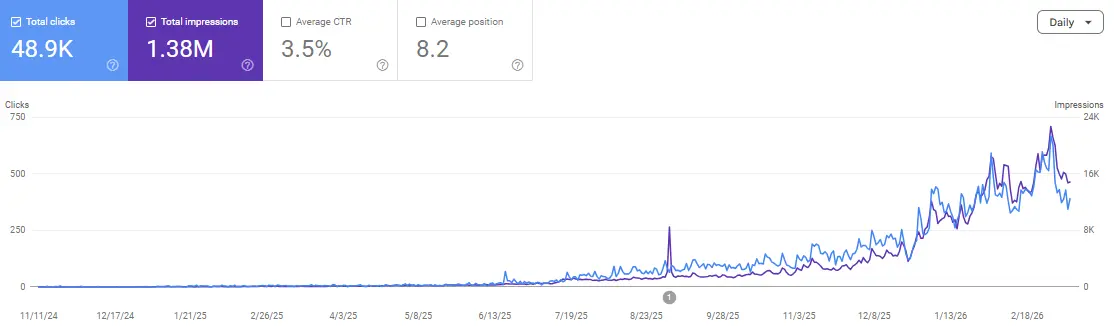
Search engine optimization has never been more powerful or more complex. In 2026, getting your content discovered requires more than ranking on Google. It requires being visible to AI-powered search tools, voice assistants, and answer engines that hundreds of millions of people use every day.
That is exactly what Hybrid Engine Optimization (HEO) is built for. And the good news is: you do not need to be an expert to get started.
This guide is specifically written for beginners who want to understand HEO from the ground up and take their first practical steps without feeling overwhelmed. New to SEO and HEO? Connect with a community of practitioners who started exactly where you are join us here and ask your first question.
What Is HEO and Why Should Beginners Care?
Hybrid Engine Optimization (HEO) is the practice of making your content visible in two places at once:
- Traditional search engines like Google and Bing where you appear in ranked search results
- AI platforms like ChatGPT, Gemini, and Perplexity where AI tools summarize and cite content in their answers
If you have been studying SEO, you already understand the first part. The second part is what makes HEO different and why it matters so much right now.
Here is a simple example: if someone searches “what is the best way to build backlinks” on Google, they might see 10 blue links. However, if the same person asks ChatGPT the same question, they get a direct answer with content cited from specific sources. HEO is the strategy for ensuring your content appears in both scenarios.
Why This Matters for You Right Now
You might be wondering: “Do I really need to worry about AI search if I am just starting out?”
The honest answer is yes and here is why.
AI-powered search is not a future trend. It is happening right now. According to multiple sources, ChatGPT has surpassed 100 million weekly users. Google’s AI Overviews now appear at the top of millions of search results. Perplexity AI is gaining traction among professional researchers and business users.
If you build your SEO strategy now with HEO in mind, you avoid the painful process of retrofitting your content library later. It is significantly easier to build HEO principles into your content from the beginning than to go back and restructure hundreds of articles later.
Additionally, many of the practices that make content AI-friendly clear answers, good structure, genuine expertise also make it perform better on traditional Google search. Therefore, starting with HEO does not mean extra work. It means smarter work from the beginning.
Understanding what SEO content is and how it ranks is the foundation before adding the AI optimization layer that HEO requires.
HEO in Plain English: The Three Things You Need to Do
Before getting into tactics, here is HEO simplified to its core:
Thing 1: Be easy to find on Google. This means traditional SEO keywords, good content, backlinks, fast website.
Thing 2: Be easy for AI to extract and cite. This means answer-first content structure, FAQ sections, schema markup, and clear definitions.
Thing 3: Be recognized as trustworthy everywhere. This means building your brand’s entity presence consistent information across Google, social media, and other authoritative sites.
That is it. Everything else in HEO is an extension or refinement of these three core activities.
Your First Week of HEO: A Beginner’s Action Plan
You do not need to do everything at once. Here is a realistic first-week plan that any beginner can execute.
Day 1–2: Set Up Your Measurement Tools
Before making changes, set up the tools that will tell you whether your efforts are working.
- Create or verify your Google Search Console account and connect it to your website. This shows you which queries bring people to your site.
- Install Google Analytics 4 if you have not already. This tracks traffic behavior on your site.
- Set up a free Brand24 or Mention trial to monitor brand mentions across the web.
Day 3–4: Understand Your Current Content
- Identify your top 5 most-visited pages using Google Search Console or Analytics.
- For each page, ask: “Does this page clearly and directly answer a question within the first 2–3 sentences?”
- Note which pages are missing FAQ sections or structured data.
Day 5–6: Do Your First HEO Keyword Research
- Go to AlsoAsked.com and enter your main topic. Review the question clusters it generates.
- Open ChatGPT and Perplexity and ask your main topic as a question. Review the questions they use to structure their answers.
- Add the most relevant questions to your content plan as future FAQ items or H3 headings.
Day 7: Make Your First HEO Content Update
- Choose your most-visited page.
- Add a clear, direct answer in the first 1–2 sentences of the introduction.
- Add a FAQ section at the bottom with at least 6 questions based on your keyword research.
- Add FAQ schema markup (use the free Merkle Schema Markup Generator if needed).
That is your first week of HEO. It is practical, it is measurable, and it builds the habits you will carry forward.
The Most Important HEO Concepts Every Beginner Needs to Know
Answer-First Content
This is the single most important HEO writing principle. Every section of your content should open with a direct answer to the implied question — before expanding into explanation, context, or detail.
Why? Because AI models extract first-paragraph responses most reliably. If your answer is buried, AI will not find it.
Schema Markup
Schema markup is code you add to your pages that tells search engines and AI systems what your content is about in a structured, machine-readable format. The most important types for beginners are:
- FAQ schema: Marks up question-and-answer pairs
- Article schema: Identifies the content as an article with a publication date and author
- Organization schema: Identifies your brand and its details
You do not need to code these manually. Free tools generate the code for you — just paste it into your page’s header.
Topical Authority
Topical authority means being recognized as an expert on a specific topic — not just one page, but across multiple interconnected pages on your site. When your site covers a topic deeply and consistently, both Google and AI platforms treat it as a credible source.
Building topical authority is why content clusters matter so much in HEO. A single article rarely builds enough authority on its own.
E-E-A-T
Experience, Expertise, Authoritativeness, and Trustworthiness. These are Google’s signals for content quality — and AI platforms use similar criteria when deciding what to cite. Always write with clear authorship, cite your sources, and demonstrate genuine knowledge of your topic.
Common HEO Mistakes Beginners Make
Knowing what not to do is just as valuable as knowing what to do. Here are the most common beginner mistakes in HEO:
Mistake 1: Treating HEO and SEO as separate projects. They are not. HEO builds on your SEO foundation. Focus on traditional SEO basics first, then layer AI optimization on top.
Mistake 2: Skipping schema markup because it seems technical. Schema is genuinely important for AI citation. Free tools make it accessible even without coding skills. Skipping it puts you at a significant disadvantage.
Mistake 3: Writing for keywords instead of questions. AI tools are question-and-answer machines. Content that is structured around answering real questions performs far better than content built around keyword density.
Mistake 4: Ignoring E-E-A-T. Thin content without clear authorship and genuine expertise is unlikely to be cited by AI systems, regardless of how well it ranks on Google.
Mistake 5: Never checking AI platforms. If you are not periodically checking whether your content appears on ChatGPT, Gemini, and Perplexity, you have no visibility into your AI search performance. Manual checks are free and take only a few minutes.
How HEO Fits Into Your Existing SEO Strategy
If you are already doing SEO, here is how HEO fits in:
Your existing keyword research, backlink building, and on-page optimization efforts remain fully relevant. HEO adds three new layers on top:
- Answer-first content formatting (affects how you write every section)
- Schema markup (a one-time technical implementation per page)
- Entity and brand presence building (ongoing activity alongside link building)
You do not need to abandon your existing SEO workflow. Instead, integrate these HEO layers into your existing content creation and optimization process.
For example, when you write a new article, simply apply the answer-first structure from the beginning. Add a FAQ section before publishing. Add schema markup at the same time you write your meta description. These additions take 30–60 extra minutes per article — and the long-term payoff in AI visibility is significant.
Learning how to build an effective SEO strategy for long-term growth gives you the foundation on which HEO layers naturally sit.
Simple HEO Checklist for Every Article You Publish
Use this checklist whenever you create or update content:
- [ ] Does the introduction answer the main question within the first 2 sentences?
- [ ] Does each H2 section open with a direct 1–2 sentence answer?
- [ ] Are headings phrased as questions or clear topic statements?
- [ ] Is there a FAQ section with at least 6 questions?
- [ ] Is FAQ schema implemented on the page?
- [ ] Is Article schema implemented?
- [ ] Is there a named author with credentials?
- [ ] Are internal links pointing to related cluster content?
- [ ] Are sentences under 20 words (on average)?
- [ ] Is the Flesch Reading Ease score above 60?
If you can check every box, your content is well-positioned for both Google rankings and AI citation.
FAQs
Do I need any technical skills to start HEO?
No. The most impactful HEO changes answer-first writing, FAQ sections, question-based headings require only writing skills. Schema markup can be generated with free tools and added through your CMS without coding. Technical SEO improvements benefit from developer support but are not the first priority for most beginners.
How long before I see results from HEO?
Traditional SEO results typically take 3 to 6 months to become measurable. AI citation presence can develop faster sometimes within weeks once your content is well-structured and schema is in place. Set realistic expectations and track progress monthly.
Can I do HEO on my own, or do I need an agency?
You can absolutely implement HEO on your own, especially in the early stages. The core practices — answer-first content, FAQ schema, entity building, and AI monitoring are all learnable skills that do not require agency support. As your site grows, you may benefit from specialist help, but solo implementation is entirely viable.
Is HEO worth it for a brand-new website?
Yes, especially for a new website. Building HEO principles into your content from day one means you never have to retrofit your content library. Starting with clear answers, good structure, and schema markup from the beginning accelerates both Google rankings and AI visibility.
What is the easiest HEO improvement I can make today?
Add a FAQ section to your most-visited page. Choose 6 questions related to your topic, write clear and direct answers, and add FAQ schema markup. This single change can improve featured snippet capture, AI extraction eligibility, and People Also Ask appearances simultaneously.
Do I need to optimize for every AI platform separately?
No. The same content principles — answer-first formatting, clear structure, schema markup, E-E-A-T signals work across ChatGPT, Gemini, Perplexity, and Google AI Overviews. You do not need separate strategies for each platform.
Where should a complete beginner start learning SEO and HEO?
Start with the fundamentals of what keywords are in SEO, then move through on-page SEO basics, and finally layer in HEO principles. Building on a solid SEO foundation makes every HEO tactic more effective.
Conclusion
If you are just beginning your SEO journey in 2026, you are starting at exactly the right moment to build an HEO-first approach from the ground up. Rather than learning traditional SEO and then having to unlearn and relearn for the AI age, you can build the right habits from day one.
Remember: HEO is not about doing more work. It is about doing smarter work. Clear answers, good structure, genuine expertise, and consistent brand presence serve every platform Google, ChatGPT, Gemini, voice search, and every discovery channel that comes after.
Start small. Follow the first-week action plan. Use the per-article checklist. Monitor your AI citation presence monthly. And build content clusters that compound in authority over time.
The brands that start HEO today will have a compounding advantage over those that wait. There is no better time to begin. Ready to start your HEO journey with a community of practitioners behind you? Join the conversation, ask your questions, and grow alongside other SEOs and content marketers who are making this shift connect with us here.