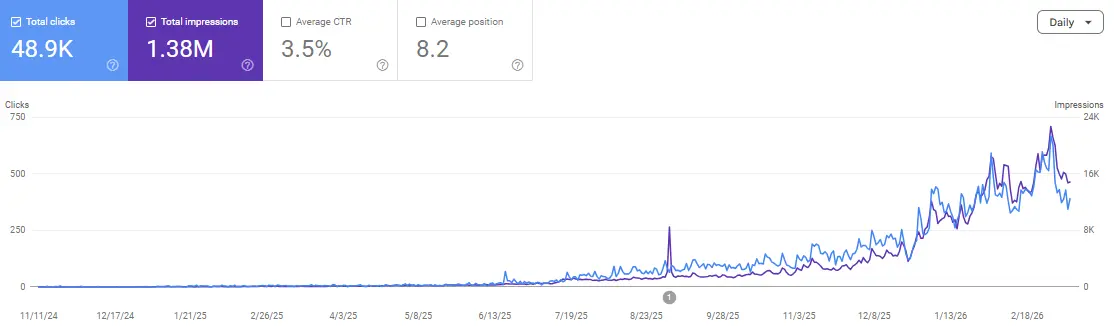
When you search in Google, ask ChatGPT a question, or see an AI Overview, you are witnessing AI answer ranking methods in action. These systems decide which content is most relevant, trustworthy, and useful then assemble it into a structured response.
Traditional SEO focused on ranking full web pages. However, AI-powered systems now prioritize specific snippets. They may pull a definition from one source, a statistic from another, and a practical explanation from a third blending them into one cohesive answer.
If you’re starting to explore how this works in practice, you’ll often find that real insights come from shared experimentation. Many SEO practitioners exchange findings and opportunities in focused spaces, like this SEO-focused Discord community, where discussions naturally evolve around ranking patterns and content performance.
Your goal is simple: make your content the clearest, easiest, and most trustworthy option for AI systems to select.
How Machine Learning Ranks AI Answers
Machine learning sits at the core of modern AI answer ranking. You don’t need to become technical, but understanding the fundamentals helps you align with what these systems reward.
Learning To Rank With Real User Signals
Search engines use Learning to Rank (LTR) models trained on real user behavior.
They evaluate signals such as:
- Click-through rate
- Time spent on page
- Query reformulation
- Result selection frequency
Over time, these systems learn what satisfies users best. Therefore, content that answers clearly and keeps users engaged naturally performs better.
Personalization And Session Context
Modern ranking systems don’t operate in isolation. Instead, they adapt in real time based on user behavior.
They can:
- Adjust results based on location and history
- Recognize multi-step research sessions
- Refine answers as users interact
Because of this, well-structured and in depth content has a higher chance of appearing across multiple related queries not just one.
How AI Understands Content Semantics
AI doesn’t just read keywords it understands relationships between concepts.
Word And Document Embeddings
Technologies like Word2Vec and similar models map relationships between terms.
This means:
- Synonyms matter
- Context matters
- Natural language wins
If you’re still approaching SEO purely from a keyword perspective, it helps to revisit the fundamentals of what are keywords in SEO, especially in how they evolve into topics and intent.
Ultimately, AI rewards content that explains ideas clearly not content that repeats phrases.
Cross-Modal Understanding
Modern AI can also connect text with images.
To support this:
- Use descriptive alt text
- Add contextual captions
- Keep visuals relevant
This improves your chances of being featured in both text and visual AI results.
Why Answer Engine Optimization Matters
Answer Engine Optimization (AEO) is the next layer of SEO. Instead of only ranking pages, you optimize for being selected and quoted.
AI Overviews now dominate a large portion of search results. If your content isn’t structured for extraction, it may never be surfaced even if it ranks traditionally.
How AEO Differs From Traditional SEO
AEO prioritizes:
- Direct answers early in sections
- Clear structure with headings
- Strong trust signals
- Easily extractable formatting
Think of it this way: you’re not just writing for readers—you’re packaging answers for machines.
Voice Search And Conversational Queries
AI increasingly delivers answers through voice and conversational interfaces.
To adapt:
- Use question-based headings
- Provide concise answers first
- Expand with detail afterward
This structure mirrors how people naturally ask questions and how AI delivers them.
Key Metrics Used In AI Answer Ranking
AI systems evaluate content using multiple quality signals.
These include:
- Accuracy
- Relevance
- Coherence
- Helpfulness
- Trust
Additionally, ranking systems consider order not just inclusion. This is why stronger, clearer content often outranks partially relevant pages.
Google’s Core AI Ranking Signals
AI ranking systems rely on signals such as:
- Relevance
- Topic clarity
- Engagement
- Freshness
- Authority
Many of these connect directly with classic SEO principles. For example, understanding what is search intent in SEO becomes even more critical in an AI-driven environment.
When your content aligns tightly with intent, your chances of being selected increase significantly.
Practical Steps To Rank In AI Answers
Now let’s translate theory into action.
Structure Content For Snippet Extraction
Make your content easy to extract:
- Use clear H2 and H3 questions
- Answer immediately in 1–2 sentences
- Expand afterward
- Keep paragraphs concise
This allows AI to pull exactly what it needs.
Implement Helpful Schema Markup
Schema adds clarity for machines.
Start with:
- FAQ schema
- How-to schema
- Article schema
This reduces ambiguity and increases visibility in rich results.
Build Depth And Internal Connections
AI favors comprehensive coverage.
You should:
- Cover related subtopics
- Build topical clusters
- Link relevant pages
If you want to strengthen authority further, combining this with smart link strategies like those explained in how to get more backlinks can significantly boost trust signals.
Interestingly, many site owners begin testing collaboration and link opportunities once they reach this stage. It’s not uncommon to see these discussions happening organically in communities like this SEO networking space, where people exchange placements and growth strategies more fluidly.
Keep Content Fresh And Well Structured
AI prefers current and reliable information.
To stay competitive:
- Update content every 6–12 months
- Add new data and examples
- Improve clarity and structure
Freshness signals relevance especially in fast-changing topics.
FAQs
1. What Are AI Answer Ranking Methods?
They are systems that evaluate and order content based on relevance, accuracy, and usefulness for AI-generated answers.
2. How Are They Different From Traditional SEO?
Traditional SEO ranks pages, while AI ranking selects specific content snippets and combines them into answers.
3. Why Do AI Overviews Reduce Clicks?
Users often find answers directly in summaries, reducing the need to visit individual sites.
4. How Can You Optimize For Voice Search?
Use conversational headings and provide concise answers immediately below them.
5. What Role Does E-E-A-T Play?
It helps AI evaluate trustworthiness. Strong expertise and credibility increase your chances of being cited.
6. Can Small Websites Compete?
Yes. With strong structure, relevance, and clarity, smaller sites can outperform larger ones in specific niches.
Conclusion
AI answer ranking methods may seem complex, but the strategy is clear. You need to create content that is easy to understand, easy to extract, and easy to trust.
When you combine structured writing, strong intent alignment, and continuous updates, your content becomes far more likely to be selected by AI systems.
And if you’re not building this in isolation if you’re occasionally exchanging ideas, testing strategies, or even collaborating quietly with others—you’ll likely move faster. Spaces like this SEO growth community often become where those small advantages compound.
Because in the AI search era, clarity gets you indexed but collaboration often gets you ahead.