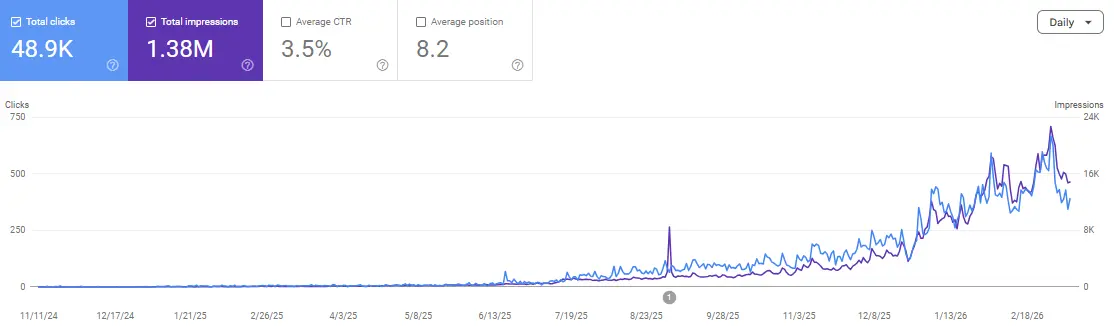
Thin content means a page has little value for the person searching, even if the page has many words. It matters for SEO because low-value content can fail to rank, weaken content quality, and make your site less useful.
In this guide, you will learn what is thin content, how to find weak pages, and how to fix them with practical SEO improvements.
What Is Thin Content?
Thin content is content that does not give enough original value to the reader. It may be short, copied, shallow, outdated, duplicated, or poorly matched to search intent.
For example, a 300-word page that answers a simple question clearly may not be thin content. However, a 2,000-word article can still be weak content if it repeats generic points without examples, screenshots, or useful steps.
Google’s Manual Actions report includes “Thin content with little or no added value” as a manual action type, which shows that low-value content can become a serious SEO issue in some cases.
Thin Content Is Not Always Short Content
Thin content SEO is not only about word count. Instead, the bigger issue is whether the page satisfies user intent and adds useful content value.
| Page example | Thin or useful? | Why |
| 400-word glossary page | Useful | It answers a simple definition clearly |
| 2,000-word generic article | Thin | It repeats common advice with no original value |
| Product page with copied text | Thin | It gives no unique buying help |
| Tutorial with screenshots | Useful | It helps the reader complete a task |
Because of this, do not fix thin content by adding filler text. Add missing value instead.
Why Thin Content Can Hurt SEO
Thin content can hurt SEO because it often fails to answer the searcher’s real need. Google says its ranking systems are designed to prioritize helpful, reliable information created for people, not content made mainly to manipulate rankings.
Low-value content can also create indexation problems. For example, if your site has many weak tag pages, duplicate pages, or near-duplicate content, Google may spend attention on pages that do not deserve to rank.
In addition, thin pages can weaken your topical authority. If many pages are shallow, users and search engines may struggle to see your site as a useful source.
How to Find Thin Content on Your Website
Start with a simple content audit. You want to find pages that have poor content quality, low traffic, weak rankings, or little content usefulness.
Use these methods:
- Google Search Console: Find pages with impressions but low clicks, low CTR, or poor average position.
- Analytics data: Check pages with low engagement, low traffic, or no conversions.
- Crawl tools: Look for duplicate titles, duplicate meta descriptions, thin category pages, and short indexable pages.
- Manual review: Read the page and ask whether it fully answers the query.
- SERP comparison: Compare your page with top-ranking results.
How to Fix Thin Content: Improve, Merge, Noindex, or Delete
Not every thin page needs the same fix. Therefore, choose the action based on traffic, search intent, backlinks, and content value.
| Situation | Best action |
| Page has impressions but weak content | Improve |
| Page overlaps another article | Merge |
| Page is useful for users but not search | Noindex |
| Page has no traffic and no value | Delete |
| Page has backlinks | Improve or redirect carefully |
| Page targets a useful keyword | Rewrite and expand |
How to Improve Thin Content
The best way to fix thin content is to improve usefulness. Start by checking the main query and rewriting the first paragraph so it answers the topic directly.
Then, improve the page with practical additions:
- Match search intent more closely
- Add missing H2 sections
- Include original examples
- Add screenshots or workflow images
- Add FAQs from Google Search Console queries
- Include comparison tables
- Update outdated information
- Add internal links to related pages
- Remove repeated filler text
- Add expert insight or real experience
Google’s spam policies also warn against scaled content abuse, scraped content, and doorway abuse, so avoid publishing many pages that exist mainly to manipulate search rankings instead of helping users.
Thin Content Examples and Fixes
Examples make thin content easier to understand. Use this table when reviewing your own site.
| Thin page | Problem | Fix |
| “What is keyword research?” with 300 generic words | Too basic | Add workflow, examples, tools, and screenshots |
| Local service page copied across 20 cities | Near-duplicate content | Add unique local proof, FAQs, reviews, and services |
| Product page with manufacturer text | No original content | Add use cases, comparisons, photos, and buyer FAQs |
| AI article with no examples | Poor content quality | Add real process, screenshots, data, and internal links |
A useful page should help the reader make progress. If the page only repeats what every competitor says, it needs stronger original content.
How to Prevent Thin Content in the Future
Prevention is easier than fixing hundreds of weak pages later. Before publishing, use a simple checklist.
Check that every page has:
- one clear primary keyword
- clear search intent
- useful examples
- original value
- helpful screenshots if needed
- FAQs for beginner questions
- internal links
- unique title and meta description
- enough depth to solve the query
In addition, avoid creating many pages only for tiny keyword variations. Instead, group related topics into stronger pages when the intent is similar.
FAQs About Thin Content
What is thin content in SEO?
Thin content in SEO means a page gives little or no added value to users. It may be shallow, copied, duplicated, outdated, or poorly matched to search intent.
Is thin content always short content?
No, thin content is not always short. A short page can be useful if it answers the query well, while a long page can be thin if it has poor content quality.
Can thin content hurt rankings?
Yes, thin content can hurt rankings because it may fail to satisfy users. In serious cases, Google may also apply a manual action for thin content with little or no added value.
How do I find thin content?
Use Google Search Console, analytics data, crawl tools, and manual review. Then, compare weak pages against top-ranking results for the same keyword.
Should I delete thin content?
Delete thin content only when the page has no traffic, no backlinks, no user value, and no strategic purpose. Otherwise, improve, merge, noindex, or redirect it carefully.
How do I fix thin content?
Fix thin content by matching search intent, adding original examples, improving structure, updating information, adding FAQs, including screenshots, and linking to related pages.
Conclusion
Thin content is not just short content. It is low-value content that does not fully help the reader, match search intent, or add enough original usefulness.
To fix thin content, run a content audit, review Google Search Console data, compare the SERP, and choose whether to improve, merge, noindex, or delete each page. Then, strengthen useful pages with examples, screenshots, FAQs, updated information, and internal links.
Want help reviewing thin content and improving weak SEO pages? Join the Scale Xpert community here.