Grok’s real-time X access and DeepSearch make it incredibly valuable for a narrow set of SEO and research workflows. However, the engine remains mediocre for tasks where ChatGPT, Claude, or Perplexity consistently win.
Using Grok effectively requires routing the right tasks to the right platform. You must build specific workflows that extract Grok’s distinctive value without wasting time on use cases where it underperforms.
This guide covers the exact workflows where Grok shines, the tasks you should route elsewhere, and the specific prompt setups that produce the most reliable outputs.
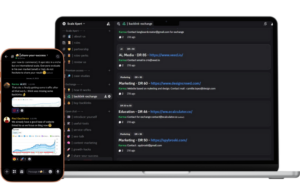
If you are testing Grok against other AI tools in your SEO stack, the Scale Xpert Discord community is built for that exact exchange. Join real operators sharing technical insights, modern SEO tactics, and genuine backlink exchanges.
Where Grok Genuinely Outperforms Every Alternative
Grok face no real competition in three specific research spaces:
-
Real-Time Social Discourse Analysis: Discovering what real people within a niche are saying about a topic right now.
-
Early Trend Identification: Spotting emerging conversations, complaints, or perspectives weeks before they appear in traditional web content.
-
Live Sentiment Aggregation: Reading thousands of recent posts to summarize dominant industry opinions and contrarian viewpoints.
For these specific tasks, Grok’s live X firehose access makes it irreplaceable. Competitors like ChatGPT, Claude, Gemini, and Perplexity can only retrieve web articles that summarize old social media activity. They cannot analyze live streams.
If the insights you need live in current peer-to-peer discussions rather than week-old journalism, route your workflow to Grok. For tasks outside these three core spaces, evaluate alternatives carefully.
Workflow 1: Social Listening for SEO Content Ideas
Keyword tools only measure historical search volume for queries that users already know how to articulate. X conversations capture the raw questions people are struggling with in real time. This workflow uses Grok to spot content gaps and underserved queries months before they show up in standard database tools.
Executing the Social Listening Workflow
First, define your target industry or umbrella topic. Next, instruct Grok to analyze recent niche discussions to isolate recurring questions, frustrations, or confusion points. Grok reads recent threads, posts, and replies to synthesize clear user patterns.
The resulting data uncovers highly differentiated content angles. Addressing these real-world pain points allows you to build unique authority.
The Content Gap Prompt
Use this specific prompt structure to extract actionable gaps:
“Search X for conversations about [topic] from the past two weeks. Identify the five most common questions, frustrations, or confusion points that practitioners are expressing. For each, summarize what specific aspect of [topic] people seem unclear about. Include examples of representative posts where possible.”
Differentiated data points help you build authoritative pages. Creating unique, high-value assets allows you to outpace generic AI summaries. Review our comprehensive blueprint on how to create non-commodity content AI cannot replicate to protect your organic traffic.
Workflow 2: Competitor and Brand Monitoring
Grok’s real-time data stream makes it an exceptional tool for tracking live brand reputation. Instead of delivering disjointed individual alerts, Grok synthesizes patterns across thousands of conversations.
Plaintext
Traditional Alert Tool ──► Delivers isolated, disjointed text mentions
Grok Reputation Loop   ──► Analyzes thousands of posts ──► Synthesizes core sentiment patterns
Uncovering Competitive Intelligence
Use Grok to map out the dominant themes surrounding a competitor. The engine quickly isolates common customer complaints, product praise points, and emerging brand narratives.
The Reputation Audit Prompt
Deploy this prompt structure to monitor competitor conversations:
“Search X for recent posts mentioning [brand/competitor] from the past month. Identify the top three positive narratives practitioners are sharing about them, the top three criticisms or concerns, and any emerging issues gaining momentum. Focus on substantive posts from accounts with genuine domain expertise.”
This workflow produces deep intelligence in minutes, saving hours of manual scrolling. The output allows you to refine your landing page positioning, address competitor weaknesses, and resolve critical customer objections directly through your content.
Workflow 3: Algorithm Update Impact Analysis
In the immediate aftermath of a Google core update, the SEO community shares massive volumes of live data on X. Practitioners post traffic screenshots, niche-specific losses, and initial indexing observations. Grok synthesizes this distributed data days before major industry blogs publish formal case studies.
Gathering Early Core Update Clues
During the vital first two weeks of an update, use Grok to look for common operational threads. The engine sweeps practitioner accounts to find out which categories are dropping and which are climbing.
The Algorithm Tracking Prompt
Maximize early update analysis with this query setup:
“Search X for posts from SEO practitioners discussing the [update name] from the past [timeframe]. Synthesize which types of sites appear to have been most negatively impacted, which seem to have benefited, and what common patterns practitioners are observing. Focus on accounts with apparent SEO expertise that share specific site types and traffic changes.”
This workflow provides fast, directional signals when you need them most. For example, during the June 2026 Spam Update, this loop synthesized clear data patterns well ahead of traditional media coverage.
To benchmark your findings against verified recovery playbooks, read our analysis on what the Google June 2026 spam update targeted and how to respond.
Workflow 4: DeepSearch for Content Research
When building research-heavy content, a standard search engine query often returns identical, repetitive overview articles. Grok’s DeepSearch mode solves this by executing multiple iterative search passes to uncover hidden source files.
The Multi-Pass Advantage
Standard engines scrape the top results of a single query and stop. DeepSearch analyzes the initial results, flags information gaps, and launches secondary searches to locate missing data points.
Plaintext
DeepSearch Flow: Run Initial Query ──► Evaluate Results ──► Scan for Data Gaps ──► Run Targeted Sub-Queries
This multi-pass setup effortlessly extracts statistics buried deep within case studies, whitepapers, or niche industry reports.
The Deep Research Prompt
To build data-rich asset guidelines, configure your prompt like this:
“Use DeepSearch to research [topic]. Provide a summary of the current consensus, three to five areas where expert opinion is genuinely divided, and specific statistics from credible sources with attribution. Focus on substantive, sourced information rather than surface overview summaries.”
Workflow 5: X Thread Analysis for Primary Research
Grok allows you to use specific social media threads as primary research material. No other AI tool can perform this analysis because competitors lack direct access to historical conversion loops.
Sourcing Expert Consensus
This workflow helps you extract immediate value from long, chaotic industry debates. It isolates the exact arguments made by verified experts while ignoring casual commentary.
The Thread Synthesis Prompt
Isolate high-value primary accounts with this layout:
“Find and analyze the most substantive recent X conversations about [topic] involving [specific account types, e.g., technical SEOs, industry researchers]. Summarize the key positions taken, the specific evidence cited, and any consensus emerging from the discussion. Include links to representative posts.”
Quoting real-time peer interactions adds incredible depth to your articles. This first-hand industry perspective helps you meet modern search engine requirements for authentic human expertise.
Where NOT to Route Work to Grok
Grok is a specialized instrument, not a general-purpose solution. Several core workflows yield far better results on alternative platforms:
-
Long-Form Content Drafting: Route this to Claude. Claude follows complex stylistic guides and maintains narrative coherence over long word counts far more reliably than Grok.
-
Technical Scripting & Automations: Use tools like Claude Code or ChatGPT with Advanced Data Analysis. Grok Build remains in early beta and lacks the execution stability needed for heavy coding production.
-
Editorial Quality Tweaks: Lean on Claude or GPT-5. They offer nuanced, highly precise stylistic feedback, whereas Grok provides blunter structural suggestions.
-
Stable Reference Research: Turn to Perplexity Pro Search or Gemini Deep Research if your topic relies entirely on published books, whitepapers, or academic documents rather than social media chatter.
-
Core Keyword Metrics: Rely on dedicated SEO tools like Ahrefs, Semrush, or Google Search Console. AI models cannot simulate live search volume indexes or accurate keyword difficulty metrics.
Configuring Grok for Best Research Results
You can significantly improve Grok’s research outputs by avoiding default behaviors and using specific configuration boundaries.
Define Authoritative Source Parameters
Explicitly tell Grok what kind of content to value. Add phrases like “focus on posts from accounts with demonstrated domain expertise rather than general commentary” or “prioritize web sources containing raw data over generic summary articles.”
Enforce Strict Timeframes
Control the recency filter manually. Include explicit boundaries like “analyze posts from the past 48 hours” for breaking news, or “scan conversations from the past 30 days” to evaluate stable market trends.
Leverage Persona Framing
Assigning Grok a specific, highly critical role activates its internal credibility evaluation layers.
Plaintext
Unframed Query ──► Default Web Search ──► Returns Surface-Level Overview Summary
Persona Framed  ──► Fact-Checking Role ──► Activates Source Credibility Evaluation Filters
Start your complex research prompts with this framing:
“You are conducting research as an elite fact-checking analyst. Your job is to locate verified, specific information and rank all retrieved sources based on their objective credibility.”
Frequently Asked Questions
What are Grok’s primary advantages over competitors?
Grok leads the market in analyzing real-time X conversations, mapping out social sentiment trends, and synthesizing distributed peer perspectives weeks before they hit traditional web channels.
Should I use DeepSearch for standard everyday queries?
No. DeepSearch runs multiple slower, iterative search loops and uses more of your subscription allocation. Reserve it for complex tasks that demand multi-source validation and deep data gathering.
How does Grok’s research layer compare to Perplexity?
Perplexity excels at compiling clean, comprehensive web-index lookups with aggressive freshness filters. Grok wins whenever your research requires live social discourse, immediate community sentiment tracking, or real-time breaking news context.
Conclusion
Grok provides immense value for search marketing and market research, provided you stay within its operational sweet spots. Its direct access to the live X firehose makes it the absolute best choice for real-time trend tracking, algorithm monitoring, and social listening workflows. For creative long-form drafting or complex technical coding, continue to rely on specialized engines like Claude. By routing your research tasks intelligently across your AI toolset, you ensure your content strategy remains data-rich, authoritative, and competitive.
Refine your multi-tool AI research stack alongside elite web operators. Join the Scale Xpert Discord community to collaborate on advanced search visibility and link-building tactics today.