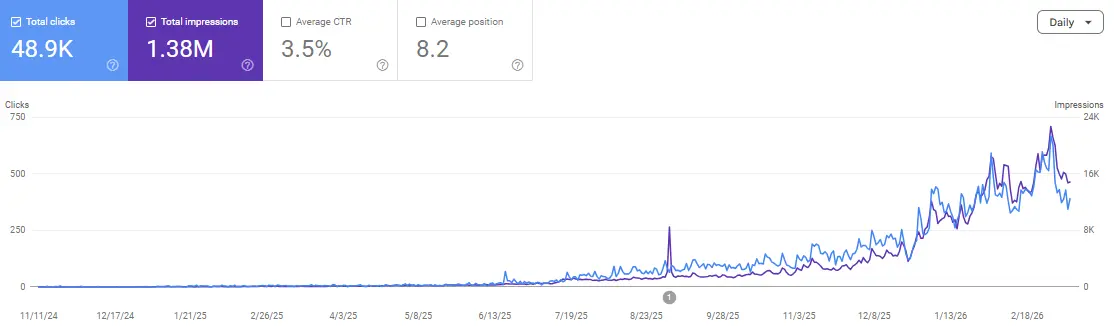
Tracking organic traffic in Google Analytics 4 shows you exactly how many people find your website through unpaid search results, which pages they land on, how long they stay, and whether they take action. This data is the most direct feedback loop available to any SEO practitioner, and it costs nothing to access once your property is set up.
If you want to discuss your organic traffic data with a community of site owners who are doing the same work, join Scale-Xpert on Discord. Members share what they are seeing in their analytics, exchange backlinks, and help each other interpret the numbers.
What Organic Traffic Means in Google Analytics 4
Organic traffic in Google Analytics 4 refers to all sessions where a visitor arrived at your website by clicking an unpaid result in a search engine. Google is the dominant source for most websites, but organic traffic also includes clicks from Bing, DuckDuckGo, Yahoo, Baidu, and other search engines that Google recognizes.
How Google Analytics 4 identifies organic sessions
When a user clicks a search result, their browser passes along referrer information that includes the search engine’s domain. Google Analytics 4 reads this referrer and checks whether the medium equals “organic.” If it does, that session is assigned to the Organic Search channel in your Default Channel Group. No manual setup is required for this classification to happen automatically.
Why organic traffic is the most valuable channel for SEO
Organic traffic compounds over time in a way that no paid channel can replicate. Every piece of content you publish and every backlink you earn can continue to drive organic visits for months or years without additional investment. In contrast, paid traffic stops the moment your budget runs out. This compounding nature is why tracking your organic channel carefully is one of the highest-return habits you can build as a website owner.
What organic traffic does not include
It is important to understand what is excluded from the Organic Search channel. Paid search ads, even on Google, are tracked separately in the Paid Search channel. Social media clicks, email newsletter clicks, and direct visits all have their own channels. This separation makes your organic data clean and reliable as a pure measure of your SEO performance. For a full breakdown of every channel, see the complete guide to traffic sources in Google Analytics 4.
Where to Find Your Organic Traffic Data
Google Analytics 4 stores organic traffic data in several places. Knowing where to look for each type of question saves you time and helps you build a consistent review habit.
The Traffic Acquisition report
The Traffic Acquisition report is your starting point for organic traffic analysis. To open it, go to Reports in the left sidebar, then Acquisition, then Traffic Acquisition. The default view shows all your channel groups in rows. Look for the row labeled “Organic Search” to see your total organic sessions, engagement rate, average engagement time, and conversions for the selected date range.
Filtering for organic traffic only
To analyze only your organic sessions without the distraction of other channels, click “Add filter” at the top of the Traffic Acquisition report. Set the dimension to “Session default channel group,” set the condition to “exactly matches,” and set the value to “Organic Search.” This filtered view lets you analyze your organic visitors in isolation so you can see their behavior clearly without mixing in direct or referral traffic.
The Landing Page report for organic sessions
Once you have filtered for organic traffic, change the primary dimension from “Session default channel group” to “Landing page and screen class.” This transforms the report into a page-level view that shows exactly which pages are receiving organic visits, how engaged those visitors are, and whether they convert. This is one of the most actionable reports available for content-focused SEO work.
The Search Console Queries report
If you have connected Google Analytics 4 with Google Search Console, you also have access to the Queries report inside the Search Console collection. This report shows you the actual search terms that brought users to your site along with impressions, clicks, click-through rate, and average position. It is the only place inside Google Analytics 4 where you can see keyword-level data for your organic traffic. The step-by-step guide to connecting Google Analytics 4 with Search Console walks through the full setup process if you have not done this yet.
How to Analyze Your Organic Traffic Effectively
Collecting organic traffic data is the first step. Knowing how to read it and turn it into decisions is where the real SEO work begins.
Compare organic traffic over time
Use the date comparison feature in Google Analytics 4 to compare your current period against a previous equivalent period. The most useful comparisons are this month versus the same month last year, which removes seasonal distortion, and this week versus the previous week, which catches sudden changes early. A consistent upward trend in organic sessions over months is the clearest signal that your SEO efforts are producing cumulative results.
Identify your top organic landing pages
In your filtered organic Traffic Acquisition report, sort by Sessions descending to find your highest-traffic organic pages. These are your most valuable SEO assets. They deserve regular content updates, strong internal linking from newer articles, and consideration for backlink outreach to maintain and grow their rankings. In addition, studying what these pages have in common, such as content length, topic type, or heading structure, helps you replicate their success in future articles.
Find underperforming pages with high impressions
In the Search Console Queries report inside Google Analytics 4, sort by Impressions descending and look for queries where your average position is above 10 and your click-through rate is below two percent. These pages are visible in search results but not attracting clicks. The fix is usually a stronger title tag, a more compelling meta description, or additional content depth that signals higher authority. Understanding how to optimize title tags and meta descriptions can turn these underperforming pages into reliable traffic drivers.
Monitor engagement rate for organic visitors
Engagement rate measures the percentage of organic sessions where a user was actively engaged, meaning they spent at least ten seconds on the page, viewed more than one page, or triggered a conversion. A low engagement rate on a page that gets significant organic traffic often signals a mismatch between the search query and the content. Users arrive expecting something specific and leave quickly when they do not find it. This is a search intent problem that requires revisiting the content structure rather than just updating the design.
Track organic conversions separately
In your filtered organic Traffic Acquisition report, look at the Conversions column to see how many of your defined conversion events were triggered by organic visitors. Comparing organic conversion rates against other channels tells you how commercially valuable your SEO traffic is. High-intent organic visitors who searched for something specific often convert at a higher rate than social or direct visitors, which makes the organic channel even more valuable than raw session numbers suggest.
Setting Up Organic Traffic Monitoring as a Regular Habit
Tracking organic traffic once is not enough. The real value comes from consistent monitoring that lets you spot trends, catch problems early, and measure the impact of your SEO work over time.
Create a weekly organic traffic check
Every week, open your Traffic Acquisition report filtered to Organic Search and compare the last seven days against the previous seven days. Look for any significant drops in sessions or engagement rate. A sudden drop often indicates a Google algorithm update, a technical issue like a broken page or accidental noindex tag, or a competitor who has overtaken you for a key ranking. Catching these problems within days rather than months minimizes the damage to your traffic.
Build a monthly performance review
Once a month, do a deeper review that compares your organic traffic month over month and year over year. Note your total organic sessions, your top five landing pages by organic traffic, your average engagement rate for organic visitors, and your total organic conversions. Recording these numbers in a simple spreadsheet builds a historical record that makes trends visible over time and helps you demonstrate SEO progress to clients or stakeholders.
Set up alerts for traffic drops
Google Analytics 4 allows you to create custom insights and email alerts that notify you when a specific metric crosses a threshold. Setting an alert for when organic sessions drop more than 20 percent compared to the previous week gives you an early warning system that catches problems before they become serious. This kind of proactive monitoring is part of building a professional SEO workflow rather than a reactive one.
Using Organic Traffic Data to Improve Your SEO Strategy
The data you collect about your organic traffic is most valuable when it directly informs your next actions. Here is how to close the loop between measurement and strategy.
Double down on topics that rank
If you find that a cluster of pages around a specific topic drives the majority of your organic sessions, that is a clear signal to publish more content on related sub-topics. Search engines reward websites that demonstrate depth and authority across a topic area, so expanding your coverage tends to lift rankings across the entire topic cluster rather than just the individual new pages you add.
Fix pages that rank but do not convert
A page that drives substantial organic traffic but converts at a fraction of your site average is a missed opportunity. Investigate what users are searching for when they find that page and whether the page content fully satisfies that intent. Sometimes adding a clearer call to action, a more relevant lead magnet, or a better-structured answer to the user’s question can significantly lift conversions without any change to your rankings.
Use organic data to prioritize your backlink outreach
Your highest-traffic organic pages are the ones most worth building additional backlinks to because they are already proven to attract and engage organic visitors. Adding more backlinks to these pages can push them from position 5 to position 2, which often doubles or triples their click-through rate with no content changes required. Understanding what makes a backlink genuinely valuable helps you focus your outreach on links that will actually move your rankings rather than just adding to your link count.
Align your content calendar with organic performance data
Every quarter, use your organic traffic data to audit which content topics are gaining traction and which are stagnant. Publish more content in the directions where organic traffic is already growing, update content in areas where rankings are slipping, and consider retiring or redirecting content that has never attracted meaningful organic visits despite being live for more than six months. This data-driven approach to your content calendar produces significantly better results than publishing based on instinct alone.
Tracking organic traffic is ultimately about closing the distance between the work you do and the results you see. Join the Scale-Xpert community on Discord to share what you are finding in your organic reports, get input from other SEO practitioners, and exchange backlinks with site owners in your niche.
Frequently Asked Questions
Why does Google Analytics 4 show different organic traffic numbers than Google Search Console?
The two tools measure different things. Google Search Console counts clicks from search results, which is a server-side measurement. Google Analytics 4 counts sessions, which is a client-side measurement that depends on the tracking tag firing correctly in the user’s browser. Differences arise from users who click a result and immediately leave before the tag fires, ad blockers that prevent the Google Analytics 4 tag from loading, and session timeout rules. A variance of 10 to 20 percent between the two is normal and expected.
Can I see which specific keywords drive organic traffic in Google Analytics 4?
Not directly within Google Analytics 4 alone. Google encrypts most keyword data before it reaches Google Analytics 4, which is why the organic search channel shows sessions but not the queries that triggered them. However, if you link Google Analytics 4 to Google Search Console, the Queries report inside the Search Console collection shows you exactly which search terms are sending organic clicks to your site.
How long does it take to see organic traffic growth after publishing new content?
It varies depending on your domain authority, the competitiveness of your target keywords, and how well your content matches search intent. A new article on a competitive topic might take three to six months to rank meaningfully. Content targeting low-competition keywords on an established domain can sometimes rank within days or weeks. Consistent publishing and active link building accelerate the process, but patience is always required with organic traffic growth.
What is a good organic traffic engagement rate in Google Analytics 4?
A healthy engagement rate for organic traffic typically falls between 55 and 75 percent depending on your niche and content type. Purely informational content like how-to guides tends to have higher engagement rates than commercial pages where users often scan and leave quickly. If your organic engagement rate is consistently below 40 percent, it is worth investigating whether your content is matching the search intent behind the queries that bring users to your site.
Should I track organic traffic from all search engines or just Google?
For most websites, Google accounts for 90 percent or more of organic search traffic, so focusing on Google is practical. However, Google Analytics 4 tracks organic traffic from all recognized search engines automatically in the same Organic Search channel. If you serve an audience in a region where alternative search engines like Bing or DuckDuckGo have significant share, it is worth checking the Session Source breakdown within your organic filter to see the engine-level split.
How do I know if a Google algorithm update has affected my organic traffic?
A sudden and sustained drop in organic sessions that is not explained by seasonal patterns, technical issues, or content changes is often the strongest indicator of algorithm impact. Cross-reference the timing of the drop with published Google algorithm update dates, which are documented publicly by sources like Search Engine Land and Google’s own Search Status Dashboard. If the timing aligns, audit the pages that lost the most traffic and assess whether their content quality, search intent alignment, or backlink profile needs improvement.
Can I track organic traffic from specific countries or devices in Google Analytics 4?
Yes. In your filtered organic Traffic Acquisition report, you can add secondary dimensions for country, device category, or operating system to break down your organic sessions by geography or device type. This is useful for identifying whether your organic traffic skews heavily toward mobile users, which may indicate a need to prioritize mobile page experience improvements, or toward a specific country where localized content could capture more search demand.
Conclusion
Tracking organic traffic in Google Analytics 4 is one of the most practical and immediately useful things you can do as a website owner focused on SEO. It shows you what is working, what needs attention, and where your next content and link building efforts will have the greatest impact.
In summary, the core steps are: open your Traffic Acquisition report, filter for the Organic Search channel, review your top landing pages and their engagement metrics, connect Google Search Console to unlock keyword data, and build a consistent weekly and monthly review habit. Each of these steps takes your organic traffic analysis from a passive number on a dashboard to an active tool that shapes every SEO decision you make.
As you collect more data over time, the patterns become clearer and your ability to predict which content investments will pay off improves significantly. The site owners who build this analytical habit early have a measurable advantage over those who rely on instinct alone.
Start by reviewing your organic traffic report today. Then take your findings to the Scale-Xpert community on Discord where other site owners are doing the same work and are ready to share what they are learning.