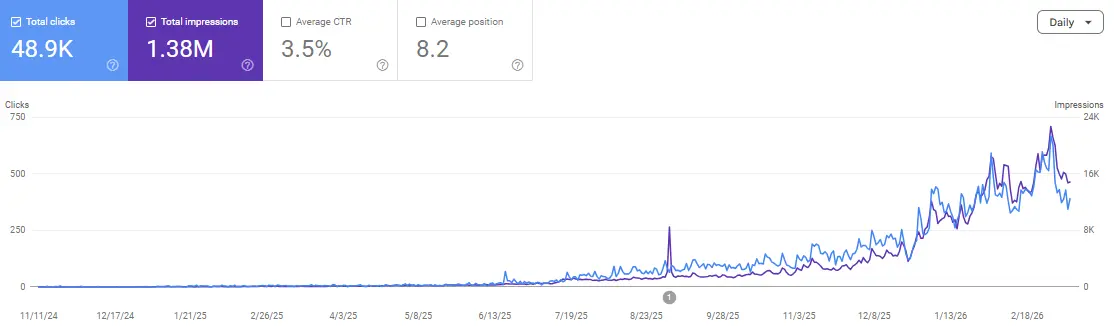
Most content writers are trained to optimize for one audience: Google’s algorithm. However, in 2026, that approach leaves a significant and growing portion of your potential visibility untapped.
Hybrid Engine Optimization (HEO) content strategy is about writing in a way that serves Google rankings, AI citations, and human readers all at once. The good news is that these goals are far more compatible than they might initially seem. Want content strategy insights from practitioners who are doing this daily? Our community shares real results and proven approaches join the conversation here.
What Makes HEO Content Different from Regular SEO Content?
Regular SEO content is primarily built around keywords, word count, and backlink targets. It is engineered to rank which is valuable, but no longer sufficient.
HEO content is built around three simultaneous goals:
- Ranking on Google: Traditional SEO signals still matter keyword relevance, heading structure, internal linking, E-E-A-T.
- Being cited by AI platforms: Content must be structured so AI models can extract clear, accurate answers.
- Serving human readers: Content must be genuinely useful, readable, and engaging not written for bots.
The key insight is that these three goals largely overlap. Content that clearly answers questions, demonstrates genuine expertise, and is well-organized for human readers is also the content that AI models prefer to cite.
The Inverted Pyramid: The Core Structure of HEO Content
The inverted pyramid is a writing principle borrowed from journalism. In traditional journalism, the most important information comes first. The same principle applies to HEO content.
Here is how it works in practice:
Every section of your content should follow this order:
- Direct answer to the question (1–2 sentences)
- Supporting explanation and context (3–5 sentences)
- Examples, data, or case studies
- Practical applications for the reader
This structure is critical because AI models extract first-paragraph responses most reliably. If your answer is buried three paragraphs into a section, AI platforms may miss it entirely even if your overall content is excellent.
In addition, human readers scan before they read deeply. Leading with the answer respects their time and increases engagement.
How to Write AI-Friendly Headings
Heading structure is one of the most important signals for both Google and AI systems. In HEO content strategy, headings serve double duty: they signal topic relevance to Google’s crawler, and they act as answer prompts for AI extraction.
Here is what effective HEO headings look like:
Weak heading (traditional SEO): Overview of Content Structure
Strong heading (HEO): What Is the Best Content Structure for AI Search?
The stronger version is phrased as a question, which directly mirrors how users query AI tools. It also matches People Also Ask boxes on Google, increasing your chances of capturing those featured positions.
Additional heading best practices for HEO:
- Use H2 for major topic sections
- Use H3 for subtopics and supporting questions
- Include target keywords or their close variants naturally
- Avoid vague headings like “Introduction” or “Summary”
Understanding what on-page SEO requires is the foundation before applying HEO-specific heading strategies on top.
Writing for Semantic SEO Within HEO
Semantic SEO is the practice of covering a topic with depth and context rather than repeating a single keyword. It is central to both traditional SEO and HEO — but it matters even more for AI optimization.
AI language models do not just look for keyword matches. They evaluate:
- How comprehensively a topic is covered
- Whether related subtopics are addressed
- How well the content connects concepts together
- Whether the language is natural and contextually appropriate
Therefore, your HEO content strategy should use a wide range of related terms, synonyms, and natural language variations rather than repeating your primary keyword. For a topic like Hybrid Engine Optimization, that means naturally incorporating phrases like AI search optimization, answer engine optimization, generative search, structured content, entity building, and topical authority.
E-E-A-T: The Human Credibility Layer in HEO Content
Google’s E-E-A-T framework (Experience, Expertise, Authoritativeness, Trustworthiness) was designed to evaluate content quality from a human perspective. However, it has become equally relevant for AI optimization.
AI language models are trained to favor content from sources that demonstrate real-world expertise and credibility. Thin, generic content without clear authorship or subject matter depth is less likely to be cited regardless of its keyword optimization.
Here is how to build E-E-A-T into your HEO content:
- Experience: Include first-person examples, case studies, or data from your own testing and implementation.
- Expertise: Demonstrate deep knowledge by covering not just the basics but the nuances, edge cases, and advanced applications of a topic.
- Authoritativeness: Attribute content to named authors with clear credentials and link to their professional profiles.
- Trustworthiness: Cite credible sources, include accurate statistics with proper attribution, and maintain factual consistency across your content library.
How to Use FAQs in HEO Content Strategy
FAQ sections are among the most powerful elements in HEO content. They serve multiple purposes simultaneously:
- They capture PAA (People Also Ask) positions on Google
- They provide structured content that AI models can easily extract
- They enable FAQ schema markup, which improves rich result eligibility
- They address the long-tail, conversational questions that AI users ask
Best practices for HEO-optimized FAQs:
- Include a minimum of 6 questions per FAQ section
- Write each answer as a standalone response (assume the reader has not read the rest of the article)
- Keep individual answers between 40 and 100 words for optimal AI extraction
- Use natural, conversational question phrasing that mirrors how people actually ask AI tools
Content Depth vs Content Length in HEO
Many SEO practitioners equate content quality with word count. However, in an HEO content strategy, depth matters far more than length.
A 1,500-word article that comprehensively covers a topic, answers the key questions clearly, and provides genuine insight will outperform a 3,000-word article that is padded with repetition and filler both in Google rankings and in AI citations.
The right length is whatever it takes to thoroughly address the topic without unnecessary repetition. For most informational articles, that falls between 1,500 and 2,500 words. For comprehensive pillar pages, it may be longer.
What matters more than length:
- Clear, direct answers at the top of each section
- Comprehensive subtopic coverage within the cluster structure
- High Flesch Reading Ease score (aim above 60)
- Short sentences and short paragraphs (maximum 4 sentences per paragraph)
- Strategic use of bullet points and numbered lists for scannable information
Linking Strategy in HEO Content
Internal and external links play a specific role in HEO content strategy. Internal links build the topical authority cluster that signals expertise to both Google and AI platforms. External links to credible sources reinforce E-E-A-T and demonstrate that your content exists within a broader information ecosystem.
For internal linking in HEO, prioritize:
- Linking from cluster articles back to the pillar page
- Linking between related cluster articles
- Using semantic, descriptive anchor text rather than generic phrases like “click here”
For example, when discussing AI search strategy, linking to resources on how AI understands context beyond keywords reinforces the topical cluster and adds genuine value for readers seeking deeper understanding.
For external links, prioritize:
- Official sources (Google documentation, academic research, industry reports)
- High-authority publications in your niche
- Statistics and data sources that can be independently verified
Content Refresh Strategy for AI Platforms
One of the most overlooked elements of HEO content strategy is recency. AI language models are trained with recency signals they prefer content that is actively maintained and up to date.
Build a rolling content refresh schedule into your strategy:
- Audit top-performing articles every 6 months
- Update any statistics, tool recommendations, or platform-specific information that has become outdated
- Add new sections addressing questions that have emerged in your niche since the original publication date
- Re-optimize answer-first formatting based on new AI query patterns you have identified
A well-maintained content freshness strategy signals to both Google and AI systems that your content is actively maintained and authoritative — rather than a stale resource from two years ago.
FAQs
How is HEO content different from regular blog writing?
HEO content is specifically structured for both Google ranking and AI citation. This means using answer-first formatting, question-based headings, FAQ sections with schema markup, semantic keyword variation, and E-E-A-T signals rather than simply writing long, keyword-rich articles.
How many words should an HEO article be?
There is no universal target word count. Aim for whatever length thoroughly covers your topic without padding. Most informational HEO articles fall between 1,500 and 2,500 words. Pillar pages may be longer. Depth and clarity matter more than length.
Should every article have an FAQ section?
For most informational and educational content, yes. FAQs directly serve AI extraction, People Also Ask optimization, and featured snippet capture. They also help readers who scan for specific answers rather than reading from top to bottom.
How often should I update HEO content?
Review high-traffic and pillar content every 6 months. Update statistics, examples, and outdated references. Add new sections for emerging questions. Regular updates signal recency to AI platforms and help maintain rankings on Google.
Does HEO content need to be longer than traditional SEO content?
Not necessarily. HEO emphasizes depth and clarity over length. A well-structured 1,600-word article with clear answers, relevant schema, and strong E-E-A-T signals will typically outperform a padded 3,000-word article that repeats information and lacks structure.
Can I apply HEO content principles to product pages?
Yes. Product pages benefit from answer-first descriptions, FAQ schema addressing common buyer questions, clear entity signals (brand, product category, specifications), and structured data markup. These elements improve both search ranking and AI citation eligibility for commercial queries.
How do I know if my HEO content is working?
Track both Google performance (Search Console, rankings, CTR) and AI citation presence (manual checks on ChatGPT, Gemini, Perplexity). Improvement in featured snippet capture rate is also a strong leading indicator that your content is being extracted effectively by AI systems.
Conclusions
The most effective HEO content strategy is not complicated in its principles but it requires consistent execution. Write clearly. Answer questions directly. Cover topics comprehensively. Build entity credibility. Refresh regularly.
When you apply these principles across a well-structured content cluster, the results compound over time. Your pages do not just rank on Google they become the sources that AI platforms cite, summarize, and trust.
That is the ultimate goal of HEO content strategy: becoming not just visible, but authoritative on every platform where your audience searches. Want to refine your content strategy with feedback from real practitioners? Our community is the right place to start connect with us here.