GPT-5.6 is OpenAI’s new model family built around three tiers: Sol, Terra, and Luna. OpenAI describes Sol as the flagship and most capable model, Terra as a strong lower-cost option, and Luna as the fastest and most cost-efficient model. During the preview period, OpenAI says GPT-5.6 is available through the API and Codex for a limited group of trusted partners, and it is not available in ChatGPT during the preview.
For SEO teams, GPT-5.6 matters because it signals a bigger shift in AI-assisted search, content production, technical work, and citation competition. Better AI models make it easier to research, compare sources, write drafts, audit pages, and build workflows. However, that also means generic AI content becomes easier for everyone to produce.
The real advantage is not simply using GPT-5.6. The advantage comes from using it to build non-commodity content, verify claims, improve topical depth, and make pages easier for AI systems to understand and cite.
Before applying this GPT-5.6 SEO playbook, you can join the Scale-Xpert backlink exchange and SEO learning community to discuss AI citation tests, safe link building, and practical SEO workflows with other builders.
What Is GPT-5.6?
GPT-5.6 is a three-model AI family designed for different levels of capability, cost, and speed. Sol is the most advanced tier, Terra is the balanced tier, and Luna is the lightweight efficient tier.
OpenAI says the GPT-5.6 family advances software engineering, computer use, professional knowledge work, scientific research, and cybersecurity. That makes GPT-5.6 relevant beyond casual chatbot use, especially for teams that use AI inside research, coding, strategy, and automation workflows.
The three-tier structure is useful because not every task needs the most expensive model. A deep SEO audit may need Sol. A content brief may only need Terra. A simple metadata or keyword classification task may work well with Luna.
This model structure also changes how teams should think about ChatGPT value. For example, users comparing advanced AI access and subscription cost may also want to review whether ChatGPT Pro is worth the monthly investment in 2026.
What Are Sol, Terra, and Luna?
Sol, Terra, and Luna are capability tiers inside the GPT-5.6 family. Each tier is designed for a different balance of intelligence, speed, and cost.
Sol is the flagship tier. It is best for complex reasoning, long research, advanced coding, cybersecurity tasks, technical SEO audits, and workflows where accuracy matters more than cost.
Terra is the balanced tier. It is useful for everyday professional work, content briefs, source summaries, SERP analysis, keyword clustering, and article planning.
Luna is the fast and affordable tier. It is useful for high-volume support tasks, such as title variations, meta descriptions, simple classifications, spreadsheet cleanup, topic tagging, and first-pass QA.
OpenAI’s preview pricing also supports this tiered workflow. OpenAI lists GPT-5.6 pricing per 1 million tokens as $5 input and $30 output for Sol, $2.50 input and $15 output for Terra, and $1 input and $6 output for Luna. OpenAI also notes prompt caching features, including explicit cache breakpoints, a 30-minute minimum cache life, and a 90 percent cached-input discount for cache reads.
Therefore, the smart SEO workflow is not “use the strongest model for everything.” The better workflow is matching each task to the right model tier.
Why GPT-5.6 Matters for SEO
GPT-5.6 matters for SEO because it increases the speed and depth of AI-assisted content operations. It can help teams research faster, compare sources more clearly, and build stronger article structures before publishing.
However, the SEO impact is bigger than content writing. GPT-5.6 can support technical SEO, content audits, internal link planning, schema ideation, entity mapping, competitor gap review, and AI citation tracking.
Google says generative AI search is still SEO because its AI features are rooted in core Search ranking and quality systems. Google also explains that generative AI features use retrieval-augmented generation and query fan-out to highlight content from the Search index.
This matters because a page is no longer judged only by one exact keyword. A query can fan out into related subtopics, questions, entities, and follow-up needs. As a result, pages that cover a topic deeply and clearly have a better chance of being useful in AI search experiences.
For teams already using ChatGPT in daily work, this also connects with broader productivity decisions. The article on how ChatGPT Plus dominates the 2026 productivity market can support readers who want to compare practical AI usage levels.
Source Strategy: Where Should the Answers Come From?
A strong GPT-5.6 article should take its core facts from official OpenAI sources, SEO guidance from Google, traffic impact data from SEO studies, and practical interpretation from hands-on creator commentary. This keeps the article accurate while still making it useful.
For GPT-5.6 facts, use OpenAI’s launch page, OpenAI Help Center, and the GPT-5.6 Preview System Card. These sources are best for model names, availability, access limits, safety context, pricing, and official positioning.
For SEO impact, use Google Search Central because it explains how generative AI features interact with SEO. Google’s guidance is especially useful for RAG, query fan-out, non-commodity content, crawlability, technical structure, and what not to over-optimize.
For traffic risk, use SEO studies such as Ahrefs. Ahrefs reported that AI Overviews reduced click-through rate for position-one content by about 58 percent as of December 2025.
For E-E-A-T, use practical creator commentary carefully. Caleb Writes Code is useful for understanding regulation, infrastructure, pricing, and market pressure. Prompt Engineer is useful for explaining model tiers, reasoning modes, and availability. However, these should support the article’s experience layer, not replace official sources for hard facts.
How GPT-5.6 Changes Keyword Research
GPT-5.6 changes keyword research by making intent mapping, topic clustering, and query expansion faster. Instead of only finding keywords, SEO teams can use GPT-5.6 to understand why users search, what subtopics they expect, and what sources they may trust.
A practical keyword workflow can look like this:
- Use Terra to group keywords by intent.
- Use Luna to label keywords as informational, commercial, navigational, or transactional.
- Use Sol to review the full topic cluster and find missing angles.
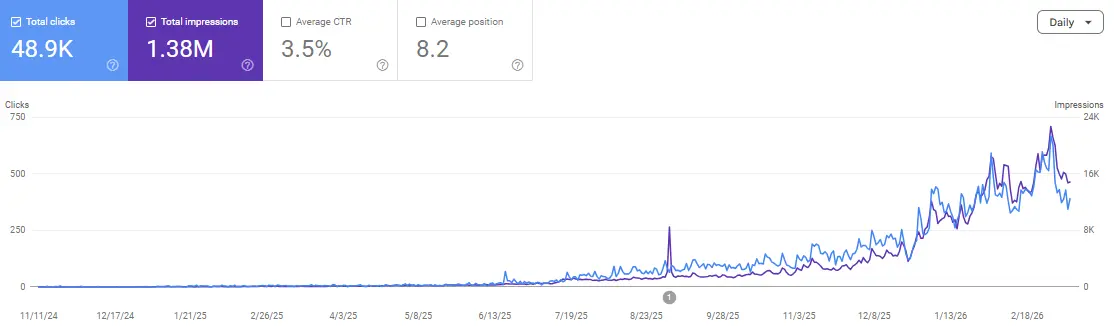
- Use Search Console data to validate impressions, clicks, CTR, and position.
- Use human review to decide which pages deserve updates or new content.
This is important because AI search often answers broad questions with multiple subtopics. Therefore, an article about GPT-5.6 should not only explain the model names. It should also answer use cases, pricing, availability, SEO workflow, citation strategy, risks, and measurement.
In addition, keyword research should include entity consistency. Use the official names Sol, Terra, and Luna clearly. Avoid confusing “Sol” with “Soul,” except as a small typo note if needed.
How GPT-5.6 Changes Content Creation
GPT-5.6 changes content creation by making briefs, drafts, outlines, and content refreshes faster. However, speed alone is not enough for SEO success.
Google recommends creating non-commodity content that provides unique value, expert input, and useful organization. Google also warns against simply recycling what others have already said or producing pages for every possible query variation.
Therefore, the best GPT-5.6 content workflow should include:
- A verified source pack before drafting
- A clear search intent summary
- A BLUF answer for every H2
- Source-backed claims
- Original examples from real SEO work
- A human editor for accuracy and tone
- Internal links that support topical depth
- A content refresh note when facts change
For smaller users or beginners, it may not be necessary to start with advanced API workflows. The guide on why ChatGPT Free is still useful for casual users in 2026 can help them understand when free AI access is enough.
Tips and Tricks to Get Cited in AI Search
The best way to get cited in AI search is to make your article easy to retrieve, easy to verify, and easy to summarize. AI systems need clear answers and trustworthy evidence.
Start with direct answers. Every H2 should answer the question in the first sentence. This improves readability and helps AI systems extract the main point quickly.
Use source-backed claim blocks. A strong block includes the claim, source, date, and implication. For example, if you mention GPT-5.6 pricing, cite OpenAI and explain why it matters for task allocation.
Add original experience. For example, include a mini workflow showing how an SEO specialist would use Sol for a technical audit, Terra for content planning, and Luna for metadata checks.
Use comparison tables. A table comparing Sol, Terra, and Luna by use case, cost level, speed, and SEO task makes the article more scannable.
Keep entity language consistent. Use GPT-5.6, Sol, Terra, Luna, OpenAI, Codex, AI Overviews, AI Mode, RAG, and query fan-out naturally across the article.
Update the article often. GPT-5.6 access, pricing, and availability can change quickly. Therefore, add a visible update note when the model becomes available in ChatGPT or when OpenAI changes API access.
If you are testing AI citation tactics, you can join the Scale-Xpert SEO learning hub and backlink exchange community to compare practical results, content updates, and safe link-building ideas with other SEO builders.
How to Use GPT-5.6 for SEO Workflows
GPT-5.6 should be used as a workflow assistant, not as an unchecked content machine. The safest approach is to let AI speed up research and structure while humans handle judgment, accuracy, and final publishing decisions.
Use Sol for high-value tasks:
- Full content cluster audits
- Technical SEO issue investigation
- Complex schema planning
- Long-form source comparison
- AI citation strategy
- Search intent conflict analysis
Use Terra for balanced SEO production:
- Content briefs
- SERP summaries
- FAQ planning
- Internal link suggestions
- Draft outlines
- Content refresh recommendations
Use Luna for simple high-volume tasks:
- Metadata variations
- Keyword tagging
- Heading checks
- Basic grammar cleanup
- Spreadsheet formatting
- Topic labeling
This model allocation saves cost while keeping quality high. It also helps teams avoid wasting premium AI capacity on low-risk tasks.
For growing teams, this connects naturally with AI adoption at the company level. Readers who manage multiple writers, SEOs, or content editors may find the guide on how ChatGPT Business supports scalable teams in 2026 useful.
What SEO Metrics Should You Track?
SEO teams should track AI visibility, not only rankings and clicks. AI search can change how users discover brands before they visit a website.
Google announced Search Generative AI performance reports in Search Console on June 3, 2026. These reports are designed to show impressions, pages, countries, devices, and dates for URLs appearing in generative AI features such as AI Overviews and AI Mode. Google says the reports are rolling out to a subset of websites first.
A simple AI visibility tracker should include:
- Prompt tested
- AI platform tested
- Date
- Was your brand mentioned?
- Was your URL cited?
- Which competitor appeared?
- Which page section was cited?
- What source type was used?
- What content gap should be fixed?
In addition, track branded searches, direct traffic, assisted conversions, referral traffic, newsletter signups, Discord joins, and backlink requests. This matters because AI visibility may influence trust before the user clicks.
What Content Types Can Win After GPT-5.6?
The content types most likely to win after GPT-5.6 are practical, expert-led, and source-backed. Basic summaries will be easier to produce, so they will become less defensible.
Strong content types include:
- Original tests with prompts and outputs
- Step-by-step workflows
- Tool comparison guides
- Source-backed explainers
- Updated benchmark summaries
- Technical SEO tutorials
- Case studies
- FAQ pages based on real user questions
- Community discussion summaries
- Content refresh logs
The key is to add something that AI cannot easily generate from common knowledge. This could be a real screenshot, internal workflow, prompt example, expert opinion, test result, or decision framework.
For larger organizations, GPT-5.6 also connects with enterprise AI planning. The article on ChatGPT Enterprise for big organizations in 2026 can support readers who are thinking beyond individual AI use.
Mistakes to Avoid With GPT-5.6 SEO
The biggest mistake is using GPT-5.6 to publish generic AI content at scale. This may increase output, but it does not automatically increase authority, trust, or citations.
Avoid these mistakes:
- Publishing without checking official sources
- Treating AI output as final copy
- Creating many thin pages for query variations
- Ignoring crawlability and indexability
- Using unsupported benchmark claims
- Confusing Sol with Soul in key headings
- Forgetting update dates
- Writing only for AI systems instead of readers
- Chasing fake mentions or spammy citations
Google says there is no need to create special AI text files for Google Search, break content into tiny chunks, rewrite content only for AI systems, or seek inauthentic mentions. Instead, Google recommends focusing on technical clarity, valuable content, and strong foundational SEO.
FAQ
What is GPT-5.6?
GPT-5.6 is OpenAI’s new AI model family with three tiers: Sol, Terra, and Luna. Sol is the flagship model, Terra is the balanced lower-cost model, and Luna is the fastest and most cost-efficient model.
Is GPT-5.6 available in ChatGPT?
GPT-5.6 is not available in ChatGPT during the preview period. OpenAI says access is limited to selected trusted partners and organizations through the API and Codex.
What is GPT-5.6 Sol best for?
GPT-5.6 Sol is best for complex and high-value tasks such as advanced coding, cybersecurity, scientific work, professional research, technical SEO audits, and long-context analysis.
What is GPT-5.6 Terra best for?
GPT-5.6 Terra is best for balanced everyday work. For SEO, it can support content briefs, keyword clustering, source summaries, SERP analysis, internal link ideas, and article outlines.
What is GPT-5.6 Luna best for?
GPT-5.6 Luna is best for fast and affordable high-volume tasks. For SEO, it can support metadata drafts, keyword tagging, heading checks, spreadsheet cleanup, and simple QA.
Can GPT-5.6 help content get cited in AI search?
GPT-5.6 can help make content more citation-ready by improving structure, source quality, topical coverage, and clarity. However, no model can guarantee citations because AI search systems choose sources based on many ranking and retrieval signals.
How should SEO teams use GPT-5.6 safely?
SEO teams should use GPT-5.6 for research, structure, analysis, and QA, then let human editors verify facts, add experience, and approve the final article. This keeps the workflow fast without sacrificing trust.
What is the biggest SEO impact of GPT-5.6?
The biggest SEO impact is higher competition for AI-visible content. Since more teams can produce AI-assisted content quickly, the winning pages will need stronger evidence, clearer answers, better internal links, and original expert insight.
Conclusion
GPT-5.6 is important because it shows where AI work is going: stronger models, clearer tiers, faster workflows, and more pressure on content quality. Sol, Terra, and Luna give teams a practical way to match AI capability with task value. However, SEO success will not come from using GPT-5.6 to publish more generic articles. It will come from better research, better structure, better source use, stronger E-E-A-T, and pages that AI systems can confidently cite.
For SEO teams, the next step is clear. Build a source pack, map search intent, create direct answers, add original examples, use internal links naturally, and measure AI visibility alongside rankings and clicks. If you want to keep testing these ideas with other builders, you are welcome to join the Scale-Xpert backlink exchange community and SEO learning space for practical SEO discussion, safe backlink exchange ideas, and AI citation experiments.