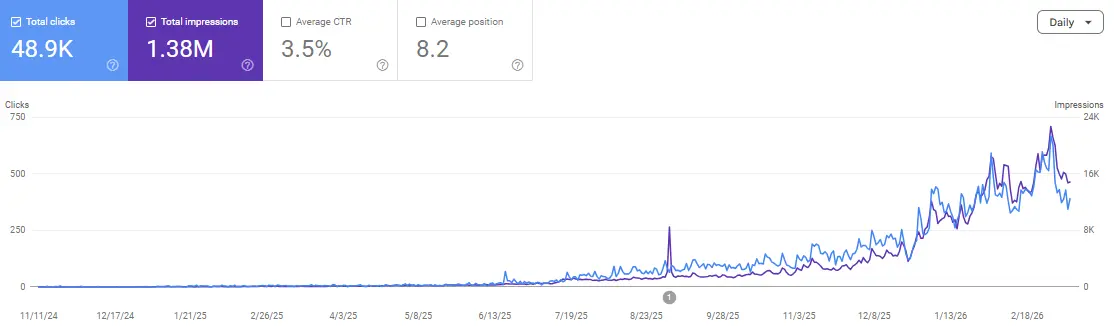
The original Skyscraper Technique was simple: find the tallest building (the best content), and add a few floors (more words). In 2026, that strategy is likely to backfire. Users—and search engines—are increasingly tired of “filler” content designed just to hit a word count. If you’re looking to modernize your content strategy, we’re actually brainstorming some “Utility-First” skyscrapers right now. If you want to see what’s working, join the conversation in our Discord community.
The Failure of “Taller” Content
I’ve seen too many guides that are 10,000 words long but say absolutely nothing new. It appears that the “Possibility” of ranking just by being “long” has vanished. Google’s algorithms are now sophisticated enough to distinguish between “comprehensive” and “padded.”
One might argue that the “Skyscraper” now needs to be measured by its foundations its UX, its load speed, and its actual utility. Instead of just writing more, we need to be asking: “How can I make this content more functional?” This is a key part of 10 link building tactics for SEO that actually work. It’s about being better, not just bigger.
Identifying the “Utility Gap”
When you audit a competitor’s top-ranking page, don’t just look at what they wrote. Look at what the user has to do next. If the page is a guide on “Calculating Project ROI,” and the user has to leave the site to open Excel, you’ve found a “Utility Gap.”
Your Skyscraper shouldn’t just explain the formula; it should be the calculator. By embedding a custom, React-based ROI tool directly into the article, you’ve created something that is objectively more useful than a static blog post. This is how to create linkable content that attracts backlinks naturally. You’re providing a tool, not just a tutorial.
The Architecture of Skyscraper 3.0
Building these high-utility pages requires a shift in how we think about “Content.”
-
Semantic Depth: Don’t just target the main keyword. Map out the entire topical cluster. If you’re writing about “Next.js Performance,” you need to cover everything from Middleware to Edge Caching.
-
Interactive Elements: Use your front-end skills. Can you add a live code editor? A “Comparison Slider”? A dynamic table that users can filter? These elements increase dwell time and social shares.
-
Performance Optimization: A high-utility page that is slow is a failure. You need to focus on Core Web Vitals. If you’re unsure how to optimize these heavy pages, check out the ultimate guide to mobile SEO optimization for your business.
Building these interactive modules can be tricky without the right templates. We’ve actually shared some of our favorite “SEO-friendly” UI components in the Scale-Xpert Discord community—feel free to grab them and use them on your own skyscrapers.
Beyond the Text: The UX of Authority
Evidence suggests that “Design” is a huge trust signal for link-building. If your site looks like it was built in 2005, a high-authority site is unlikely to link to you, regardless of how good your content is. You have to look like an industry leader to be treated like one.
This ties back to domain authority explained: what it is and how to increase it. Authority isn’t just about backlinks; it’s about the perception of expertise. A clean, modern, and technically sound website is a necessity for modern link-building.
Subtle Outreach: The “Consultant” Approach
The old “Hey, your link is old, use mine” outreach is a bit aggressive. I prefer the “Subtle Critique.” You’re not trying to replace their link; you’re trying to help them improve their page.
“I noticed you’re linking to a guide on [Topic]. It’s a great resource, but I noticed it doesn’t cover the recent [New Update] changes. I actually built a tool that handles this automatically for users. Might be a helpful addition for your readers?”
This feels much more like a peer-to-peer recommendation than a marketing pitch. You’re offering a technical upgrade.
Analyzing the Competition’s Weakness
Before you spend a week building, you must know what you’re up against. This is why you need to master how to analyze competitor backlink strategies.
-
Are they ranking because of their brand?
-
Are they ranking because of a few high-powered links from 2018?
-
Is their content actually good, or just “the best of a bad bunch”?
If you find a high-ranking page that is outdated and lacks utility, that is your target. You don’t just “skyscraper” them; you demolish and rebuild.
FAQs
1. Is “Long-Form” content officially dead?
Not at all. Long-form is great for “educational” intent. But for “task-based” intent, brevity and utility are winning. You have to match the “form” of your skyscraper to the “intent” of the searcher.
2. How much coding is required for “Utility” Skyscraper?
It varies. Sometimes a well-organized HTML table is enough. Other times, you might want a full-blown interactive dashboard. The goal is to provide more value than the current #1 result, whatever that takes.
3. What if a competitor copies my interactive tool?
It’s a possibility. But being the “original” source usually carries a lot of weight with both users and Google. Plus, if you’re a developer, you can keep iterating and improving your tool faster than a copycat can keep up.
4. How do I find “Utility Gaps” efficiently?
I like to read the comments section of competitor blogs or look at “Feature Requests” in Reddit threads related to the topic. People will literally tell you what they wish a tool did.
5. Does this work for B2B SEO?
It works best for B2B. Business users are always looking for tools to make their jobs easier—calculators, templates, checklists, and comparison frameworks are link-building gold in B2B.
6. Can I use AI to help build the skyscraper?
AI is great for outlining and research, but it’s terrible at “Utility.” AI can’t build a custom tool that solves a specific user problem without human engineering. That’s your moat.
Conclusion
Skyscraper 3.0 isn’t about being the biggest; it’s about being the most indispensable. By focusing on utility, performance, and a nuanced understanding of user intent, you can build content that stands the test of time. Don’t just build higher—build smarter. If you want to bounce some “Utility-First” ideas off some fellow devs and SEOs, come join us in the Scale-Xpert Discord. Let’s see what kind of skyscrapers we can build together.