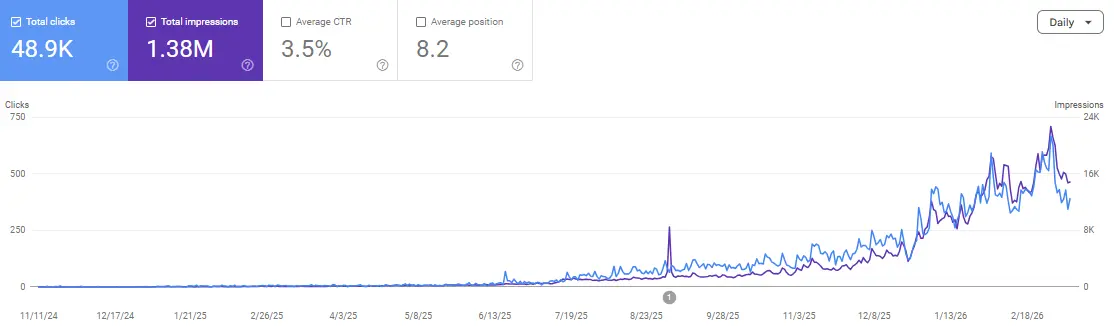
If you’ve been in the SEO trenches for a while, you probably know that the “standard” outreach email is essentially dead on arrival. Journalists at top-tier publications are drowning in pitches that offer nothing but recycled opinions. It appears that the only way to truly break through that noise is to provide something they can’t find anywhere else: original data. Before we get into the technical logic of how to scrape and analyze these datasets, you might find it useful to see how this fits into the bigger picture. If you’re struggling to land those high-tier mentions, we’re actually dissecting some successful live campaigns right now in the Scale-Xpert technical SEO community on Discord.
The Shift from “Storytelling” to “Data Discovery”
For years, Digital PR was about “the hook.” While a good hook still matters, the evidence suggests that editorial standards have shifted toward empirical evidence. A journalist at TechCrunch or Business Insider might ignore a well-written guest post, but they find it nearly impossible to ignore a unique dataset that reveals a new trend in the industry. It’s possible that your failure to land links isn’t about your writing style, but rather the lack of a proprietary “moat” around your content.
When you provide raw data, you aren’t just an SEO; you become a primary source. This is the ultimate goal of what is digital PR: meaning and why it matters for seo. You’re moving away from being a solicitor and toward being a collaborator.
The Developer’s Advantage in PR
Most PR agencies are full of great writers, but they often lack the technical chops to gather data at scale. As a developer, you have an “unfair” advantage. While a traditional PR person might spend weeks manually surveying 500 people, you can write a Python script in an afternoon to scrape 50,000 data points from public APIs or web directories.
I’ve found that some of the most successful campaigns come from simple correlations. For example, if you scrape a job board for “JavaScript” vs. “TypeScript” mentions over the last six months and cross-reference that with average salary data, you have a story that every tech publication wants to cover. It might suggest a shift in the labor market that no one else has quantified yet.
Engineering the Dataset: A Step-by-Step Logic
The process isn’t just about “getting data.” It’s about ensuring that data is statistically significant and “link-worthy.”
-
Hypothesis Generation: You need to start with a question. “Are remote jobs actually paying less in 2026?” Don’t start with the data; start with the curiosity.
-
The Scrape: Use tools like
PuppeteerorBeautifulSoup. If you’re targeting a specific niche, you might need to build a custom crawler to bypass basic anti-bot measures. This is a necessity if you want clean, original data that hasn’t been picked over by every other SEO. -
The Clean-up: Raw data is almost always messy. You’ll likely spend more time in Pandas or a SQL database cleaning out duplicates and outliers than you did actually scraping the data.
-
The Visualization: This is where your Front-End skills shine. A journalist doesn’t want a CSV. They want an embeddable chart. If you create a responsive, D3.js-powered visualization, you make it incredibly easy for them to “borrow” your work—and they’ll give you a link as credit.
Getting these scrapers to run without hitting rate limits or getting your IP banned can be a headache. If you’re running into 429 Too Many Requests errors or need help optimizing your headless browser settings, we’ve got some boilerplate scripts shared over in our Discord community that might save you a few hours of debugging.
Identifying “Link-Worthy” Anomalies
Once you have your data, you have to find the “story.” This requires a bit of intellectual hesitation. Don’t just go with the first trend you see. Look for the outliers. If 99% of developers prefer VS Code, but there’s a sudden 5% spike in a new, obscure IDE among senior architects, that is your headline.
This process is essentially how to build backlinks with original data research. You are looking for things that contradict the “common wisdom.” If your data confirms what everyone already knows, it’s not news. If it challenges a common assumption, it’s a link magnet.
The Pitfalls of Modern Data PR
It would be naive to suggest that this is a guaranteed win. There are several ways a data study can fail.
-
Small Sample Sizes: If your dataset is too thin, you’ll be laughed out of an editor’s inbox.
-
Confirmation Bias: It is entirely possible to manipulate data to fit a narrative. You must remain objective, or a savvy journalist will call you out on social media, which is the opposite of the E-E-A-T you’re trying to build.
-
Timing: If you publish a study on “Remote Work Trends” the same day a major global event happens, you’ll get zero traction.
To mitigate these risks, you need to understand the different types of backlinks in SEO and which ones matter most. Sometimes, a few links from niche, highly technical blogs are worth more than one fleeting mention on a generic news site.
The Outreach: Low Friction, High Value
When you finally reach out, your email should be a “TL;DR” of the data. “Hi [Editor], we analyzed 12,000 GitHub repos and found a 30% increase in [Specific Library] usage. Thought your readers might find this interesting. Here’s the interactive chart if you want to use it.”
No fluff. No “I hope this finds you well.” Just the data. This approach respects their time and positions you as a technical authority.
FAQs
1. How do I know if my data is actually “newsworthy”?
It appears that the best test is the “So What?” test. If you tell a friend your main finding and they respond with “So what?”, the story isn’t strong enough. You need an angle that evokes surprise or provides a solution to a known industry problem.
2. Can I use public datasets from Kaggle or Government sites?
You certainly can, but the “Possibility” of landing a big link is lower because anyone else can access that same data. The magic happens when you combine two public datasets that no one has ever looked at together before.
3. What’s the best way to host the interactive charts?
As a dev, I recommend hosting them on a dedicated sub-page with high-performance optimization. If the chart takes 5 seconds to load, a journalist won’t embed it. You have to ensure it’s lightweight and mobile-friendly.
4. How do I handle “Link Attribution” properly?
You should provide a “How to cite” section at the bottom of your data page. Make it as easy as possible for the editor to copy-paste the link code.
5. Is it worth doing for small niches?
Absolutely. In fact, it might be easier. In a small niche, you can become the only person providing reliable data, which means every major blog in that niche must link to you eventually.
6. How do I filter out “noise” in my scraped data?
This is where you need to use some basic statistical filtering. Removing “bot” accounts or extreme outliers that skew the average is a necessity to maintain the integrity of your report.
Conclusion
Data-driven PR is a high-effort, high-reward strategy. It’s not about gaming the system; it’s about providing genuine value to the internet’s knowledge base. While it takes more time than writing a guest post, the authority it builds is significantly more “robust” and harder for competitors to replicate. If you’re ready to stop guessing and start building authority through engineering, let’s connect and share some data-sourcing tips over in the Scale-Xpert Discord.