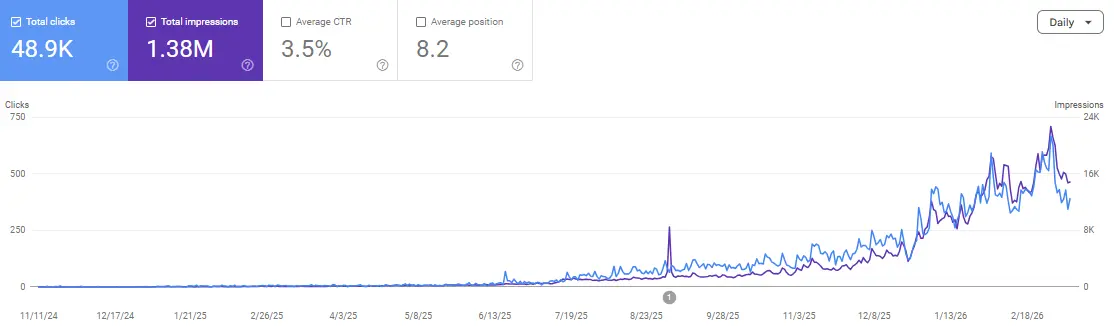
The short answer is yes, AI-written content can rank on Google. However, ranking does not happen just because content was generated quickly with a tool. Google’s current guidance focuses on whether content is helpful, reliable, relevant, and made for people rather than created mainly to manipulate rankings.
That is why AI content SEO is not really about asking, “Was this written by AI?” Instead, the better question is, “Does this page genuinely deserve to rank?” If the content is accurate, useful, original enough, and aligned with search intent, it can perform well. However, if it is mass-produced with little value, it can run into spam problems.
In this beginner-friendly guide, you will learn what Google actually says, what makes AI content rank, what can go wrong, and how to use AI responsibly in your SEO workflow.
What Is AI Content SEO?
AI content SEO refers to using artificial intelligence tools to help create, improve, or scale content intended to rank in search engines. This can include article outlines, drafts, product descriptions, FAQs, headings, summaries, and content refreshes.
However, AI content SEO is not just about generation. It also includes editing, fact-checking, adding expertise, improving structure, and making sure the page satisfies the reader’s needs. Therefore, the SEO result depends far more on quality than on the tool used.
Can AI Content Rank on Google?
Yes, AI content can rank on Google. Google’s official guidance says generative AI can be useful for tasks such as researching a topic and adding structure to original content. What matters is whether the final page meets Search Essentials and spam policies.
In other words, Google does not say “AI content cannot rank.” Instead, Google warns against using AI or similar tools to create many pages without adding value for users, because that may violate its spam policy on scaled content abuse.
Therefore, the answer is simple:
- Yes, AI-assisted content can rank.
- No, low-value mass-generated content is not safe just because it uses AI.
- Yes, human review and quality control still matter.
What Google Actually Cares About
Google’s people-first content guidance says its ranking systems are designed to prioritize helpful, reliable information created to benefit people, not content created mainly to manipulate search rankings.
That means Google is looking at the outcome, not just the production method.
Key things Google cares about
Google’s guidance points toward these priorities:
- usefulness to the reader
- accuracy and reliability
- relevance to the query
- originality or added value
- compliance with Search Essentials and spam policies
So, from an AI content SEO perspective, the question is not “Can I publish AI text?” The real issue is whether the page offers enough value to compete in search.
When AI Content Can Perform Well
AI-assisted pages tend to do better when AI is used as a support tool rather than a full replacement for judgment, editing, and subject understanding. Google explicitly notes that generative AI can help with research and structure, which means responsible use is allowed.
Situations where AI can help
AI often works well for:
- creating first drafts
- generating article outlines
- expanding FAQ sections
- refreshing older content
- improving readability
- organizing ideas around search intent
However, the strongest results usually come when a human improves the draft with real examples, brand voice, updated facts, and useful insights.
When AI Content Can Hurt SEO
AI content becomes risky when it is used to scale low-value pages just to capture search traffic. Google’s guidance specifically warns that using generative AI or similar tools to generate many pages without adding value may violate its spam policy on scaled content abuse.
Common problems with low-quality AI content
Poor AI content often includes:
- generic statements with no real insight
- factual mistakes or outdated information
- repetitive wording
- weak search intent match
- shallow topic coverage
- no evidence of experience or expertise
Therefore, publishing large volumes of unedited AI text is not a real SEO strategy. It is usually a shortcut that lowers quality.
Does Google Penalize AI Content Automatically?
There is no official rule saying content is penalized simply because AI helped create it. Google’s official position is centered on quality and spam behavior, not on banning AI as a method by itself.
That said, if AI is used to mass-produce pages with little value, the content can still perform poorly or violate spam policies. So the risk comes from abuse, not from the label “AI-generated.”
Best Practices for AI Content SEO
If you want AI content SEO to work, use AI as part of a quality workflow rather than a publishing shortcut.
1. Start with search intent
Before generating anything, define what the searcher wants. For example, are they looking for a definition, a tutorial, a comparison, or a buying guide? Content that misses intent will struggle even if it sounds polished.
AI can save time on drafting and structuring. However, it should not be treated as the final expert source, especially for topics that need precision.
3. Add human review and editing
Review every article manually. Improve weak sections, remove repetition, check tone, and make sure the content answers the query clearly.
4. Fact-check important claims
This is especially important for health, finance, legal, and technical topics. Google’s people-first content guidance emphasizes helpful, reliable information, so factual accuracy matters.
5. Add original value
Examples, firsthand observations, unique formatting, practical tips, internal data, screenshots, and better explanations can help your page stand out. Without added value, AI-written pages often sound interchangeable.
6. Avoid scaled spam
Do not publish hundreds of near-duplicate pages just because AI makes it easy. Google explicitly warns that scaled content abuse can violate spam policy.
How to Make AI Content More Likely to Rank
A stronger AI content SEO process usually looks like this:
- Research the keyword and search intent
- Generate an outline with AI
- Draft the article
- Edit for clarity and usefulness
- Fact-check important points
- Add original examples or insights
- Improve title tag, headings, and internal links
- Publish only when the page feels genuinely useful
This workflow is slower than pure automation. However, it gives you a much better chance of producing content Google can trust and users will actually read.
AI Content SEO Mistakes to Avoid
Even beginners can avoid the most common problems.
Watch out for these mistakes
- publishing AI drafts with no editing
- targeting keywords without understanding intent
- adding filler just to reach word count
- skipping fact-checking
- creating dozens of similar pages
- ignoring structure and readability
- assuming AI alone guarantees rankings
In addition, do not confuse “faster production” with “better SEO.” Speed helps only when the final page is still strong.
Is AI Content Enough on Its Own?
Usually, no. AI can help you create content faster, but strong rankings still depend on fundamentals like keyword targeting, page quality, internal linking, helpful formatting, and overall site trust. Google’s Search Essentials remain the baseline for appearing and performing well in Search.
So while AI can support content creation, it does not replace SEO fundamentals.
The Bigger Picture: Google Search Is Evolving With AI
Google is continuing to expand AI-driven search experiences and says its AI features can help users find websites, while its broader search approach is built to highlight the web and link to relevant sources.
That means helpful web content still matters. In fact, as AI-organized search experiences grow, pages that are clear, useful, and trustworthy may become even more important.
FAQs
1. Can AI-written content rank on Google?
Yes. Google allows AI-assisted content to rank if it is helpful, reliable, relevant, and compliant with Search Essentials and spam policies.
2. Does Google ban AI content?
No. Google does not ban AI content simply because AI was used. The problem is low-value or manipulative content, especially at scale.
3. What is the biggest AI content SEO risk?
The biggest risk is publishing mass-produced pages that add little value. Google says that can violate its scaled content abuse policy.
4. Should AI content be edited by humans?
Yes. Human editing improves accuracy, clarity, originality, and usefulness, which are all important for SEO performance.
5. Is AI content bad for SEO?
Not necessarily. AI content can support SEO when used responsibly, but low-quality AI content can hurt performance.
6. Can I use AI for blog posts and product pages?
Yes, but you should still review, fact-check, and improve the output before publishing.
7. What is the best way to use AI for SEO?
Use AI for outlines, drafting, idea generation, and content refreshes, then add human review, expertise, and original value before publishing.
Conclusion
Yes, AI content can rank on Google. However, AI content SEO works best when AI is treated as a tool, not as a shortcut to flood search results with low-value pages. Google’s current guidance is clear: content should help people, meet quality standards, and avoid scaled spam behavior.
So the smart approach is simple. Use AI to save time, then use human judgment to make the content worth reading. That combination gives you the best chance to rank, build trust, and create content that lasts.
If you’d like to discuss SEO, feel free to join our Discord community!