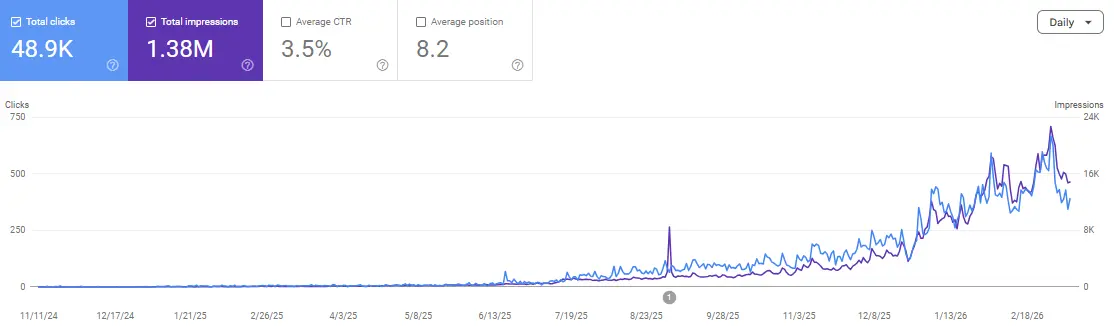
You publish high-quality content. You optimize your keywords. You even build backlinks.
However, your website still struggles to rank consistently.
So, what’s missing?
In many cases, the answer is topical authority.
Today, SEO is no longer about ranking a single article. Instead, search engines evaluate whether your website is a reliable source across an entire subject. If your content only covers a topic at surface level, it can easily be overlooked. On the other hand, websites that explore topics deeply tend to perform much better.
In this guide, you’ll learn what topical authority is and how to build it step by step.
What Is Topical Authority?
Topical authority describes how well a website is recognized as a trusted source on a specific subject.
Rather than focusing on a single page, search engines assess:
- how much content you publish on a topic
- how well your pages are connected
- how deeply you cover related subtopics
For instance, a website with dozens of articles about SEO—covering keyword research, backlinks, technical SEO, and content strategy—will appear more authoritative than a site with only one article.
As a result, strong coverage signals expertise and reliability.
Why Topical Authority Matters for SEO
Search engines aim to deliver the most relevant and trustworthy results. Therefore, websites that demonstrate strong expertise across a topic often gain an advantage.
With a solid content foundation, you can:
- rank higher in search results
- compete with established websites
- build user trust
- attract consistent organic traffic
In fact, websites with strong topical coverage often rank faster, even for competitive keywords.
How Search Engines Evaluate Topic Expertise
To determine authority, search engines consider multiple factors across your entire website.
These include:
- depth and breadth of content
- internal linking structure
- keyword relevance across pages
- publishing consistency
- user engagement signals
In other words, it’s not just about one article—it’s about your full content ecosystem.
1. Choose a Clear Topic Focus
First, define a specific niche.
If you try to cover too many unrelated subjects, your credibility becomes diluted. By contrast, focusing on one core area helps search engines understand your expertise.
For example:
- A site focused on SEO can build strong authority in digital marketing
- Meanwhile, a site covering random topics may struggle to establish trust
Therefore, clarity is essential from the start.
2. Create Content Clusters
Next, organize your content into clusters.
Typically, a cluster includes:
- a pillar page covering a broad topic
- supporting articles that explore subtopics in detail
For example:
Main topic: SEO
Supporting content:
- keyword research
- link building
- technical SEO
- on-page SEO
Because all pages are interconnected, this structure helps search engines understand topic relationships more clearly.
3. Use Strong Internal Linking
Equally important, internal links connect your content and improve crawlability.
To optimize this:
- link related articles together
- connect subtopics to pillar pages
- use descriptive anchor text
As a result, your site becomes easier to navigate—for both users and search engines.
4. Cover Topics in Depth
Publishing just one article per topic is rarely enough.
Instead, aim for comprehensive coverage by:
- answering common questions
- exploring advanced insights
- addressing related subtopics
- updating content regularly
The deeper your coverage, the stronger your perceived expertise.
5. Maintain Content Consistency
Consistency plays an important role in building topical authority.
Publishing regularly signals that your website is active and continuously providing value.
Consistency also helps:
- expand your content coverage
- build a structured content library
- improve user engagement over time
Even a steady publishing schedule can make a significant difference.
6. Match Search Intent
While content volume matters, relevance is just as important.
Each piece of content should match the search intent behind the keyword.
For example:
- informational intent → guides and tutorials
- commercial intent → comparisons and reviews
- transactional intent → service or product pages
Aligning content with user intent improves both rankings and user experience.
7. Update and Improve Existing Content
Finally, remember that authority is not built once—it’s maintained.
Refreshing old content can significantly improve performance. You can:
- add new insights
- improve clarity
- update statistics
- expand key sections
Consequently, your site remains relevant and competitive.
Common Mistakes to Avoid
When building topical authority, some common mistakes can slow your progress.
These include:
- covering too many unrelated topics
- creating shallow or low-quality content
- ignoring internal linking
- focusing only on keywords without depth
Avoiding these mistakes helps maintain a strong and focused content strategy.
FAQs
Topical authority refers to how well a website is recognized as an expert on a specific subject based on the depth and breadth of its content.
It helps improve search rankings, build trust, and increase organic traffic by showing expertise in a specific niche.
It varies, but building strong topical authority usually takes consistent effort over several months.
4. What is a content cluster?
A content cluster is a group of related articles connected to a main topic, helping improve structure and SEO relevance.
Backlinks help, but strong topical authority can also be built through high-quality content and internal linking.
Yes. By focusing on a specific niche and creating in-depth content, even small websites can build strong authority over time.
Conclusion
Topical authority is one of the most important factors in modern SEO.
Instead of focusing on individual keywords, search engines now prioritize websites that demonstrate deep knowledge and consistent coverage of a topic.
By creating content clusters, optimizing internal links, and covering topics thoroughly, you can build a strong foundation for long-term SEO success.
Over time, this approach helps your website become a trusted source in your niche—and a stronger competitor in search results.
If you’d like to discuss SEO strategies and content planning, feel free to join our Discord community!