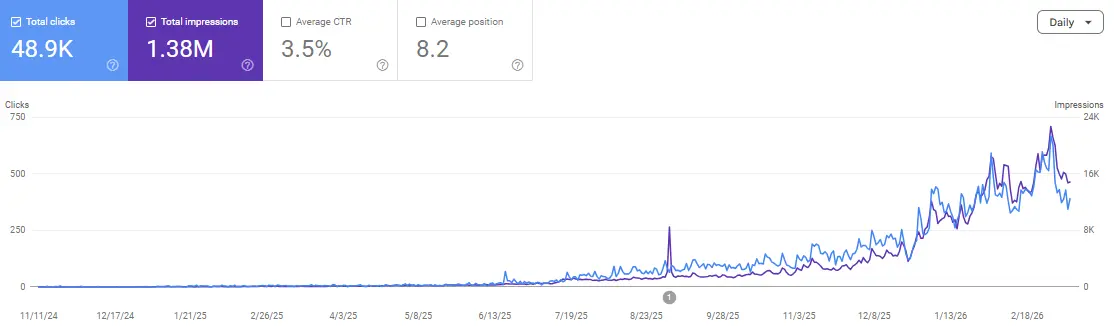
Google Analytics 4 gives you direct, real-time feedback on whether your SEO work is producing results. Every report in the platform tells you something specific about what is working, what is failing, and where your next effort will have the biggest impact. The site owners who grow consistently are not the ones who publish the most content. They are the ones who use data to make smarter decisions about every piece of content they create and every backlink they pursue.
If you want to discuss your analytics findings with other site owners who are applying the same thinking, join Scale-Xpert on Discord. It is a free community where members exchange backlinks, share SEO insights, and help each other interpret what their data is actually saying.
Why Google Analytics 4 Is Essential for SEO Decision Making
Google Analytics 4 is not just a traffic counter. It is the measurement layer that connects your SEO inputs to your actual outputs. Without it, you are publishing content and building links based entirely on assumptions. With it, you can see exactly which efforts are producing organic growth and which are wasting your time.
The feedback loop that Google Analytics 4 creates
Every time you publish an article, earn a backlink, or update a page, Google Analytics 4 records the downstream effect on your traffic, engagement, and conversions. This creates a feedback loop where your data informs your strategy, your strategy produces new results, and those results inform your next decision. Over time, this loop compounds into a measurable SEO advantage over competitors who operate without this kind of systematic measurement.
What Google Analytics 4 tells you that guesswork cannot
Guesswork can tell you that a topic seems popular. Google Analytics 4 tells you that a specific page targeting a specific topic drives 340 organic sessions per month with a 68 percent engagement rate and converts at three percent. The difference between those two levels of specificity is the difference between a content strategy that feels productive and one that demonstrably is. Understanding what Google Analytics 4 is and how it collects this data is the starting point for building this kind of measurement-driven approach.
Step 1: Establish Your Organic Traffic Baseline
Before you can use Google Analytics 4 data to improve your SEO, you need a clear picture of where you stand right now. This baseline becomes the reference point against which every future improvement is measured.
How to read your current organic performance
Open your Traffic Acquisition report in Google Analytics 4, filter for the Organic Search channel, and set your date range to the last 90 days. Note your total organic sessions, your average engagement rate, your average engagement time per session, and your total conversions from organic traffic. These four numbers are your baseline. Write them down or save them in a simple spreadsheet so you have a concrete starting point.
Why 90 days is the right starting window
Ninety days gives you enough data to smooth out weekly fluctuations while still reflecting your current performance rather than outdated historical conditions. A single week is too volatile. A full year mixes too many different conditions. Ninety days is the window where meaningful patterns become visible without being distorted by short-term noise or long-term drift.
Setting comparison periods
Once you have your 90-day baseline, use the date comparison feature in Google Analytics 4 to compare it against the previous 90 days. This immediately shows you whether your organic traffic is growing, flat, or declining. In addition, compare the current period against the same period from last year to remove seasonal effects and see genuine year-over-year growth. These comparisons transform your baseline from a static snapshot into a directional indicator.
Step 2: Identify Your Highest-Value Organic Pages
Your existing top-performing organic pages are your most important SEO asset. Understanding what makes them successful helps you replicate that success across new content.
Finding your top organic landing pages
In your Traffic Acquisition report filtered to Organic Search, change the primary dimension to “Landing page and screen class.” Sort by Sessions descending to see your highest organic traffic pages in rank order. These are the pages doing the heaviest lifting for your SEO right now.
What to look for beyond just traffic volume
Traffic volume alone does not tell the full story. For each top organic page, also look at the engagement rate, average engagement time, and conversions. A page with 1,000 organic sessions but a 20 percent engagement rate is far less valuable than a page with 400 sessions and a 70 percent engagement rate. The high-traffic but low-engagement page is likely ranking for a keyword where users do not find what they expected, which is a search intent mismatch worth fixing.
Using top pages to inform your content strategy
Study your top five organic pages and identify what they have in common. Are they long-form guides? List articles? Comparison pages? Do they cover a specific topic cluster? Whatever pattern you find, that is a strong signal about what your audience values and what search engines reward on your particular domain. Publishing more content that follows the same structure, depth, and topic area as your existing winners is one of the highest-confidence content investments you can make.
Step 3: Find and Fix Underperforming Pages
Identifying underperformers is just as important as studying your winners. These pages represent either wasted potential or active SEO problems that need attention.
Pages with high impressions but low clicks
If you have connected Google Analytics 4 with Google Search Console, open the Search Console Queries report. Sort by Impressions descending and look for pages that appear in search results frequently but attract very few clicks. A click-through rate below two percent on a page with significant impressions almost always means one of two things: the title tag is not compelling enough to stand out, or the meta description fails to communicate the value of the content clearly. Improving how to optimize title tags and meta descriptions for these pages can double or triple their organic clicks without any change to their ranking position.
Pages with high organic traffic but poor engagement
In your filtered Organic Search report, sort by Sessions descending and look for pages where the engagement rate is below 40 percent. These pages are attracting visitors who leave quickly, which sends negative engagement signals to search engines over time and puts those rankings at risk. The most common cause is a mismatch between the search query that brought the user to the page and the content they found when they arrived. Revisiting the search intent behind those queries and restructuring the content to match it more precisely is the most effective fix.
Pages that receive zero organic traffic after six months
Any page that has been live for more than six months and has received zero organic sessions deserves a critical review. Either the topic has no search demand, the page has a technical problem preventing indexing, or the content is not competitive enough to rank against what already exists. For each zero-traffic page, check whether it is indexed in Google Search Console, whether the target keyword has any meaningful search volume, and whether the content genuinely provides more value than the existing top results.
Step 4: Use Search Console Data Inside Google Analytics 4 for Keyword Intelligence
The combination of Google Analytics 4 and Google Search Console gives you one of the most powerful free keyword intelligence systems available. Most website owners underuse it significantly.
Finding keyword opportunities in your existing rankings
In the Search Console collection inside Google Analytics 4, open the Queries report. Filter for queries where your average position is between 6 and 15. These are pages that are close to breaking into the top five results but have not quite made it. For many sites, moving a page from position 8 to position 4 doubles or triples its organic traffic because click-through rates increase dramatically as you move up the first page. These near-miss keywords deserve targeted attention: additional content depth, stronger internal links, and focused backlink acquisition.
Identifying topics your audience is searching for
The Queries report also surfaces search terms you may not have thought to target explicitly. Sorting by Impressions and scanning for queries where you rank between position 15 and 30 reveals topics where you have a foothold but need significantly stronger content to compete. Publishing a new, more comprehensive article targeting these queries is often more effective than trying to further optimize an existing page that was never designed with that specific query in mind.
Connecting keyword data to your internal linking strategy
When you identify a cluster of related queries that are sending traffic to different pages on your site, that is a clear signal to build internal links between those pages. Internal linking based on actual search query data is far more strategic than adding internal links based on guesswork. It creates topical clusters that signal subject authority to search engines and helps distribute ranking power to pages that deserve more of it. The connection between keyword research and SEO growth becomes much more concrete when you can see real query data in your own reports.
Step 5: Measure the Impact of Your Link Building Efforts
Backlinks are one of the most significant ranking factors in SEO, but their impact can be difficult to attribute directly. Google Analytics 4 gives you tools to measure this impact more precisely than most site owners realize.
Tracking referral traffic from new backlinks
Every time you earn a new backlink from another website, that link has the potential to send referral traffic in addition to passing SEO authority. In your Traffic Acquisition report, filter for the Referral channel and look at your top referring domains. Domains that send consistent referral traffic are your highest-value link partners because they deliver both ranking power and actual visitors. This dual value is what makes building genuine quality backlinks fundamentally more worthwhile than accumulating low-quality links that pass no real traffic.
Detecting ranking improvements after link acquisition
When you earn a significant backlink to a specific page, monitor that page’s organic sessions in Google Analytics 4 over the following four to eight weeks. A meaningful increase in organic sessions during that window, particularly for the keywords you were targeting, is a strong signal that the backlink contributed to a ranking improvement. This kind of manual attribution is not perfectly precise but it is far better than having no measurement at all.
Using the Referral report to find new outreach targets
Your existing referral sources tell you which types of websites in your niche are willing to link to your content. Studying the domains that already send you referral traffic and finding similar sites that do not yet link to you creates a high-quality prospecting list for your next outreach campaign. These sites have already demonstrated topical relevance and a willingness to link out, which makes them significantly warmer prospects than cold outreach to random domains.
Step 6: Use Engagement Data to Prioritize Content Updates
Your Google Analytics 4 engagement data tells you which existing pages need attention before you invest in creating new content. Updating strong existing content is often faster and more effective than starting from zero.
Finding pages with declining engagement over time
Use date comparison in Google Analytics 4 to identify pages where engagement rate has dropped significantly compared to the previous period. A steady decline in engagement on a previously strong page often indicates that the content has become outdated, that competitors have published better resources on the same topic, or that the search intent for that query has shifted. Any of these causes can be addressed through a targeted content update.
Prioritizing updates by organic traffic potential
Not all declining pages are worth updating. Focus your content update effort on pages that currently receive meaningful organic traffic but have declining engagement, pages that rank between position 5 and 15 for valuable keywords but have engagement problems, and pages that previously ranked well but have slipped. Updating these pages produces faster results than updating pages that were never competitive to begin with.
Measuring the impact of content updates
After updating a page, note the date of the update in your records and then monitor that page’s organic sessions and engagement rate over the following six to eight weeks in Google Analytics 4. Most content updates that successfully improve quality show measurable engagement improvements within four weeks and ranking improvements within six to eight weeks. Tracking this systematically helps you validate which types of updates are most effective for your specific website and audience.
Understanding all of this is much easier when you can see your traffic by channel and source clearly, which is why reading the complete guide to Google Analytics 4 traffic sources alongside your actual reports accelerates your learning significantly.
Want to talk through what you are seeing in your data with others who are doing the same work? The Scale-Xpert Discord community is exactly the right place for that conversation. Members share reports, discuss patterns, and help each other build smarter SEO strategies.
Frequently Asked Questions
How often should I check my Google Analytics 4 data for SEO purposes?
A weekly check of your Traffic Acquisition report and a monthly deeper review of your top pages, engagement metrics, and conversion data covers the needs of most website owners. Daily checking is rarely necessary unless you have just made a significant change to your site or are monitoring the impact of a specific campaign. The goal is to build a consistent rhythm rather than to obsess over daily fluctuations that mean little in isolation.
Can Google Analytics 4 tell me why my rankings dropped?
Not directly, but it can tell you what happened as a result of the drop. A sudden decline in organic sessions on a specific page, correlated with a known Google algorithm update date or a competitor publishing a stronger article, points you toward the most likely cause. You then need to investigate the specific page using Search Console to see whether impressions also dropped, which confirms a ranking change rather than a click-through rate problem.
What is the most important Google Analytics 4 report for SEO?
For most website owners focused on organic growth, the Traffic Acquisition report filtered to Organic Search is the single most important report. It tells you whether your total organic traffic is growing, which pages are driving the most organic visits, and how engaged those visitors are. Paired with the Search Console Queries report for keyword data, these two reports cover the vast majority of practical SEO analysis needs.
How do I know if a content update improved my rankings?
Monitor the updated page’s organic sessions, engagement rate, and average position in Google Search Console over the six to eight weeks following the update. If organic sessions increase, engagement rate improves, and average position moves upward for your target keywords, the update was successful. If metrics are flat or declining after eight weeks, the update may not have adequately addressed the underlying issue and a more substantial revision may be needed.
Should I track every page individually or look at site-wide trends?
Both levels of analysis serve different purposes. Site-wide trends tell you whether your overall SEO strategy is producing growth. Page-level analysis tells you which specific pieces of content need attention and which are overperforming in ways you can replicate. The most effective SEO practitioners move fluidly between both levels, using site-wide trends to set strategic priorities and page-level data to execute specific improvements.
How do I use Google Analytics 4 to find content gaps?
The Search Console Queries report inside Google Analytics 4 is the best starting point. Look for queries where you have impressions but very low clicks and a position below 10. These queries represent topics your audience is searching for where you have some presence but insufficient content to rank competitively. Each of these queries is a potential content gap that a new, targeted article could close.
Does Google Analytics 4 help with local SEO?
Yes, though its local SEO applications are more limited than its general SEO applications. You can filter your Traffic Acquisition report by country or city using the secondary dimension feature to see where your organic visitors are located. If you run a local business, this data helps you understand whether your local SEO efforts are successfully attracting visitors from your target geographic area or whether most of your traffic comes from outside your service area.
Conclusion
Google Analytics 4 is the most practical SEO tool available to any website owner because it measures the actual results of every decision you make. It tells you which content earns organic traffic, which pages engage visitors and which lose them, which backlinks send real referral visits, and whether your overall organic channel is growing in the direction your strategy predicts.
In summary, the six-step framework covered in this article is: establish your organic baseline, identify your highest-value pages, find and fix underperformers, use Search Console data for keyword intelligence, measure your link building impact, and use engagement data to prioritize content updates. Each step produces actionable information that makes your next SEO decision more informed than the previous one.
The compounding effect of this measurement-driven approach is significant. Site owners who consistently use data to guide their SEO work outperform those who publish based on intuition over any meaningful time horizon. The tools are free, the data is already being collected, and the only thing required is the habit of using it systematically.
Join the Scale-Xpert community on Discord to exchange backlinks, share your Google Analytics 4 findings, and connect with other site owners who are building their organic presence with the same data-driven mindset.