Building backlinks is only one part of SEO. The next question is more important: are those backlinks actually helping your website?
Many beginners think a backlink is working only when rankings improve fast. However, backlinks often show results slowly. A link may first help Google discover a page, then increase impressions, and later support rankings or clicks.
To make a quality backlink, you also need to know how to measure it after it goes live. This guide shows the main signs that backlinks are working and what to check when nothing seems to improve.
What Does It Mean When a Backlink Is Working?
A backlink is working when it supports one or more SEO goals. It does not always mean your page jumps to the first position right away.
A backlink may help your page by:
- Getting discovered faster
- Getting indexed by Google
- Increasing search impressions
- Improving keyword rankings
- Bringing organic clicks
- Sending referral traffic
- Supporting page authority
- Helping related pages through internal links
So, do not judge a backlink from one metric only. Instead, check several signs over time.
A good backlink should support the page, fit the topic, and bring value to readers. That is why it is important to make a quality backlink, not just build any backlink.
Step 1: Check If the Backlink Is Live
Start with the simplest check. Make sure the backlink is actually live on the page.
Open the linking page and check:
- Is your link visible?
- Is the target URL correct?
- Is the anchor text correct?
- Is the link clickable?
- Is the link still on the page?
- Is it dofollow or nofollow?
If the backlink is not live, it cannot help your SEO. Also, if the link points to the wrong URL, the value may go to the wrong page.
For beginners, keep a simple spreadsheet with the backlink URL, target page, anchor text, and publish date.
Step 2: Check If the Linking Page Is Indexed
A backlink from a page that Google cannot find may have little SEO value. Therefore, the next step is checking whether the linking page is indexed.
You can search Google using:
site:example.com/page-url
If the page appears, it is likely indexed. If it does not appear after some time, Google may not have indexed the page yet.
This matters because search engines need to crawl and understand the linking page before the backlink can support your SEO.
However, new pages may need time. Wait a few days or weeks before making a final judgment.
Step 3: Check Google Search Console Impressions
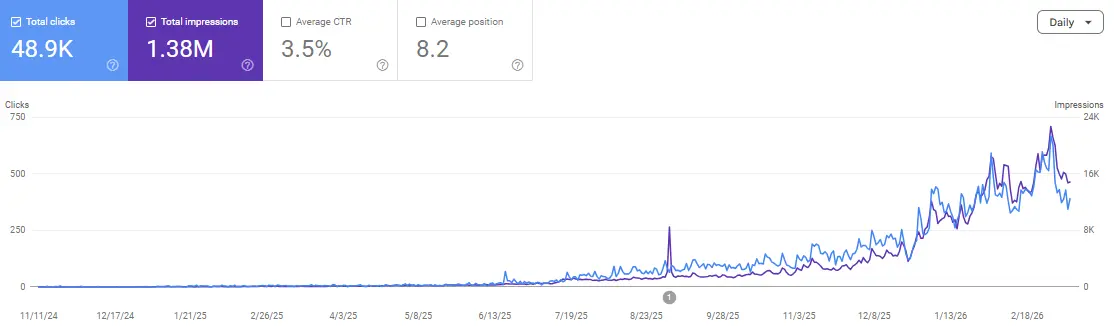
Google Search Console is one of the best tools for checking backlink impact. It does not show every backlink result directly, but it shows how your target page performs in search.
Open the Performance report and check the page that received the backlink.
Look for changes in:
- Impressions
- Clicks
- Average position
- Search queries
- Click-through rate
More impressions can be an early sign. It may mean Google is testing your page for more keywords.
However, impressions do not always turn into clicks right away. If impressions go up but clicks stay low, your title or meta description may need improvement.
Step 4: Track Keyword Ranking Movement
Backlinks can support rankings, especially when they come from relevant and trusted websites. Still, ranking movement may take time.
Track your main keyword and related keywords. Do not focus on only one phrase.
For example, if your page targets “backlink quality,” it may also start ranking for:
- how to check backlink quality
- good backlink signs
- bad backlink examples
- backlink quality checklist
- quality link building
This can show that your page is gaining more search visibility.
A backlink is more likely to help when you make a quality backlink from a related website. Random backlinks often show weaker ranking impact.
Step 5: Check Organic Clicks
Organic clicks show whether users are actually visiting your page from search results. This is one of the clearest signs that your SEO is improving.
In Google Search Console, compare clicks before and after the backlink went live. Use a fair time range, such as 30 days before and 30 days after.
Check:
- Did clicks increase?
- Did impressions increase first?
- Did average position improve?
- Did CTR drop or improve?
- Which queries are bringing clicks?
If rankings improve but clicks do not, the problem may be your title. A weak title can reduce clicks even when your page appears in search.
Step 6: Check Referral Traffic
Not every backlink works only through rankings. Some backlinks bring visitors directly from the linking website.
Use Google Analytics to check referral traffic. Look for traffic from the website that linked to you.
Check these signs:
- Referral sessions
- Engagement time
- Pages viewed
- Conversions
- Form submissions
- Signups or leads
A backlink that sends real visitors can be valuable even if ranking movement is slow.
This is why link placement matters. A visible link inside useful content has a better chance of getting clicks than a hidden footer link.
Step 7: Check If the Target Page Gets More Queries
A backlink can help a page appear for more search queries. This is easy to miss because beginners often track only one keyword.
In Google Search Console, open the target page and check the Queries tab. Compare the number of queries before and after the backlink.
Good signs include:
- More long-tail keywords
- More impressions from related terms
- Better average position for secondary keywords
- New keyword opportunities
This can happen when Google understands the page better. In addition, backlinks from relevant pages can support topical relevance.
To make a quality backlink, make sure the linking page topic matches your target page. Context matters.
Step 8: Check Internal Link Impact
A backlink may also help other pages indirectly. This happens when your target page links to related articles on your website.
For example, a backlink points to your main article about backlinks. That article links to pages about backlink quality, anchor text, and link building.
If those related pages start getting more impressions, your backlink may be supporting the wider content cluster.
Check:
- Related page impressions
- Internal link structure
- Clicks to supporting articles
- Ranking movement across the cluster
This is why internal linking matters. A backlink works better when the target page connects to other useful pages.
Step 9: Give the Backlink Enough Time
Backlinks do not always show results quickly. Search engines need time to crawl the linking page, process the link, and test your page in search results.
Use this simple timeline:
- First week: check if the backlink is live.
- 2–4 weeks: check indexing and early impressions.
- 30–60 days: check rankings, clicks, and referral traffic.
- 60–90 days: review stronger trends.
Do not judge a backlink after two days. However, do not ignore it forever either.
Track results consistently, then decide whether the backlink source is worth using again.
Step 10: Review the Backlink Quality
If nothing improves after enough time, check the backlink quality again. The problem may not be tracking. The backlink itself may be weak.
Review these points:
- Is the website relevant?
- Is the linking page indexed?
- Is the article useful?
- Is the link placed naturally?
- Is the anchor text clear?
- Does the website have real traffic?
- Does the target page deserve to rank?
Sometimes the backlink is fine, but the target page needs better content. Other times, the page is good, but the backlink comes from a weak source.
The best way to make a quality backlink is to check both sides: the linking website and your own target page.
Backlink Tracking Checklist
Use this checklist after every backlink goes live:
- Backlink is live
- Target URL is correct
- Anchor text is natural
- Linking page is indexed
- Link placement looks natural
- Target page impressions increase
- Rankings improve
- Organic clicks increase
- Referral traffic appears
- New queries appear
- Related pages improve
- Link stays active after 30–60 days
If several signs improve, the backlink is likely helping your SEO.
Common Mistakes When Checking Backlink Results
Many beginners measure backlinks too quickly or too narrowly. This can lead to wrong decisions.
Avoid these mistakes:
- Checking results after only a few days
- Tracking only one keyword
- Ignoring impressions
- Ignoring referral traffic
- Forgetting to check indexing
- Building links to weak pages
- Not tracking anchor text
- Expecting one backlink to change everything
One backlink rarely tells the full story. Look for patterns across several links and pages.
FAQs
How long does it take backlinks to work for SEO?
Backlinks can take a few weeks or longer to show results. Check early signs after 2–4 weeks, then review stronger trends after 30–90 days.
How do I know if a backlink is helping my ranking?
Check keyword rankings, Google Search Console impressions, organic clicks, and related query growth. If several metrics improve, the backlink may be helping.
Can a backlink work without referral traffic?
Yes. A backlink can still support SEO even if it does not send many visitors. However, backlinks with referral traffic often provide extra value.
Should I check backlinks in Google Search Console?
Yes. Google Search Console helps you review impressions, clicks, rankings, and search queries for the page receiving the backlink.
Why did my backlink not improve rankings?
The backlink may be weak, the page may not be strong enough, or the keyword may be too competitive. Also, SEO results may need more time.
Is one backlink enough to see SEO results?
Sometimes, but not always. One strong backlink can help, but most pages need a mix of good content, internal links, and several relevant backlinks.
Can nofollow backlinks still help?
Yes. Nofollow backlinks can bring referral traffic, brand visibility, and a more natural backlink profile.
What metrics should I track after building backlinks?
Track link status, indexing, impressions, rankings, organic clicks, referral traffic, new queries, and target page performance.
Conclusion
Knowing whether backlinks are working requires more than checking rankings. A backlink may help with indexing, impressions, keyword visibility, organic clicks, referral traffic, or content cluster strength.
Start with simple checks. Confirm the backlink is live, check if the linking page is indexed, then review Google Search Console and Google Analytics data over time.
To make a quality backlink, choose relevant websites, use natural anchor text, and build links to pages that deserve attention. When the results are unclear, ask for feedback before making your next move.
Join our Discord community to review backlink results, ask SEO questions, and learn safer backlink strategies with other beginners and practitioners.