Publishing blog posts does not always bring traffic. Many beginners write several articles, wait for Google to rank them, and then feel confused when the numbers stay flat.
This usually happens because the content is published, but something in the SEO process is missing. The keyword may be too hard. The page may not match search intent. In some cases, Google may not even index the article properly.
If your blog has low organic traffic, do not guess the problem. Check the right things one by one. This guide gives you a practical checklist to find what may be blocking your blog traffic.
What Does Low Organic Traffic Mean?
Low organic traffic means your website gets very few visitors from unpaid search results. These visitors usually come from Google, Bing, or other search engines.
For example, someone searches “how to build backlinks,” finds your article, and clicks it. That visit counts as organic traffic.
However, a blog post can be published and still get no traffic. This may happen when:
- The page is not indexed.
- The keyword has no search demand.
- The content does not match the search intent.
- The title does not attract clicks.
- The website has weak authority.
- The article has no internal links.
So, low traffic does not always mean your article is bad. It means you need to find the weak point.
Check 1: Is the Page Indexed by Google?
Start with indexing. If Google has not indexed your article, the page cannot appear in search results.
You can check this in Google Search Console. Open the URL Inspection tool, paste your blog post URL, and see if Google says the page is indexed.
You can also search Google using:
site:yourdomain.com/your-blog-url
If the page does not appear, indexing may be the issue.
What to fix
- Submit the URL in Google Search Console.
- Add internal links to the page.
- Make sure the page is not set to noindex.
- Check if the page is blocked by robots.txt.
- Improve thin or duplicate content.
If your page is indexed but still gets no clicks, move to the next checks.
Check 2: Are You Targeting Keywords People Search?
A blog post can be well-written and still get no traffic if nobody searches the topic. This is common when beginners write based only on personal ideas.
Keyword research helps you understand what people actually search for. Without it, you may publish content that has little search demand.
For low organic traffic pages, check:
- Does the keyword have search volume?
- Is the keyword too broad?
- Is the keyword too competitive?
- Are people searching for this topic in your market?
- Does the keyword match your audience?
Practical fix
Use beginner-friendly keyword sources:
- Google autocomplete
- People Also Ask
- Google Search Console queries
- Competitor blog titles
- SEO tools like Ahrefs, Semrush, or Ubersuggest
Start with long-tail keywords. They are usually easier than broad keywords.
Example:
Instead of targeting:
SEO tips
Try:
why my blog has low organic traffic
The second keyword is more specific and easier to match.
Check 3: Does the Article Match Search Intent?
Search intent means what the user really wants when they type a keyword. If your article does not match that intent, Google may not rank it well.
For example, someone searching “how to increase organic traffic” wants practical steps. If your article only explains the definition of organic traffic, it may not satisfy the search.
Before editing your article, search your target keyword on Google. Then, look at the top results.
Check:
- Are they beginner guides?
- Are they list articles?
- Are they tutorials?
- Are they comparison pages?
- Are they short answers or detailed guides?
Practical fix
Match the format and depth, but do not copy. Add your own examples, clearer steps, and better structure.
If Google shows “how-to” articles, write a how-to article. If Google shows comparison pages, include a comparison section.
Check 4: Is Your Content Too General?
Generic content often struggles because it does not give readers a strong reason to stay. It also competes with many similar articles.
A beginner article should be simple, but not empty. It still needs examples, steps, and clear explanations.
Weak topic:
SEO for blogs
Better topic:
why your blog posts get low organic traffic
The second topic is more focused. It speaks to a real problem.
Practical fix
Make the article more specific by adding:
- Examples
- Checklists
- Common mistakes
- Step-by-step fixes
- Screenshots if useful
- Internal links to related pages
- A clear next step for readers
Specific content is easier to understand and easier to rank.
Check 5: Are Your Titles Getting Clicks?
Sometimes your page appears in search, but users do not click it. This means the title may be too vague, too boring, or not matching the search problem.
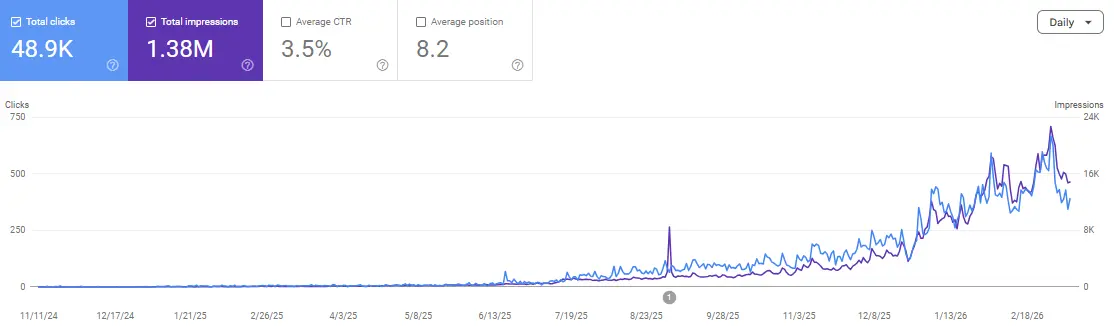
Use Google Search Console to check impressions and clicks. If impressions are growing but clicks stay low, your title and meta description may need work.
Weak title:
Organic Traffic Guide
Better title:
Published Blog Posts but Still No Traffic? Here’s What to Check
The better title speaks to a clear problem.
Practical fix
A good SEO title should:
- Match the keyword
- Show the problem
- Set a clear expectation
- Feel natural for humans
- Avoid overpromising
Do not make the title too clever. Make it clear.
Check 6: Do Your Blog Posts Have Internal Links?
Internal links connect one page on your website to another page. They help Google find your content and understand how your pages relate.
If your blog post has no internal links pointing to it, it may stay weak. This is especially true for new websites.
Practical fix
Add internal links from:
- Older related blog posts
- Main pillar articles
- Category pages
- High-traffic pages
- Resource pages
Use clear anchor text.
Good anchor examples:
- how to increase organic traffic
- common SEO mistakes
- backlink strategy for beginners
- how to check blog traffic
Avoid using only “click here” because it gives weak context.
Check 7: Is Your Content Cluster Too Thin?
One article is often not enough to build trust around a topic. Google may need to see that your website covers the topic properly.
This is where content clusters help. A content cluster is a group of related articles around one main topic.
For example, an organic traffic cluster could include:
- What is organic traffic?
- Why your organic traffic is low
- How to increase organic traffic
- Organic traffic vs paid traffic
- How to check organic traffic
- Organic traffic mistakes beginners make
This gives your website more topical depth. In addition, internal linking between these articles can make the cluster stronger.
Check 8: Does the Page Need Backlinks?
If your keyword is competitive, content alone may not be enough. Your page may need backlinks from relevant websites.
Backlinks are links from other websites to your page. They can help build authority and trust.
However, do not build backlinks to weak content. Improve the article first. Then, build links to pages that deserve attention.
Practical fix
Start with safer backlink options:
- Guest posts on relevant websites
- Resource page outreach
- Expert quotes
- Niche partnerships
- Community mentions
- Original research or useful checklists
A good backlink can support a strong page. A random backlink to a weak page usually does not solve low organic traffic.
Check 9: Is the Article Updated?
Old content can lose visibility when competitors publish better pages. Even if the article was good before, it may need updates.
Review low organic traffic pages every few months.
Update by adding:
- New examples
- Better headings
- Extra FAQs
- Internal links
- Clearer explanations
- Updated screenshots
- Better title and meta description
Also, remove outdated sections. Old advice can reduce trust.
Check 10: Are You Tracking the Right Data?
Do not judge a blog post only by traffic. Some pages start with impressions before they get clicks.
Use Google Search Console to check:
- Impressions
- Clicks
- Average position
- Search queries
- Indexed status
- Click-through rate
Use Google Analytics to check:
- Sessions
- Engagement time
- Referral traffic
- Conversions
- Landing page performance
If a page has impressions but no clicks, improve the title. If it has no impressions, review the keyword and content depth.
Quick Checklist for Low Organic Traffic
Use this checklist before rewriting everything:
- Is the page indexed?
- Does the keyword have search demand?
- Is the keyword too competitive?
- Does the article match search intent?
- Is the topic specific enough?
- Is the title clickable?
- Are internal links pointing to the page?
- Is the content cluster strong?
- Does the page need backlinks?
- Has the article been updated?
- Are you tracking impressions, not only clicks?
This checklist helps you find the real issue faster.
FAQs
Why does my blog have content but no traffic?
Your blog may have no traffic because the page is not indexed, the keyword has low demand, or the content does not match search intent.
How long does it take for blog posts to get organic traffic?
Some posts get impressions within a few weeks. However, competitive topics may take several months, especially for newer websites.
Can a blog post be indexed but get no visitors?
Yes. A page can be indexed but rank too low to get clicks. It may need better content, stronger internal links, or backlinks.
Should I write more content or update old content?
Do both when needed. However, if old posts target useful keywords, updating them can be faster than writing new articles.
Do backlinks help low organic traffic?
Yes, backlinks can help when the page is already useful and targets a keyword with search demand.
How do I know if my keyword is too competitive?
Search the keyword and check the top-ranking pages. If they are large, trusted websites with strong content and backlinks, the keyword may be difficult.
What is the fastest way to improve low organic traffic?
Start with pages that already have impressions but low clicks. Improve the title, meta description, headings, and content quality.
How often should I update blog posts?
Review important posts every few months. Update faster if rankings drop or competitors publish stronger content.
Conclusion
Published blog posts do not guarantee traffic. If your website has low organic traffic, check the basics before creating more content.
Start with indexing, keyword demand, search intent, titles, internal links, content depth, backlinks, and tracking data. These checks show where the real problem is.
For beginners, the best approach is simple: diagnose first, then fix. When you are not sure what is blocking your traffic, ask for feedback. Join our Discord community to review your blog pages and learn practical SEO with other website owners.