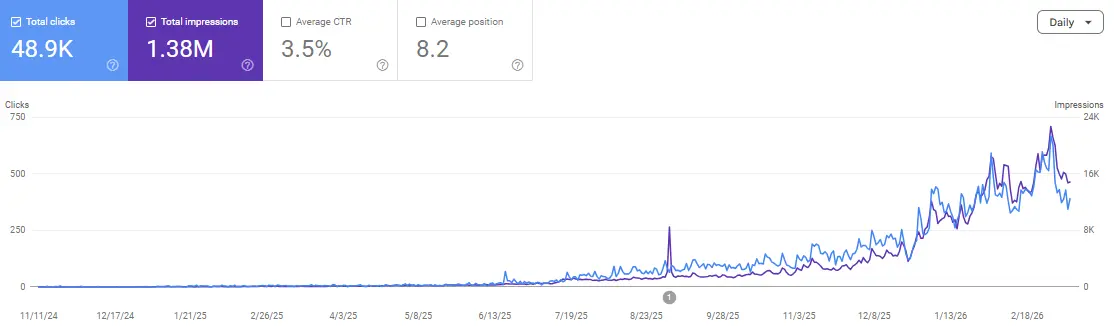
Search is changing faster than most people realize. A few years ago, ranking on Google was all you needed to stay visible. Today, your audience is getting answers from ChatGPT, Gemini, Perplexity, and voice assistants often without clicking a single link.
That shift is exactly why Hybrid Engine Optimization (HEO) exists. If you want to stay competitive in 2026 and beyond, understanding and applying HEO is no longer optional. Want to stay ahead of the SEO curve? Join a community of digital marketers already using smarter strategies connect with us here and get the support you need.
What Is Hybrid Engine Optimization (HEO)?
Hybrid Engine Optimization (HEO) is the practice of optimizing your content to rank on traditional search engines like Google and get cited by AI-powered platforms like ChatGPT, Gemini, and Perplexity at the same time.
Think of it this way: traditional SEO helps you win the Google ranking game. HEO helps you win both the ranking game and the AI citation game simultaneously.
In simple terms, HEO ensures your content:
- Ranks on Google’s search results pages
- Gets selected and cited by AI answer engines
- Appears in featured snippets, voice search, and AI Overviews
- Builds brand authority across every modern discovery channel
Therefore, it is not a replacement for SEO it is an evolution of it.
Why Hybrid Engine Optimization Matters in 2026
The numbers tell a clear story. Google’s AI Overviews now appear at the top of millions of search results. ChatGPT has surpassed 100 million weekly users, many of whom use it as their primary research tool. Voice search queries continue to grow, and Perplexity AI is rapidly gaining traction among professional audiences.
In addition, users no longer always click links. They read AI-generated summaries and move on. If your content is not structured for AI understanding, you lose that visibility entirely even if you rank on page one.
That is why brands investing in AI search engine optimization strategies are already seeing compounding results across both Google and AI platforms.
HEO addresses this new reality head-on.
The Three Layers of HEO
At its core, Hybrid Engine Optimization combines three distinct optimization layers:
Layer 1: Traditional SEO
This is the non-negotiable foundation. Without it, everything else falls apart.
- Keyword research and on-page optimization
- Technical SEO (site speed, mobile-friendliness, crawlability)
- Backlink building and domain authority
- Internal linking and site architecture
Layer 2: Answer Engine Optimization (AEO)
AEO focuses on structuring content so AI systems can extract accurate, helpful answers directly from your pages.
- Writing clear definition paragraphs at the top of each section
- Using FAQ schema and structured data markup
- Answering questions directly within the first 2–3 sentences
- Formatting content with short paragraphs and question-based headings
Layer 3: AI Optimization (AIO)
This layer helps AI models recognize your brand as a trustworthy, citable entity.
- Entity-based content that clearly defines your brand, topic, and relationships
- Consistent brand mentions across the web
- Context-rich writing that goes beyond keyword matching
- E-E-A-T signals that build credibility with both humans and machines
When all three layers work together, your content becomes easy to rank, easy to extract, and easy for AI to cite.
HEO vs Traditional SEO vs AEO: Key Differences
Understanding how these approaches differ is essential for building the right strategy.
| Factor | Traditional SEO | AEO | Hybrid Engine Optimization |
|---|---|---|---|
| Target Platform | Google, Bing | ChatGPT, Gemini, Perplexity | Search engines + AI platforms |
| Content Format | Long-form, keyword-focused | Concise, direct answers | Layered content: answers + depth |
| Keyword Strategy | Exact-match keywords | Conversational queries | Both keyword types combined |
| Success Metrics | Rankings, organic traffic | AI citations, answer inclusion | Rankings + AI visibility combined |
As this comparison shows, neither traditional SEO nor AEO alone covers the full search landscape. HEO addresses both channels simultaneously, which is precisely why it is becoming the new standard.
To understand the foundation of this approach better, it helps to first revisit what keywords are in SEO and how their role is shifting in the age of AI.
Who Needs Hybrid Engine Optimization?
The honest answer is: every business with an online presence.
However, HEO is especially critical for:
- B2B companies whose buyers research extensively before purchasing
- Service businesses trying to build local and topical authority
- Content publishers and bloggers who rely on organic traffic
- E-commerce stores competing in crowded product categories
- SaaS companies competing for informational and decision-stage queries
In short, if your customers use Google or AI tools to find information — and almost everyone does — HEO is directly relevant to your growth.
The Core Benefits of HEO
Implementing Hybrid Engine Optimization delivers advantages that go well beyond a simple ranking boost.
Increased Visibility Across Platforms
Your content no longer competes only in Google’s search results. Instead, it appears across AI summaries, voice answers, featured snippets, and knowledge panels — multiplying your presence without multiplying your effort.
Higher Authority and Trust
AI systems prefer content that is well-structured, authoritative, and consistent. By meeting those standards, your brand naturally builds trust with both machines and human readers.
Future-Proof SEO Strategy
Search behavior will continue to shift toward AI-driven discovery. Brands that optimize for HEO today are building the infrastructure to remain visible regardless of how the landscape evolves.
Better User Engagement
Clear, helpful answers written for HEO also improve user experience on your site. As a result, time on page increases, bounce rates decrease, and conversion potential grows.
Already doing SEO but unsure how to adapt? Our community of SEO practitioners shares real strategies every week join the conversation here.
Key HEO Strategies to Start Implementing Today
Use Question-Based Headings
Structure your content around the actual questions your audience is asking. For example, “What is Hybrid Engine Optimization?” works far better than “HEO Overview” as a heading.
This approach increases your chances of appearing in:
- Google’s People Also Ask boxes
- Featured snippets
- Voice search results
- AI-generated answers
Write the Answer First, Then Expand
Start each section with a direct 1–2 sentence answer before going into detail. AI models extract first-paragraph responses most reliably. This inverted pyramid structure works equally well for human readers who scan before they read.
Build Topical Authority Through Content Clusters
A single well-optimized page will not outperform a network of interconnected, expert-level content. Building a strong topical authority through content clusters is one of the most powerful HEO tactics available.
Create a pillar page that covers your core topic comprehensively, then support it with cluster content that dives deep into related subtopics.
Implement Structured Data Markup
FAQ schema, HowTo schema, Article schema, and Organization schema give search engines and AI systems a machine-readable layer to understand your content accurately. Structured data is not optional in an HEO strategy it is a core technical requirement.
Optimize for E-E-A-T Signals
Both Google and AI language models favor content that demonstrates Experience, Expertise, Authoritativeness, and Trustworthiness. Include detailed author bios, cite credible sources, and showcase real-world experience throughout your content.
Common HEO Mistakes to Avoid
Even experienced SEO professionals make errors when transitioning to HEO. Watch out for these:
- Ignoring AI platforms entirely: If you are only tracking Google rankings, you are missing half the picture.
- Keyword stuffing: AI models penalize low-quality, repetitive content just as harshly as Google does.
- Skipping structured data: Without schema markup, you are invisible to rich results and AI citations.
- Weak entity presence: If your brand is not clearly defined across the web, AI systems cannot reliably cite you.
- No content refresh strategy: AI models have recency preferences. Outdated content gradually loses citation authority.
Understanding what makes content SEO-friendly helps avoid these pitfalls from the start.
FAQs
What does HEO stand for in SEO?
HEO stands for Hybrid Engine Optimization. It refers to the strategy of optimizing content for both traditional search engines like Google and AI-powered platforms like ChatGPT, Gemini, and Perplexity at the same time.
Is HEO the same as GEO?
Not exactly. GEO (Generative Engine Optimization) focuses specifically on appearing in AI-generated search results. HEO is broader — it combines traditional SEO with GEO and AEO to maximize visibility across all modern search surfaces simultaneously.
Do I need to abandon traditional SEO for HEO?
No. Hybrid Engine Optimization builds on top of your existing SEO foundation, it does not replace it. Strong technical SEO, keyword strategy, and backlink building remain essential components of any HEO approach.
How long does it take to see results from HEO?
Traditional SEO components typically show measurable ranking improvements within 3 to 6 months. AI citation presence can develop faster — sometimes within weeks once structured data and entity signals are properly implemented.
Is HEO suitable for small businesses?
Yes, absolutely. Small businesses can benefit significantly from HEO, especially through local SEO, Google Business Profile optimization, and structured data implementation. Entity building and local citation consistency are particularly high-value starting points.
What tools do I need for HEO?
A solid HEO tool stack typically includes Google Search Console, Semrush or Ahrefs for keyword and backlink research, a schema markup validator, Surfer SEO for content optimization, and manual checks on ChatGPT and Perplexity to monitor AI citation presence.
How is HEO different from content marketing?
Content marketing focuses on creating valuable content to attract and engage an audience. HEO is specifically about ensuring that content — whatever form it takes is structured and formatted to perform across both traditional search engines and AI discovery platforms.
Conclusion
Search has never been more fragmented, and therefore never more full of opportunity for brands willing to adapt. Hybrid Engine Optimization is not a trend to watch it is the new standard for any business that wants to remain visible in a world where Google, AI chatbots, voice assistants, and answer engines all compete for your audience’s attention simultaneously.
The brands that win in this environment will not just rank on Google. They will be referenced, summarized, and trusted by AI systems across every platform their audience uses.
Start with a strong SEO foundation. Layer in AI optimization through structured data, entity building, and answer-first content. Build topical authority that compounds over time. And if you want to track your progress effectively, make sure you understand how to increase organic traffic as a meaningful measure of HEO success. Ready to level up your SEO and AI search strategy? Join our growing community of digital marketers already making the shift come talk strategy with us here.